Hermann Hesse - The Glass Bead Game
Здесь есть возможность читать онлайн «Hermann Hesse - The Glass Bead Game» весь текст электронной книги совершенно бесплатно (целиком полную версию без сокращений). В некоторых случаях можно слушать аудио, скачать через торрент в формате fb2 и присутствует краткое содержание. Год выпуска: 1969, Жанр: Современная проза, Социально-психологическая фантастика, на английском языке. Описание произведения, (предисловие) а так же отзывы посетителей доступны на портале библиотеки ЛибКат.
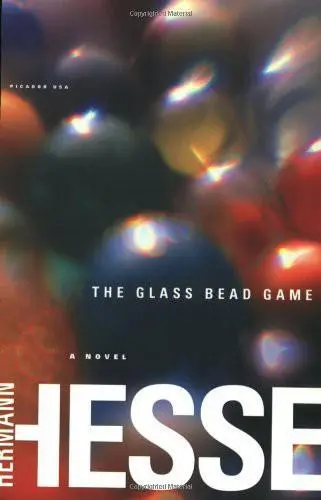
- Название:The Glass Bead Game
- Автор:
- Жанр:
- Год:1969
- ISBN:нет данных
- Рейтинг книги:4 / 5. Голосов: 2
-
Избранное:Добавить в избранное
- Отзывы:
-
Ваша оценка:
The Glass Bead Game: краткое содержание, описание и аннотация
Предлагаем к чтению аннотацию, описание, краткое содержание или предисловие (зависит от того, что написал сам автор книги «The Glass Bead Game»). Если вы не нашли необходимую информацию о книге — напишите в комментариях, мы постараемся отыскать её.
Something like chess but far more intricate, the game of Magister Ludi known as the Glass Bead Game is thought in its purest form, a synthesis through which philosophy, art, music and scientific law are appreciated simultaneously. The scholar-players are isolated within Castalia, an autonomous elite institution devoted wholly to the mind and the imagination…
The Glass Bead Game — читать онлайн бесплатно полную книгу (весь текст) целиком
Ниже представлен текст книги, разбитый по страницам. Система сохранения места последней прочитанной страницы, позволяет с удобством читать онлайн бесплатно книгу «The Glass Bead Game», без необходимости каждый раз заново искать на чём Вы остановились. Поставьте закладку, и сможете в любой момент перейти на страницу, на которой закончили чтение.
Интервал:
Закладка:
He had realized some time earlier that he would have to leave without informing his friend Tegularius and burdening him with farewells. This course was essential, not only to spare his oversensitive friend, but also in order not to endanger his whole plan. Presumably Fritz would make his peace with the accomplished fact, whereas an abrupt disclosure and a farewell scene might lead to a regrettable emotional upheaval. Knecht had for a while even thought of departing without seeing Fritz for the last time. But now he decided that it would seem too much like evading a difficult encounter. However wise it was to spare his friend agitation and an occasion for follies, he had no right to make the thing so easy for himself. A half-hour remained before bedtime; he could still call on Tegularius without disturbing him or anyone else.
Night had already settled in the broad inner courtyard as he crossed to his friend’s cell. He knocked with that strange feeling of: this is the last time, and found Tegularius alone. Delighted, Fritz laid aside the book he had been reading and invited Knecht to sit down.
“An old poem came to my mind today,” Knecht remarked casually, “or rather a few lines from it. Perhaps you know where the rest can be found.” And he quoted: “In all beginnings dwells a magic force…”
Tegularius traced it with no great trouble. After a few minutes of reflection he recognized the poem, got up, and produced from a desk drawer the manuscript of Knecht’s poems, the original manuscript which Knecht had once presented to him. He looked through it and brought out two sheets of paper containing the first draft of the poem. Smilingly, he held them out to the Magister.
“Here,” he said, “your Excellency may examine them himself. This is the first time in many years that you have deigned to remember these poems.”
Joseph Knecht studied the two sheets attentively and with some emotion. In his student days, during his stay in the College of Far Eastern Studies, he had covered these two sheets of paper with lines of verse. They spoke to him of a remote past. Everything about them, the faintly yellowed paper, the youthful handwriting, the deletions and corrections in the text, reminded him painfully of almost forgotten times. He thought he could recall not only the year and the season when these verses had been written, but even the day and the hour. There came to him now the very mood, that proud and strong feeling that had gladdened him and found expression in the poem. He had written it on one of those special days on which he had experienced that spiritual shock which he called “awakening.”
The title of the poem had obviously been written even before the poem itself, and had seemingly been intended as the first line. It had been set down in a large impetuous script, and read: “Transcend!”
Later, at some other time, in a different mood and situation, this title as well as the exclamation mark had been crossed out, and in smaller, thinner, more modest letters another title had been written in. It read: “Stages.”
Knecht now remembered how at the time, filled with the idea of his poem, he had written down the word “Transcend!” as an invocation and imperative, a reminder to himself, a newly formulated but strong resolve to place his actions and his life under the aegis of transcendence, to make of it a serenely resolute moving on, filling and then leaving behind him every place, every stage along the way. Almost whispering, he read some lines to himself:
Serenely let us move to distant places
And let no sentiments of home detain us.
The Cosmic Spirit seeks not to restrain us
But lifts us stage by stage to wider spaces.
“I had forgotten these lines for many years,” he said, “and when they happened to come to my mind today, I no longer knew how I knew them and didn’t realize they were mine. How do they strike you today? Do they still mean anything to you?”
Tegularius considered.
“I have always had a rather odd feeling about this particular poem,” he said finally. “The poem itself is among the very few you’ve written that I didn’t really like. There was something about it that repelled or disturbed me. At the time I had no idea what it was. Today I think I see it. I never really liked this poem of yours, which you headed ‘Transcend!’ as if that were a marching order — thank God you later substituted a better title — I never really liked it because it has something didactic, moralizing, or schoolmasterly about it. If this element could be stripped away, or rather if this whitewash could be scrubbed off, it would be one of your finest poems — I’ve just realized that again. The real meaning is rather well suggested by the title ‘Stages,’ although you might just as well and perhaps better have called it ‘Music’ or ‘The Nature of Music.’ For if we discount the moralizing or preachy attitude, it is really about the nature of music, or if you will a song in praise of music, of its serenity and resolution, its quality of being constantly present, its mobility and unceasing urge to hasten on, to leave the space it has only just entered. If you contented yourself with this contemplation or praise of the spirit of music, if you had not turned it into an admonition and sermon — though obviously you had pedagogic ambitions even then — the poem might have been a perfect jewel. But as it stands it seems to me not only too hortatory but also afflicted by faulty logic. It equates music and life solely for the sake of the moral lesson. But that is highly questionable and disputable, for it transforms the natural and morally neutral impulse which is the mainspring of music into a ‘Life’ that summons, calls, commands us, and wants to impart good lessons to us. To put it briefly, in this poem a vision, something unique, beautiful, and splendid, has been falsified and exploited for didactic ends, and it is this aspect that always prejudiced me against it.”
The Magister had been listening with pleasure as his friend worked himself up into that angry ardor which he so liked in him.
“Let’s hope you’re right,” he said half jokingly. “You certainly are right in what you say about the poem’s relationship to music. The idea of serenely moving to distant places and the underlying concept of the lines actually does come from music, without my having been conscious of it. I really don’t know whether I corrupted the idea and falsified the vision; you may be right. When I wrote the poem, at any rate, it no longer dealt with music, but with an experience — the very experience that the lovely parable of music had revealed its moral aspect to me and become, within me, an awakening and an admonition to respond to the summons of life. The imperative form of the poem, which so particularly displeases you, is not the expression of any desire to command or teach, because the command is addressed to myself alone. That should have been clear from the last line, my friend, even if you weren’t already well aware of it. I experienced an insight, a perception, an inward vision, and was bent on telling the content and the moral of this insight to myself, and impressing it on my mind. That is why the poem remained in my memory, although I was not conscious of it. So whether these lines are good or bad, they’ve accomplished their purpose; the admonition remained alive inside me and was not forgotten. Today I hear it again as if it were brand new. That’s a fine little experience, and your mockery can’t spoil it for me. But it’s time for me to go. How lovely were those days, my friend, when we were both students and could so often allow ourselves to break the rules and stay together far into the nights, talking. A Magister can no longer allow himself such luxuries — more’s the pity.”
Читать дальшеИнтервал:
Закладка:
Похожие книги на «The Glass Bead Game»
Представляем Вашему вниманию похожие книги на «The Glass Bead Game» списком для выбора. Мы отобрали схожую по названию и смыслу литературу в надежде предоставить читателям больше вариантов отыскать новые, интересные, ещё непрочитанные произведения.






Обсуждение, отзывы о книге «The Glass Bead Game» и просто собственные мнения читателей. Оставьте ваши комментарии, напишите, что Вы думаете о произведении, его смысле или главных героях. Укажите что конкретно понравилось, а что нет, и почему Вы так считаете.