Hermann Hesse - The Glass Bead Game
Здесь есть возможность читать онлайн «Hermann Hesse - The Glass Bead Game» весь текст электронной книги совершенно бесплатно (целиком полную версию без сокращений). В некоторых случаях можно слушать аудио, скачать через торрент в формате fb2 и присутствует краткое содержание. Год выпуска: 1969, Жанр: Современная проза, Социально-психологическая фантастика, на английском языке. Описание произведения, (предисловие) а так же отзывы посетителей доступны на портале библиотеки ЛибКат.
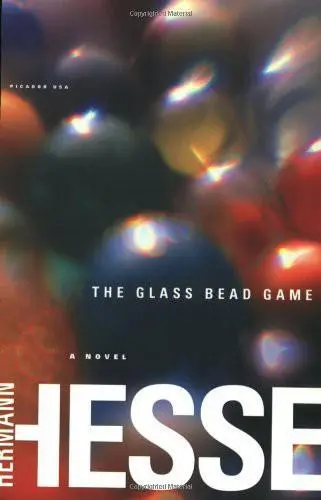
- Название:The Glass Bead Game
- Автор:
- Жанр:
- Год:1969
- ISBN:нет данных
- Рейтинг книги:4 / 5. Голосов: 2
-
Избранное:Добавить в избранное
- Отзывы:
-
Ваша оценка:
The Glass Bead Game: краткое содержание, описание и аннотация
Предлагаем к чтению аннотацию, описание, краткое содержание или предисловие (зависит от того, что написал сам автор книги «The Glass Bead Game»). Если вы не нашли необходимую информацию о книге — напишите в комментариях, мы постараемся отыскать её.
Something like chess but far more intricate, the game of Magister Ludi known as the Glass Bead Game is thought in its purest form, a synthesis through which philosophy, art, music and scientific law are appreciated simultaneously. The scholar-players are isolated within Castalia, an autonomous elite institution devoted wholly to the mind and the imagination…
The Glass Bead Game — читать онлайн бесплатно полную книгу (весь текст) целиком
Ниже представлен текст книги, разбитый по страницам. Система сохранения места последней прочитанной страницы, позволяет с удобством читать онлайн бесплатно книгу «The Glass Bead Game», без необходимости каждый раз заново искать на чём Вы остановились. Поставьте закладку, и сможете в любой момент перейти на страницу, на которой закончили чтение.
Интервал:
Закладка:
We shall keep our present communication brief, but are at your disposal for a discussion in person. From our brief summary you can already see that your circular letter has not had the effect you may have hoped for. In large part its failure no doubt is based on objective grounds, the incompatibility of your opinions with those of the majority. But there are also purely formal reasons. At any rate it seems to us that a direct personal discussion between yourself and your colleagues would have taken a significantly more harmonious and positive course. We would moreover suggest that it was not only your couching of the matter in the form of a written memorandum that affected the Board adversely. Far more striking was your combining, in a way highly unusual among us, a professional communication with a personal request, a petition. Most of your colleagues consider this fusion an unfortunate attempt at innovation; some bluntly called it impermissible.
This brings us to the most delicate point of all, your request for release from your office and transfer to some secular school system. The petitioner should have realized from the outset that the Board could not possibly approve so sudden and curiously argued a request. Of course the Board’s reply is, “No.”
What would become of our hierarchy if the Order no longer assigned each man to his place? What would become of Castalia if everyone wished to assess his own gifts and aptitudes and choose his position for himself? We suggest that the Master of the Glass Bead Game reflect upon this subject for a few minutes, and bid him to continue administering the honorable office he has been entrusted with.
In saying this we have met your request for a reply to your letter. We have been unable to give the answer you may have hoped for. But we should also like to express our appreciation for the stimulating and admonitory value of your document. We trust we will be able to discuss its content with you orally, and in the near future. For although the directorate of the Order believes that it can rely on you, that point in your memorandum in which you speak of an incapacity to conduct the affairs of your office naturally gives us grounds for concern.
Knecht read the letter without any great expectations, but with the closest attention. He had expected that the Board would have “grounds for concern,” and moreover had had signs that it was truly worried. A guest from Hirsland had recently come to the Players’ Village, provided with a regular pass and a recommendation from the directorate of the Order. He had requested hospitality for a few days, supposedly for work in the Archives and library, and had also asked permission to audit a few of Knecht’s lectures. An elderly man, silent and attentive, he had turned up in almost all the departments and buildings of the Village, had inquired after Tegularius, and had several times called on the director of the Waldzell elite school, who lived in the vicinity. There could scarcely be any doubt that the man had been sent as an observer to determine whether there were any traces of negligence in the Players’ Village, whether the Magister was in good health and at his post, the officials diligent, the students stimulated. He had stayed for a full week and missed none of Knecht’s lectures. Two of the officials had even commented on his quiet ubiquitousness. Evidently the directorate of the Order had waited for the report from this investigation before dispatching its reply to the Magister.
What was he to think of this answer, and who had probably been its author? The style betrayed nothing; it was the conventional, impersonal officialese the occasion demanded. But on subtler analysis the letter revealed more individuality than he had thought at first reading. The basis of the entire document was the hierarchic spirit, a sense of justice and love of order. It was plain to see how unwelcome, inconvenient, not to say troublesome and annoying Knecht’s petition had been. Its rejection had undoubtedly been decided at once by the author of this reply, without regard to the opinions of others. On the other hand, the vexation was leavened by another emotion, for there was a clear note of sympathy present in the letter, with its mention of all the more lenient and friendly comments Knecht’s petition had received during the meeting of the Board. Knecht had no doubt that Alexander, the President of the Order, was the author of this reply.
We have now reached the end of our journey, and hope that we have reported all the essentials of Joseph Knecht’s life. A later biographer will no doubt be in a position to ascertain and impart a good many additional details about that life.
We forbear to present our own account of the Magister’s last days, for we know no more about them than every Waldzell student and could not tell the story any better than the Legend of the Magister Ludi, many copies of which are in circulation. Presumably it was written by some of the departed Magister’s favorite students. With this legend we wish to conclude our book.
TWELVE
THE LEGEND
WHEN WE LISTEN to our fellow students talk about our Master’s disappearance, about the reasons for it, the rightness or wrongness of his decisions and acts, the meaning or meaninglessness of his fate, it sounds to us like Diodorus Siculus explaining the supposed causes for the flooding of the Nile. We would think it not only useless but wrong to add to such speculations. Instead, we wish to preserve in our hearts the memory of our Master, who so soon after his mysterious departure into the world passed over into a still more mysterious beyond. His memory is dear to us, and for this reason we wish to set down what we have learned about these events.
After the Master had read the letter in which the Board denied his petition, he felt a faint shiver, a matutinal coolness and sobriety which told him that the hour had come, that from now on there could be no more hesitating or lingering. This peculiar feeling, which he was wont to call “awakening,” was familiar to him from other decisive moments of his life. It was both vitalizing and painful, mingling a sense of farewell and of setting out on new adventures, shaking him deep down in his unconscious mind like a spring storm. He looked at the clock. In an hour he had to face a class. He decided to devote the next hour to meditation, and went into the quiet Magister’s garden. On his way a line of verse suddenly sprang into his mind:
In all beginnings is a magic source…
He murmured this under his breath, uncertain where he had read it. The line appealed to him and seemed to suit the mood of this hour. In the garden, he sat down on a bench strewn with the first faded leaves, regulated his breathing, and fought for inner tranquility, until with a purged heart he sank into contemplation in which the patterns of this hour in his life arranged themselves in universal, suprapersonal images. But on the way to the small lecture room, the line of verse came back to him. He turned the words over in his mind, and thought that he did not have them quite right. Suddenly his memory cleared. Under his breath he recited:
In all beginnings dwells a magic force
For guarding us arid helping us to live.
But it was not until nearly evening, long after his lecture was over and he had passed on to all sorts of other routine matters, that he discovered the origin of the verses. They were not the work of some old poet; they came from one of his own poems, which he had written in his student days. He remembered now that the poem had ended with the line:
So be it, heart: bid farewell without end!
That very evening he sent for his deputy and informed him that on the morrow he would have to leave for an indefinite time. He put him in charge of all current affairs, with brief instructions, and bade good-by in a friendly and matter-of-fact way, as he would ordinarily have done before departing on a brief official journey.
Читать дальшеИнтервал:
Закладка:
Похожие книги на «The Glass Bead Game»
Представляем Вашему вниманию похожие книги на «The Glass Bead Game» списком для выбора. Мы отобрали схожую по названию и смыслу литературу в надежде предоставить читателям больше вариантов отыскать новые, интересные, ещё непрочитанные произведения.









Обсуждение, отзывы о книге «The Glass Bead Game» и просто собственные мнения читателей. Оставьте ваши комментарии, напишите, что Вы думаете о произведении, его смысле или главных героях. Укажите что конкретно понравилось, а что нет, и почему Вы так считаете.