Hermann Hesse - The Glass Bead Game
Здесь есть возможность читать онлайн «Hermann Hesse - The Glass Bead Game» весь текст электронной книги совершенно бесплатно (целиком полную версию без сокращений). В некоторых случаях можно слушать аудио, скачать через торрент в формате fb2 и присутствует краткое содержание. Год выпуска: 1969, Жанр: Современная проза, Социально-психологическая фантастика, на английском языке. Описание произведения, (предисловие) а так же отзывы посетителей доступны на портале библиотеки ЛибКат.
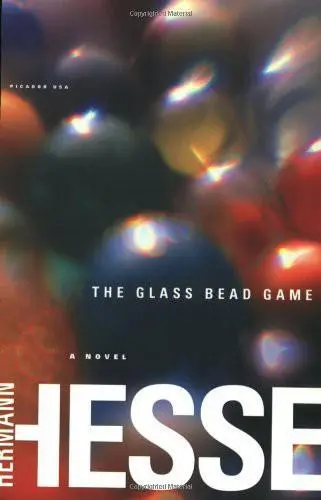
- Название:The Glass Bead Game
- Автор:
- Жанр:
- Год:1969
- ISBN:нет данных
- Рейтинг книги:4 / 5. Голосов: 2
-
Избранное:Добавить в избранное
- Отзывы:
-
Ваша оценка:
The Glass Bead Game: краткое содержание, описание и аннотация
Предлагаем к чтению аннотацию, описание, краткое содержание или предисловие (зависит от того, что написал сам автор книги «The Glass Bead Game»). Если вы не нашли необходимую информацию о книге — напишите в комментариях, мы постараемся отыскать её.
Something like chess but far more intricate, the game of Magister Ludi known as the Glass Bead Game is thought in its purest form, a synthesis through which philosophy, art, music and scientific law are appreciated simultaneously. The scholar-players are isolated within Castalia, an autonomous elite institution devoted wholly to the mind and the imagination…
The Glass Bead Game — читать онлайн бесплатно полную книгу (весь текст) целиком
Ниже представлен текст книги, разбитый по страницам. Система сохранения места последней прочитанной страницы, позволяет с удобством читать онлайн бесплатно книгу «The Glass Bead Game», без необходимости каждый раз заново искать на чём Вы остановились. Поставьте закладку, и сможете в любой момент перейти на страницу, на которой закончили чтение.
Интервал:
Закладка:
Their labors were fruitful. Out of those intrepid and impoverished beginnings they slowly erected a magnificent edifice. In the course of generations they created the Order, the Board of Educators, the elite schools, the Archives and collections, the technical schools and seminaries, and the Glass Bead Game. Today we live as their heirs in a building almost too splendid. And let it be said once again, we live in it like rather vapid and complacent guests. We no longer want to know anything about the enormous human sacrifices our foundation walls were laid on, nor anything about the ordeals of which we are the beneficiaries, nor anything about history which favored or at least tolerated the building of our mansion, which sustains and tolerates us today and possibly will go on doing so for a good many Castalians and Magisters after our day, but which sooner or later will overthrow and devour our edifice as it overthrows and devours everything it has allowed to grow.
Let me return from history and draw my conclusion. What all this means to us at the present time is this: Our system has already passed its flowering. Some time ago it reached that summit of blessedness which the mysterious game of world history sometimes allows to things beautiful and desirable in themselves. We are on the downward slope. Our course may possibly stretch out for a very long time, but in any case nothing finer, more beautiful, and more desirable than what we have already had can henceforth be expected. The road leads downhill. Historically we are, I believe, ripe for dismantling. And there is no doubt that such will be our fate, not today or tomorrow, but the day after tomorrow. I do not draw this conclusion from any excessively moralistic estimate of our accomplishments and our abilities; I draw it far more from the movements which I see already on the way in the outside world. Critical times are approaching; the omens can be sensed everywhere; the world is once again about to shift its center of gravity. Displacements of power are in the offing. They will not take place without war and violence. From the Far East comes a threat not only to peace, but to life and liberty. Even if our country remains politically neutral, even if our whole nation unanimously abides by tradition (which is not the case) and attempts to remain faithful to Castalian ideals, that will be in vain. Some of our representatives in Parliament are already saying that Castalia is a rather expensive luxury for our country. The country may very soon be forced into serious rearmament — armaments for defensive purposes only, of course — and great economies will be necessary. In spite of the government’s benevolent disposition toward us, much of the economizing will strike us directly. We are proud that our Order and the cultural continuity it provides have cost the country as little as they have. In comparison with other ages, especially the early period of the Feuilletonistic Age with its lavishly endowed universities, its innumerable consultants and opulent institutes, this toll is really not large. It is infinitesimal compared with the sums consumed for war and armaments during the century of wars. But before too long this kind of armament may once again be the supreme necessity; the generals will again dominate Parliament; and if the people are confronted with the choice of sacrificing Castalia or exposing themselves to the danger of war and destruction, we know how they will choose. Undoubtedly a bellicose ideology will burgeon. The rash of propaganda will affect youth in particular. Then scholars and scholarship, Latin and mathematics, education and culture, will be considered worth their salt only to the extent that they can serve the ends of war.
The wave is already gathering; one day it will wash us away. Perhaps that will be as it should be. But for the present, my revered colleagues, we still possess that limited freedom of decision and action which is the human prerogative and which makes world history the history of mankind. We may still choose, in proportion to our understanding of events, in proportion to our alertness and our courage. We can, if we will, close our eyes, for the danger is still fairly far away. Probably we who are Magisters today will be able to complete our terms of office in peace and lie down to die in peace before the danger comes so close that it is visible to all. But for me, and no doubt for others like me, such peace could not be had with a clear conscience. I would rather not continue to administer my office in peace and play Glass Bead Games, contented that the coming upheavals will probably find me no longer alive. Rather, it seems to me urgent to recollect that we too, nonpolitical though we are, belong to world history and help to make it. Therefore I said at the beginning of this memorandum that my competence as Magister Ludi is compromised, since I cannot keep my mind from dwelling anxiously upon the future danger. I do not allow myself to imagine what form the disaster might assume for us and for me. But I cannot close my mind to the question: What have we and what have I to do in order to meet the danger? Permit me to say a few words more about this.
I am not inclined to urge Plato’s thesis that the scholar, or rather the sage, ought to rule the state. The world was younger in his time. And Plato, although the founder of a sort of Castalia, was by no means a Castalian. He was a born aristocrat, of royal descent. Granted, we too are aristocrats and form a nobility, but one of the mind, not the blood. I do not believe that man will ever succeed in breeding a hereditary nobility that is at the same time an intellectual nobility. That would be the ideal aristocracy, but it remains a dream. We Castalians are not suited for ruling, for all that we are civilized and highly intelligent people. If we had to govern we would not do it with the force and naïveté that the genuine ruler needs. Moreover, our proper field and real concern, cultivation of an exemplary cultural life, would be quickly neglected. Ruling does not require qualities of stupidity and coarseness, as conceited intellectuals sometimes think. But it does require wholehearted delight in extroverted activity, a bent for identifying oneself with outward goals, and of course also a certain swiftness and lack of scruple about the choice of ways to attain success. And these are traits that a scholar — for we do not wish to call ourselves sages — may not have and does not have, because for us contemplation is more important than action, and in the choice of ways to attain our goals we have learned to be as scrupulous and wary as is humanly possible.
Therefore it is not our business to rule and not our business to engage in politics. We are specialists in examining, analyzing, and measuring. We are the guardians and constant verifiers of all alphabets, multiplication tables, and methods. We are the bureaus of standards for cultural weights and measures. Granted we are many other things also. In some circumstances we can also be innovators, discoverers, adventurers, conquerors, and reinterpreters. But our first and most important function, the reason the people need us and keep us, is to preserve the purity of all sources of knowledge. In trade, in politics, and what have you, turning an X into a Y may occasionally prove to be a stroke of genius; but never with us.
In former ages, during the wars and upheavals of so-called periods of “grandeur,” intellectuals were sometimes urged to throw themselves into politics. This was particularly the case during the late Feuilletonistic Age. That age went even further in its demands, for it insisted that Mind itself must serve politics or the military. Just as the church bells were being melted down for cannon, as hapless schoolboys were drawn on to fill the ranks of the decimated troops, so Mind itself was to be harnessed and consumed as one of the materials of war.
Читать дальшеИнтервал:
Закладка:
Похожие книги на «The Glass Bead Game»
Представляем Вашему вниманию похожие книги на «The Glass Bead Game» списком для выбора. Мы отобрали схожую по названию и смыслу литературу в надежде предоставить читателям больше вариантов отыскать новые, интересные, ещё непрочитанные произведения.







Обсуждение, отзывы о книге «The Glass Bead Game» и просто собственные мнения читателей. Оставьте ваши комментарии, напишите, что Вы думаете о произведении, его смысле или главных героях. Укажите что конкретно понравилось, а что нет, и почему Вы так считаете.