Hermann Hesse - The Glass Bead Game
Здесь есть возможность читать онлайн «Hermann Hesse - The Glass Bead Game» весь текст электронной книги совершенно бесплатно (целиком полную версию без сокращений). В некоторых случаях можно слушать аудио, скачать через торрент в формате fb2 и присутствует краткое содержание. Год выпуска: 1969, Жанр: Современная проза, Социально-психологическая фантастика, на английском языке. Описание произведения, (предисловие) а так же отзывы посетителей доступны на портале библиотеки ЛибКат.
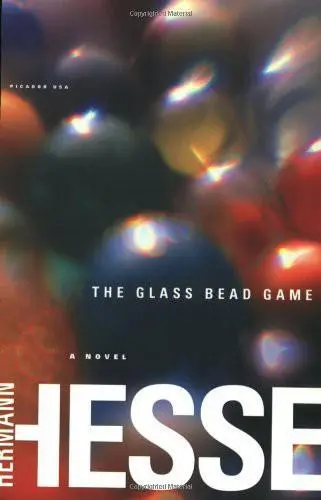
- Название:The Glass Bead Game
- Автор:
- Жанр:
- Год:1969
- ISBN:нет данных
- Рейтинг книги:4 / 5. Голосов: 2
-
Избранное:Добавить в избранное
- Отзывы:
-
Ваша оценка:
The Glass Bead Game: краткое содержание, описание и аннотация
Предлагаем к чтению аннотацию, описание, краткое содержание или предисловие (зависит от того, что написал сам автор книги «The Glass Bead Game»). Если вы не нашли необходимую информацию о книге — напишите в комментариях, мы постараемся отыскать её.
Something like chess but far more intricate, the game of Magister Ludi known as the Glass Bead Game is thought in its purest form, a synthesis through which philosophy, art, music and scientific law are appreciated simultaneously. The scholar-players are isolated within Castalia, an autonomous elite institution devoted wholly to the mind and the imagination…
The Glass Bead Game — читать онлайн бесплатно полную книгу (весь текст) целиком
Ниже представлен текст книги, разбитый по страницам. Система сохранения места последней прочитанной страницы, позволяет с удобством читать онлайн бесплатно книгу «The Glass Bead Game», без необходимости каждый раз заново искать на чём Вы остановились. Поставьте закладку, и сможете в любой момент перейти на страницу, на которой закончили чтение.
Интервал:
Закладка:
The second reason we fight shy of history is our traditional and I would say valid distrust of a certain kind of history writing which was very popular in the age of decadence before the founding of our Order. A priori we have not the slightest confidence in that so-called philosophy of history of which Hegel is the most brilliant and also most dangerous representative. In the following century it led to the most repulsive distortion of history and destruction of all feeling for truth. To us, a bias for this sham philosophy of history is one of the principal features of that era of intellectual debasement and vast political power struggles which we occasionally call the Century of Wars, but more often the Age of the Feuilleton. Our present culture, the Order and Castalia, arose out of the ruins of that age, out of the struggle with and eventual defeat of its mentality — or insanity.
But it is part of our intellectual arrogance that we confront world history, especially in modern times, in much the same spirit that the hermits and ascetics of early Christianity confronted the theatrum mundi, the great theater of the world. History seems to us an arena of instincts and fashions, of appetite, avarice, and craving for power, of blood lust, violence, destruction, and wars, of ambitious ministers, venal generals, bombarded cities, and we too easily forget that this is only one of its many aspects. Above all we forget that we ourselves are a part of history, that we are the product of growth and are condemned to perish if we lose the capacity for further growth and change. We are ourselves history and share the responsibility for world history and our position in it. But we gravely lack awareness of this responsibility.
Let us glance at our own history, at the periods in which the present pedagogic provinces arose, in our own country and in so many others. Let us glance at the origins of the various Orders and hierarchies of which our Order is one. We see immediately that our hierarchy and our homeland, our beloved Castalia, was certainly not founded by people who held so proudly detached an attitude toward world history as we do. Our predecessors and founders began their work in a shattered world at the end of the Age of Wars. Our official explanation of that age, which began approximately with the so-called First World War, is all too one-sided. The trouble was, we say, that the things of the mind did not count in those days; that the powerful rulers considered intellect itself merely a weapon of inferior quality, and meant only for occasional use. This attitude, we say, was a consequence of “feuilletonistic” corruption.
Very well — the anti-intellectuality and brutality of that period are all too visible to us. When I call it anti-intellectual, I do not mean to deny its imposing achievements in intelligence and methodology. But we in Castalia are taught to consider intellect primarily in terms of striving for truth, and the kind of intellect manifested in those days seems to have had nothing in common with striving for truth. It was the misfortune of that age that there was no firm moral order to counter the restiveness and upheaval engendered by the tremendously rapid increase in the human population. What remnants there were of such a moral order were suppressed by the contemporary sloganizing. And those struggles produced their own strange and terrible conflicts. Much like the era of Church schism introduced by Luther four centuries earlier, the entire world was gripped by an immense unrest. Everywhere lines of battle formed; everywhere bitter enmity sprang up between old and young, between fatherland and humanity, between Red and White. We in our day can no longer reconstruct, let alone comprehend and sympathize with the impetus and power of such labels as Red and White, let alone the real meanings of all those battle cries. Much as in Luther’s time, we find all over Europe, and indeed over half the world, believers and heretics, youths and old men, advocates of the past and advocates of the future, desperately flailing at each other. Often the battlefronts cut across frontiers, nations, and families. We may no longer doubt that for the majority of the fighters themselves, or at least for their leaders, all this was highly significant, just as we cannot deny many of the spokesmen in those conflicts a measure of robust good faith, a measure of idealism, as it was called at the time. Fighting, killing, and destroying went on everywhere, and everywhere both sides believed they were fighting for God against the devil.
Among us, that savage age of high enthusiasms, fierce hatreds, and altogether unspeakable sufferings has fallen into a kind of oblivion. That is hard to understand, since it was so closely linked with the origin of all our institutions, was the basis and cause of those institutions. A satirist might compare this loss of memory with the kind of forgetfulness that parvenu adventurers who have at last obtained a patent of nobility have for their birth and parentage.
Let us continue to dwell a little longer on those warlike times. I have read a good many of their documents, taking less interest in the subjugated nations and destroyed cities than in the attitude of the intellectuals of the day. They had a hard time of it, and most of them did not endure. There were martyrs among the scholars as well as among the clergy, and the example of their martyrdom was not entirely without some effect, even in those times so accustomed to atrocities. Still and all, most men of mind did not stand up under the pressures of that violent age. Some capitulated and placed their talents, knowledge, and techniques at the disposal of the rulers — let us recall the well-known statement of a university professor in the Republic of the Massagetes: “Not the faculty but His Excellency the General can properly determine the sum of two and two.” Others put up a struggle as long as it was possible to do so in a reasonably safe fashion, and published protests. A world-famous author of the time — so we read in Ziegenhalss — in a single year signed more than two hundred such protests, warnings, appeals to reason, and so on — probably more than he had actually read. But most learned the art of silence; they also learned to go hungry and cold, to beg and hide from the police. They died before their time and were envied for this by the survivors. Countless numbers took their own lives. There was truly no pleasure and no honor in being a scholar or a writer. Those who entered the service of the rulers and devised slogans for them had jobs and livelihoods, but they suffered the contempt of the best among their fellows, and most of them surely suffered pangs of conscience also. Those who refused such service had to go hungry, live as outlaws, and die in misery or exile. A cruel, an incredibly harsh weeding out took place. Scientific research that did not directly serve the needs of power and warfare rapidly sank into decadence. The same was true for the whole educational system. History, which each of the leading nations of any given period referred exclusively to itself, underwent revision and fantastic simplification. Historical philosophy and feuilletonism dominated the field.
So much for details. Those were wild and violent times, chaotic and Babylonian times in which peoples and parties, old and young, Red and White, no longer understood each other. After sufficient bloodletting and debasement, it came to its end; there arose a more and more powerful longing for rationality, for the rediscovery of a common language, for order, morality, valid standards, for an alphabet and multiplication table no longer decreed by power blocs and alterable at any moment. A tremendous craving for truth and justice arose, for reason, for overcoming chaos. This vacuum at the end of a violent era concerned only with superficial things, this sharp universal hunger for a new beginning and the restoration of order, gave rise to our Castalia. The insignificantly small, courageous, half-starved but unbowed band of true thinkers began to be aware of their potentialities. With heroic asceticism and self-discipline they set about establishing a constitution for themselves. Everywhere, even in the tiniest groups, they began working once more, clearing away the rubble of propaganda. Starting from the very bottom, they reconstructed intellectual life, education, research, culture.
Читать дальшеИнтервал:
Закладка:
Похожие книги на «The Glass Bead Game»
Представляем Вашему вниманию похожие книги на «The Glass Bead Game» списком для выбора. Мы отобрали схожую по названию и смыслу литературу в надежде предоставить читателям больше вариантов отыскать новые, интересные, ещё непрочитанные произведения.







Обсуждение, отзывы о книге «The Glass Bead Game» и просто собственные мнения читателей. Оставьте ваши комментарии, напишите, что Вы думаете о произведении, его смысле или главных героях. Укажите что конкретно понравилось, а что нет, и почему Вы так считаете.