Mo Yan - Sandalwood Death
Здесь есть возможность читать онлайн «Mo Yan - Sandalwood Death» весь текст электронной книги совершенно бесплатно (целиком полную версию без сокращений). В некоторых случаях можно слушать аудио, скачать через торрент в формате fb2 и присутствует краткое содержание. Город: Norman, Год выпуска: 2013, ISBN: 2013, Издательство: University of Oklahoma Press, Жанр: Современная проза, на английском языке. Описание произведения, (предисловие) а так же отзывы посетителей доступны на портале библиотеки ЛибКат.
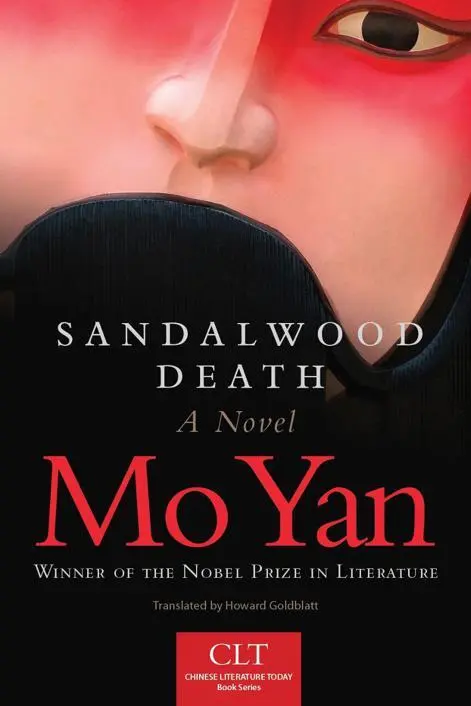
- Название:Sandalwood Death
- Автор:
- Издательство:University of Oklahoma Press
- Жанр:
- Год:2013
- Город:Norman
- ISBN:978-0-8061-4339-2
- Рейтинг книги:3 / 5. Голосов: 1
-
Избранное:Добавить в избранное
- Отзывы:
-
Ваша оценка:
Sandalwood Death: краткое содержание, описание и аннотация
Предлагаем к чтению аннотацию, описание, краткое содержание или предисловие (зависит от того, что написал сам автор книги «Sandalwood Death»). Если вы не нашли необходимую информацию о книге — напишите в комментариях, мы постараемся отыскать её.
Sandalwood Death Filled with the sensual imagery and lacerating expressions for which Mo Yan is so celebrated
brilliantly exhibits a range of artistic styles, from stylized arias and poetry to the antiquated idiom of late Imperial China to contemporary prose. Its starkly beautiful language is here masterfully rendered into English by renowned translator Howard Goldblatt.
Sandalwood Death — читать онлайн бесплатно полную книгу (весь текст) целиком
Ниже представлен текст книги, разбитый по страницам. Система сохранения места последней прочитанной страницы, позволяет с удобством читать онлайн бесплатно книгу «Sandalwood Death», без необходимости каждый раз заново искать на чём Вы остановились. Поставьте закладку, и сможете в любой момент перейти на страницу, на которой закончили чтение.
Интервал:
Закладка:
“Bring the old gentleman’s things inside!”
Like a line of black ants, the yayi entered the compound carrying everything I had requested from Excellency Yuan. Each item was presented at the door for my approval:
A purple sandalwood stake five feet long and five fen wide, like the metal spike used by the Tang general Qin Shubao. The absolutely indispensable item.
A large white rooster with a black comb, legs tied with a strip of red cloth, which lay in the arms of a fair-faced yayi like a bawling, unhappy baby boy. A rare breed, one of which they had managed to find somewhere in Gaomi County.
New leather straps that still gave off the pungent smell of tanning salt, light blue in color, as if grass-stained.
Two wooden mallets with a reddish luster that had been used in an oil mill as far back, perhaps, as the reign of the Kangxi Emperor, two centuries before. Made from date-wood knots and in constant contact with oil, they had by now drunk their fill and were heavier than their metal counterparts. But they were nonetheless wood and not metal, and thus more yielding. Hardness with a bit of give was what I had specified.
Two extra-large baskets, each filled with a hundred jin of the finest white rice. The unique fragrance and blue tinge were proof that it had come from Tengzhou Prefecture, which produced rice of a quality unmatched anywhere in Gaomi County.
Two hundred jin of flour packed in four gunnysacks stamped with the Tonghe Refined Flour Mill trademark.
A basket of red-shelled eggs, one of which, a first egg, was stained by real blood. Just seeing it evoked the image of a little red-faced hen straining to lay her first egg.
A sizeable cut of beef on a large platter, the sinews in the meat seemingly still vibrating.
An enormous cauldron, carried by two men, big enough to cook a whole cow.
Song Three was carrying half a jin of ginseng under his clothes. He took it out and handed it to me. Even through the paper wrapper, the bitter smell of fine ginseng was strong.
“Old sir,” Song Three said as his face lit up, “your humble servant personally visited the herbal shop and kept his eye on Qin Seven, that wily old fox, as he opened a catalpa cabinet with three locks and selected this ginseng from a blue and white porcelain jar. ‘If it’s not the real thing,’ he said, ‘you can twist my head right off my shoulders.’ This is prized ginseng. Just by carrying it next to me this little while and smelling its fragrance, your humble servant grew light on his feet, sharp-eyed and clear-headed; I felt like I was becoming an immortal. Just think what eating it could do!”
I peeled back the paper wrapping and counted the gnarled brown roots whose necks were tied together with a red string: one, two, three… five… eight altogether, each as thick as a chopstick at the top and as thin as a bean stalk at the end, from which a beard of fine hairs fluttered in the slightest breeze. Half a jin? I don’t believe it. I gave the man a cold glare. Well, the bastard bent at the waist and, with an unctuous smile, said softly:
“Nothing gets past the gentleman’s eyes. These eight roots only weigh four liang, not eight, but that is all Qin Seven had in his shop. He said you could boil them in water, pour the liquid into a dead man’s mouth, and he’d jump out of his coffin—do you think, sir…”
I waved him off without saying a word. What was I supposed to say? Chief yayi like him are craftier than demons and sneakier than a monkey. He got down on one knee to pay his respects. That, he thought, made up for the shortage. The swine was getting away with at least fifty liang of silver from the ginseng alone. But then he took a small chunk of silver out from under his clothes and said:
“This, old squire, is what your humble servant was given to buy pork, but it occurred to me that one does not fertilize another’s field, and since you have someone here in your home who slaughters pigs, why go elsewhere? This should be yours.”
Now, I knew that this little bit of silver was worth far less than what he had skimmed from the ginseng, but I thanked him anyway. “You put a great deal of thought into this,” I said, “so take the silver and divide it among your fellow yayi as a little bonus.”
“We thank the old squire!” He bowed again, as did the men who had come with him.
Money talks! A tiny bit of silver had that bastard calling me “old squire” instead of the vapid “sir.” If I’d given him a gold ingot, he’d be down on all fours, banging his head on the ground and calling me Daddy! Again I waved my hand, this time for him to get up, and without a trace of emotion, as if commanding a dog, said: “Go now. You and your men take all these things to the execution site, where you are to set up a big cook stove. Dump the sesame oil into the cauldron, fill the belly of the stove with kindling, and light it. Then set up a smaller stove for stewing the beef. After that, put up a mat shed near the stoves, place a vat inside, and fill it with water—be sure it’s fresh drinking water. And ready an earthen pot for herbal medicine along with a hollow horn used to medicate livestock. Carpet the ground in the shed with a thick layer of this year’s dry wheat straw. Then I want you personally to carry in my chair—you know its background, I take it. That master of yours and the Provincial Governor, Excellency Yuan, both got down on their knees and performed the rite of three bows and nine kowtows in front of it, so be very careful. If you so much as knock off a chip of paint, Excellency Yuan will skin you like a dog. Everything I’ve told you must be ready precisely at noon. If you are missing anything, go see your laoye.” The man bowed and proclaimed loudly:
“It will be as you say, Laoye.”
After they left, I checked off the remaining objects in the yard again: the sandalwood stake—the single most important item—would require much painstaking work, but nothing I would let those bastards watch, not with their unclean eyes, for that would spoil the effect. Nor would I let them hold the rooster, not with their dirty hands, for that would sap its power. I shut the gate; two armed yayi were posted to keep people out. Apparently our Magistrate Qian had seen to everything. Of course, I knew it was all for Excellency Yuan’s benefit. Oh, how he hated me, but my gums still bled from losing two teeth, and to teach the dog a lesson I needed to let him know who he was dealing with. I must not demean myself. I was not putting on airs or throwing my weight around, flaunting the fact that I had been favored by gifts from the Empress Dowager and the Emperor. And this assuredly was not a case of abusing public power to avenge a personal slight. It was a matter of national honor. Since I had been chosen to end the life of a man whose shocking criminal acts had gained worldwide attention, an extravagant display was both proper and necessary. The extravagance would belong not to me, but to the Great Qing Empire. Being laughed at by foreigners could not be tolerated.
Damn you, von Ketteler, I know you Europeans have used wooden stakes on people, but that is simply nailing someone to a crossbar and leaving him to die. I am going to let you see what a real punishment is like, one that is so exquisite, so refined, that the name alone reveals its resounding elegance: sandal—wood—death , a term with a rough exterior but an aesthetic core, displaying the patina and aura of antiquity. It is a form of punishment beyond the imagination of any European. Out on the street, my neighbors, all hopelessly rustic and shortsighted, craned their necks to get a peek into my yard. The looks on their faces revealed envy and admiration. Attracted by wealth, they were blind to the dangers that lay behind it, and my son was no less wooly-headed than they, though his muddled mind had its endearing qualities. Hearing my shifu tell how he had dismembered the woman with skin like pure snow had brought an end to my sexual life. Not even the lascivious women of the capital’s infamous Eight Lanes, who oozed lust, had the power to arouse me. At some point—when I cannot say—my beard stopped growing, and I was reminded of Grandma Yu: “My sons,” he said, “people in our profession are like palace eunuchs: Their potency has been excised with a knife, but their desire lives on. Our physical maleness remains intact, but our hearts have been purged of desire.” Grandma Yu said that when the day comes that the sight of a woman has no effect on you, when even the thought does not cross your mind, you are on the verge of becoming a totally accomplished executioner. Some decades ago, when I came home from an assignment and went to bed, a hint of potency remained, and I somehow sired a foolish but not totally worthless offspring, something hard to imagine, on the order of producing a stalk of sorghum from a fried seed. The reason I tried so hard to retire and return to my native home was that I had a son to return to, someone I wanted to train to become the Great Qing Empire’s next preeminent executioner. The Empress Dowager Herself once said that every profession has its zhuangyuan. I was one, and my son would follow in my footsteps. My daughter-in-law was a spirited woman who kept Qian Ding’s bed warm and subjected me to humiliation. But heaven has eyes, and saw to it that my qinjia fell into my hands. I laughed as I said to her: “Daughter-in-law, I must show him some favor, since we are related. All these things you see here are for him.”
Читать дальшеИнтервал:
Закладка:
Похожие книги на «Sandalwood Death»
Представляем Вашему вниманию похожие книги на «Sandalwood Death» списком для выбора. Мы отобрали схожую по названию и смыслу литературу в надежде предоставить читателям больше вариантов отыскать новые, интересные, ещё непрочитанные произведения.

Обсуждение, отзывы о книге «Sandalwood Death» и просто собственные мнения читателей. Оставьте ваши комментарии, напишите, что Вы думаете о произведении, его смысле или главных героях. Укажите что конкретно понравилось, а что нет, и почему Вы так считаете.