Mo Yan - Sandalwood Death
Здесь есть возможность читать онлайн «Mo Yan - Sandalwood Death» весь текст электронной книги совершенно бесплатно (целиком полную версию без сокращений). В некоторых случаях можно слушать аудио, скачать через торрент в формате fb2 и присутствует краткое содержание. Город: Norman, Год выпуска: 2013, ISBN: 2013, Издательство: University of Oklahoma Press, Жанр: Современная проза, на английском языке. Описание произведения, (предисловие) а так же отзывы посетителей доступны на портале библиотеки ЛибКат.
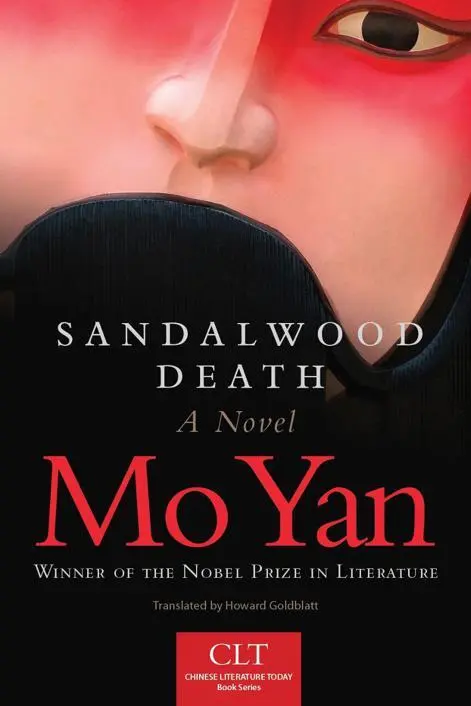
- Название:Sandalwood Death
- Автор:
- Издательство:University of Oklahoma Press
- Жанр:
- Год:2013
- Город:Norman
- ISBN:978-0-8061-4339-2
- Рейтинг книги:3 / 5. Голосов: 1
-
Избранное:Добавить в избранное
- Отзывы:
-
Ваша оценка:
Sandalwood Death: краткое содержание, описание и аннотация
Предлагаем к чтению аннотацию, описание, краткое содержание или предисловие (зависит от того, что написал сам автор книги «Sandalwood Death»). Если вы не нашли необходимую информацию о книге — напишите в комментариях, мы постараемся отыскать её.
Sandalwood Death Filled with the sensual imagery and lacerating expressions for which Mo Yan is so celebrated
brilliantly exhibits a range of artistic styles, from stylized arias and poetry to the antiquated idiom of late Imperial China to contemporary prose. Its starkly beautiful language is here masterfully rendered into English by renowned translator Howard Goldblatt.
Sandalwood Death — читать онлайн бесплатно полную книгу (весь текст) целиком
Ниже представлен текст книги, разбитый по страницам. Система сохранения места последней прочитанной страницы, позволяет с удобством читать онлайн бесплатно книгу «Sandalwood Death», без необходимости каждый раз заново искать на чём Вы остановились. Поставьте закладку, и сможете в любой момент перейти на страницу, на которой закончили чтение.
Интервал:
Закладка:
“Dieh,” my son said excitedly from behind me with a platter of dough the size of a millstone, “the dough is ready.”
Believe it or not, he had used up the entire sack of flour. But no harm done, since we would expend a great deal of energy tomorrow, and would need plenty of nourishment to get through the day. I twisted off a chunk of dough, rolled it between my hands, and pulled it into a long strip, which I dropped into the oil. It rolled and twisted in the churning oil like an eel fighting to stay alive. With a clap of his hands, my son jumped up and down.
“Fried fritter!” he shouted. “It’s a fried fritter!”
Together we dumped a steady stream of dough twists into the oil. They sank to the bottom, but quickly floated to the top and tumbled in the space between the sandalwood spears. I was frying them in the same oil so the essence of grain would attach to the wood. I knew that these stakes would enter Sun Bing’s grain passage and travel up through his body, and that the grain coating would be beneficial. The aroma of frying fritters spread—they were done, so I fished them out with a pair of tongs. “Eat one, son.” With his back to the mat shed, he started in on the lip-burning fritter; his bulging cheeks showed how happy he was. I picked one up and took a bite, slowly savoring its unique sandalwood taste and its Buddhist aura. I had stopped eating meat after receiving the string of prayer beads from the Old Buddha Herself. Kindling blazing beneath the stove crackled and spit; the oil in the cauldron bubbled and popped. After eating several of the fritters, I went to work cutting the slab of beef into fist-sized chunks and tossing them into the oil. I did that so the essence of meat would overlay that of grain and soften the wood even more. All this I was doing for Qinjia! My son moved up close and muttered:
“I want some meat, Dieh.”
“Son,” I said affectionately, “this is not for us. In a while you can have some from the small cauldron. Once the punishment is administered to your Maoqiang-singing gongdieh, you can eat the meat and he’ll drink the broth.”
Just then the crafty chief yamen attendant, Song Three, came up and asked what I wanted him to do next, slavishly bowing and scraping as if I were a powerful official. Naturally, I had to assume the proper air, so I coughed importantly and said:
“Nothing more. Preparing the stakes is all there is to do today, and that is my job, not yours, so you may leave and do whatever you are supposed to do.”
“Your humble servant may not leave.” The words slithered out of his oily mouth like loaches. “We dare not leave.”
“Has His Eminence your master the County Magistrate told you to stay?”
“Not His Eminence, but His Excellency Governor Yuan, who ordered us to stay for your protection. You have become a living treasure, sir.”
He stuck out his paw, picked up an oil fritter, and stuffed it into his mouth. As I stared at his greasy lips, I said silently: I am not the treasure, you bastards; it is that which I carry with me. I reached under my clothes and took out the sandalwood prayer beads given to me by the wise and august Empress Dowager Cixi, and began fingering them, closing my eyes and striking the calming pose of a meditating monk to keep those bastards from knowing what was on my mind. I could have crushed them into pulp without their ever guessing what I was thinking.
————
4
————
Old Zhao Jia sits by the shed, his state of mind a mass of tangles. (What are you thinking, Dieh?) Images of earlier days float past his eyes from all angles. (What images?) The benevolent Yuan Shikai had not forgotten his old friend, and that is how father and son have reached this day. (What day is this?)
—Maoqiang Sandalwood Death. A father and son duetAfter completing the slicing death on the brave Qian Xiongfei, I picked up my tools and, along with my apprentices, planned to return overnight to Peking. People say that one should avoid crowded, hectic places and not linger where disputes arise. With our belongings on our backs, we were about to set out when our way was blocked by one of Excellency Yuan’s most loyal retainers, a fierce-looking man who gazed up into the sky and said:
“Do not leave, Slay-master. Excellency Yuan wants to see you.”
After getting my apprentices settled in a tiny inn, I fell in behind the retainer. We passed through a series of sentry posts before I was kneeling in front of Excellency Yuan. Sweat dripped from my back, and I was out of breath. I banged my head loudly on the floor, managing between kowtows to sneak a look at his corpulent image. Over the previous twenty-three years, as I well knew, thousands of high officials and talented individuals had passed in front of the great man’s eyes like a running-horse lantern, so what chance was there that he would remember someone as insignificant as me? But I remembered him, remembered him well. Twenty-three years earlier, as a handsome young man who could not even grow a moustache, he had spent much of his time in the yamen with his uncle, Yuan Baoheng, Vice President of the Board of Punishments. Bristling at his enforced idleness, he had come to the Eastern Compound, where we executioners lived, and struck up a conversation with me. Excellency, you were fascinated by our profession—putting people to death—and said to Grandma Yu, who was still healthy and active, “Take me on as your apprentice, Grandma!” Seized with terror at the request, Grandma Yu said, “Young scion, are you toying with us?” With a straight face, Excellency, you replied, “I am serious. Great men appear in chaotic times, and if the seal of authority is beyond their reach, the knife is not!”
“You did your job well, Grandma Zhao.” The great man’s comment brought my reveries to an abrupt end. His words seemed to come from the depths of a bell, like deeply moving chimes.
I admit that I had carried out my duty in a manner that did nothing to undermine the Board of Punishment’s reputation, and I was confident that I was the only person in the Great Qing Empire who could have performed the slicing death to such a high standard. But that was not the attitude I could assume in the presence of Excellency Yuan. I might be a man of little importance, but I knew that Excellency Yuan, who commanded an elite modern army, was a prominent figure in the Imperial Court. “It was not an effort I can be proud of,” I said humbly, “and I can only beg forgiveness for disappointing Your Excellency.”
“Grandma Zhao, you sound like an educated man.”
“I respectfully confess that Excellency Yuan’s humble servant can neither read nor write.”
“I see,” he said with a smile. Then he abruptly switched to his native Hunan dialect, as if swapping his official clothing for a jacket of homespun cloth: “If you raise a dog in an official yamen, in ten years it will speak like a classical scholar.”
“A wise comment, Excellency. In the Board of Punishments I am a dog.”
Excellency Yuan laughed lustily at my remark.
“Well spoken,” he said once he had finished laughing. “It takes a good man to humble himself! You are a dog in the Board of Punishments, and I am a dog at the Imperial Court.”
“Your humble servant does not deserve to be mentioned in the same breath as Your Excellency… gold-inlaid jade, while I am nothing but a cobblestone…”
“Zhao Jia, how shall I thank you for helping me accomplish something so important?”
“Your humble servant is a dog raised by the nation; Your Excellency is a pillar of the state, whom I am obliged to serve.”
“I find nothing wrong in what you say, but I wish to reward you nonetheless.” He turned to his attendant. “See Grandma Zhao off to the capital with a hundred liang of silver.”
Читать дальшеИнтервал:
Закладка:
Похожие книги на «Sandalwood Death»
Представляем Вашему вниманию похожие книги на «Sandalwood Death» списком для выбора. Мы отобрали схожую по названию и смыслу литературу в надежде предоставить читателям больше вариантов отыскать новые, интересные, ещё непрочитанные произведения.


Обсуждение, отзывы о книге «Sandalwood Death» и просто собственные мнения читателей. Оставьте ваши комментарии, напишите, что Вы думаете о произведении, его смысле или главных героях. Укажите что конкретно понравилось, а что нет, и почему Вы так считаете.