Mo Yan - Sandalwood Death
Здесь есть возможность читать онлайн «Mo Yan - Sandalwood Death» весь текст электронной книги совершенно бесплатно (целиком полную версию без сокращений). В некоторых случаях можно слушать аудио, скачать через торрент в формате fb2 и присутствует краткое содержание. Город: Norman, Год выпуска: 2013, ISBN: 2013, Издательство: University of Oklahoma Press, Жанр: Современная проза, на английском языке. Описание произведения, (предисловие) а так же отзывы посетителей доступны на портале библиотеки ЛибКат.
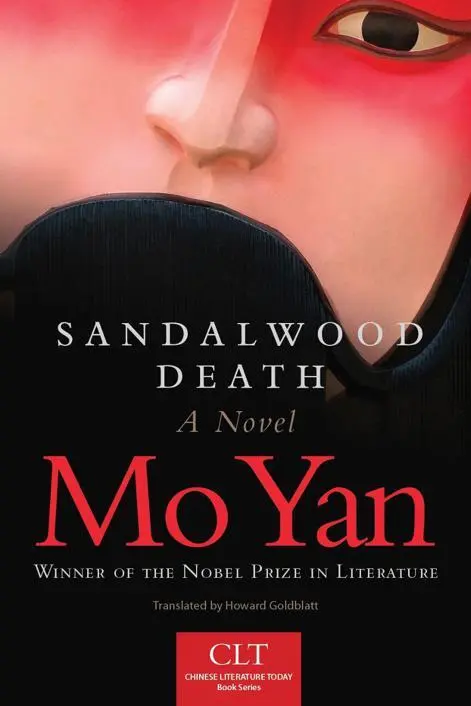
- Название:Sandalwood Death
- Автор:
- Издательство:University of Oklahoma Press
- Жанр:
- Год:2013
- Город:Norman
- ISBN:978-0-8061-4339-2
- Рейтинг книги:3 / 5. Голосов: 1
-
Избранное:Добавить в избранное
- Отзывы:
-
Ваша оценка:
Sandalwood Death: краткое содержание, описание и аннотация
Предлагаем к чтению аннотацию, описание, краткое содержание или предисловие (зависит от того, что написал сам автор книги «Sandalwood Death»). Если вы не нашли необходимую информацию о книге — напишите в комментариях, мы постараемся отыскать её.
Sandalwood Death Filled with the sensual imagery and lacerating expressions for which Mo Yan is so celebrated
brilliantly exhibits a range of artistic styles, from stylized arias and poetry to the antiquated idiom of late Imperial China to contemporary prose. Its starkly beautiful language is here masterfully rendered into English by renowned translator Howard Goldblatt.
Sandalwood Death — читать онлайн бесплатно полную книгу (весь текст) целиком
Ниже представлен текст книги, разбитый по страницам. Система сохранения места последней прочитанной страницы, позволяет с удобством читать онлайн бесплатно книгу «Sandalwood Death», без необходимости каждый раз заново искать на чём Вы остановились. Поставьте закладку, и сможете в любой момент перейти на страницу, на которой закончили чтение.
Интервал:
Закладка:
But events did not unfold as the Magistrate expected. The German soldiers disappeared from sight after passing through the gateway opening. A cloud of smoke and dust was followed by howls in German, and the Magistrate knew at once that the clever and resourceful Sun Bing had set a trap by digging a deep pit just inside the gate. The look on von Ketteler’s face said it all as he frantically waved his flag as a signal for his men to fall back. The German soldiers’ lives were what counted, and von Ketteler’s plan, which had called for victory without the loss of a single man, had failed. He was certain to order a second bombardment by his artillerymen, who had been given enough shells to turn the town into a wasteland. The Magistrate would be fooling himself if he believed that this battle would result in anything but a German victory. As expected, von Ketteler turned to the commander of his artillery unit and shouted a command, just as the outline of an idea in the Magistrate’s mind was suddenly transformed into a bold plan of action. He turned to von Ketteler’s interpreter.
“Ask von Ketteler to hold off. I have something important to say to him.”
The interpreter did as he was told, and von Ketteler honored the request. Suddenly two pairs of eyes were fixed on the County Magistrate: the Plenipotentiary’s deep green eyes and those of Ma Longbiao, whose expression was one of dejection.
“There is a popular adage, sir, that goes, ‘If you want to defeat an enemy, first go after his king.’ The commoners in town are under a spell woven by Sun Bing. That is the only thing that would have led them to do battle with your honorable soldiers. Sun Bing is the sole culprit in this episode. As long as we capture him and punish him severely—in effect, execute him as a warning to the masses—there will be no more vandalism against the railroad, and you will have carried out your assignment. It is my understanding that you have come to China in search of riches, not to subject the people of either nation to bloodshed. If what I say strikes you as reasonable, I offer my services to enter the town and convince Sun Bing to give himself up.”
“Are you sure you don’t plan to go in there for the purpose of cooking up a new strategy with Sun Bing?” The interpreter was kept busy interpreting for both men.
“I am an official representative of the Great Qing Court. My family is still in the county yamen,” the Magistrate replied. “The reason I am willing to put my life on the line is to spare your men from injury or worse. They have crossed a vast ocean to be here, and each of their lives is of great value. If large numbers of them were to be killed or wounded, the Kaiser would not reward you for a job well done, I believe.”
“I will agree if Ma Longbiao stays behind as your guarantor,” the interpreter said.
“Elder Brother Qian,” Ma said, his heavy-hearted tone unmistakable, “I know what you have in mind. But if unruly people inside…”
“Commander Ma,” the Magistrate said, “I am fifty percent sure of success. I cannot stand by and watch one of the county’s most flourishing towns be leveled by these foreigners and, even worse, see my people cut down for no good reason.”
“If you manage to enter town and convince Sun Bing to surrender,” Ma Longbiao said earnestly, “keeping our Imperial forces from harm while also protecting the lives of countless civilians, I will personally testify to your achievement to Excellency Yuan himself.”
“We have reached the point where I can lay no claim to any achievements,” the Magistrate replied. “I only hope that I do not make matters worse. Please get an assurance from von Ketteler that once I bring Sun Bing out, he will withdraw his forces.”
“You can trust me on that,” Ma Longbiao said as he took out a new pistol he was carrying and handed it to the Magistrate. “Elder Brother Qian,” he said, “keep this with you, just in case.”
The Magistrate waved the gesture off. “In the name of all the inhabitants of the town, I ask Elder Brother Ma to see that von Ketteler does not fire his cannons.” With that, he mounted his horse and headed for the open gateway.
“I am the Magistrate of Gaomi County,” he called out. “A friend of your commander. I need to speak with him. It is of the utmost importance!”
————
5
————
The Magistrate rode unimpeded into town, where he gave the trap a wide berth, but not before looking down into the pit, where a dozen or more German soldiers were struggling and screaming in pain. The floor of the pit, which was at least ten feet deep, was lined with pointed bamboo and metal spikes; some of the trapped Germans were already dead, while others had suffered grievous wounds and lay there like frogs on a spit. The stench rising out of the pit was proof that Sun Bing, not content merely to line the bottom of his trap with sharp objects, had dumped in a layer of excrement as well. That reminded the Magistrate of the time, decades earlier, when the foreigners had first come to China, and a certain frontier ambassador had petitioned the Emperor with a plan for dealing with them: the foreigners, he said, were obsessed with cleanliness and sanitation, and anything to do with bodily waste horrified them. So, he suggested, if each imperial soldier carried a bucket of shit into battle, all he had to do was spread his filth on the ground to send the enemy fleeing in disgust, holding their noses and maybe even vomiting until they died. The Xianfeng Emperor was said to have enthusiastically approved what He considered to be an especially creative suggestion, since it not only had the potential to vanquish this new enemy, but required a minimum of expense. The Magistrate’s wife had told him this, treating it as a joke, and he had had a good laugh over it. Never in his wildest imagination would he have thought that Sun Bing would employ that very method, with a bit of modification, a military tactic that had all the characteristics of a practical joke; he did not know whether to laugh or to cry. In point of fact, in the wake of the farcical hostage exchange of the previous day, the Magistrate had gained an understanding of Sun Bing’s approach to military tactics. Juvenile, to be sure, the stuff of children’s games, and yet, contrary to all expectations, they made people stop and think, as more often than not they proved effective. As he rode past the pit, the Magistrate also saw a good many dead and dying Boxers on both sides of the fortification, as well as smashed porridge pots whose steamy contents lay in pools of blood. The wounded were voicing their agony. Red-kerchiefed Boxers, as well as women and children, were running headlong up and down the street on which he had traveled not so long before. For all practical purposes, the town had been laid waste, the Magistrate concluded. The Germans could take it almost without a fight, and this realization underscored his sense of self-worth. By sacrificing Sun Bing, one man, he could save thousands. Sun Bing had to be delivered, at all costs. If persuasion failed, force would have to have to be employed. Even though he had refused Ma Longbiao’s offer of a pistol, the Magistrate was confident that Sun Bing was no match for him. He had such a deep sense of valor and solemnity that he could all but hear drums and horns heralding his arrival. Spurring his horse into a gallop, he flew down the street, heading straight for the mat shed that stood at the bend in the river, where he would find Sun Bing.
There he saw hundreds of Boxers down in the dry riverbed ingesting Taoist charms. Using both hands, each man held a bowl in which paper ashes were mixed with water. Sun Bing, the man he sought, stood atop a pile of bricks and filled the air with a loud incantation. His primary outside help, the Caozhou Righteous Harmony Boxer Sun Wukong, was nowhere to be seen; the second-in-command, Zhu Bajie, was demonstrating martial skills with his rake to lend an impressive air to Sun’s ritual. The Magistrate slid down off his horse and walked up to the brick pile, where he kicked over the incense altar in front of Sun Bing.
Читать дальшеИнтервал:
Закладка:
Похожие книги на «Sandalwood Death»
Представляем Вашему вниманию похожие книги на «Sandalwood Death» списком для выбора. Мы отобрали схожую по названию и смыслу литературу в надежде предоставить читателям больше вариантов отыскать новые, интересные, ещё непрочитанные произведения.



Обсуждение, отзывы о книге «Sandalwood Death» и просто собственные мнения читателей. Оставьте ваши комментарии, напишите, что Вы думаете о произведении, его смысле или главных героях. Укажите что конкретно понравилось, а что нет, и почему Вы так считаете.