Гарольд Роббинс - The Raiders
Здесь есть возможность читать онлайн «Гарольд Роббинс - The Raiders» весь текст электронной книги совершенно бесплатно (целиком полную версию без сокращений). В некоторых случаях можно слушать аудио, скачать через торрент в формате fb2 и присутствует краткое содержание. Жанр: Современная проза, на английском языке. Описание произведения, (предисловие) а так же отзывы посетителей доступны на портале библиотеки ЛибКат.
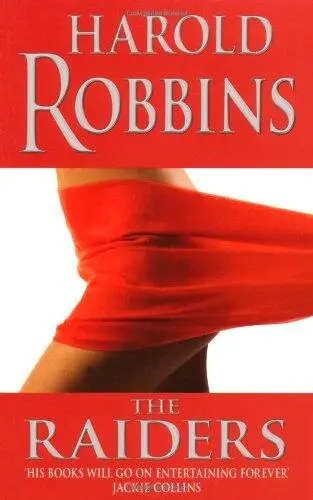
- Название:The Raiders
- Автор:
- Жанр:
- Год:неизвестен
- ISBN:нет данных
- Рейтинг книги:3 / 5. Голосов: 1
-
Избранное:Добавить в избранное
- Отзывы:
-
Ваша оценка:
The Raiders: краткое содержание, описание и аннотация
Предлагаем к чтению аннотацию, описание, краткое содержание или предисловие (зависит от того, что написал сам автор книги «The Raiders»). Если вы не нашли необходимую информацию о книге — напишите в комментариях, мы постараемся отыскать её.
The Raiders — читать онлайн бесплатно полную книгу (весь текст) целиком
Ниже представлен текст книги, разбитый по страницам. Система сохранения места последней прочитанной страницы, позволяет с удобством читать онлайн бесплатно книгу «The Raiders», без необходимости каждый раз заново искать на чём Вы остановились. Поставьте закладку, и сможете в любой момент перейти на страницу, на которой закончили чтение.
Интервал:
Закладка:
The family schism followed.
"You will do no such thing. You will marry Nathan before the summer is over and settle down to a proper and honorable life."
"No, Papa. I will not marry Nathan. I do not want to marry him. I don't love him."
"He is a good young man. He will be a rabbi. You will be the wife of a rabbi. Every girl wants to be the wife of a rabbi. You will share in the respect and honor that will be accorded him. The matter is settled, Golda. I have promised you to him. I will hear nothing to the contrary."
"I know a little of the law myself, Papa. You can't force me to marry Nathan. What is more, I am seventeen years old and will soon be eighteen. I can leave your home."
" SHIKSA !"
5
She worked that summer — the last summer when the world was at peace — at two borscht-belt hotels. To her disgust and shame, she discovered that she was expected to wait tables at lunch as well as to perform on the stage, two shows each evening. Ernie Levin told her not to worry, that was the way you broke in. He told her she was getting experience. He pointed out to her that she was allowed to work solo, to dance and sing, to crack jokes, and most of all to learn her trade.
A comedian was the star of each show, and she worked behind five of them that summer. There were other singers and other dancers, but what Levin told her was true, that she had a small lead role in each show and was allowed to polish her shtick.
She wore leotards and net stockings, sometimes a top hat, and sometimes she used a cane. Levin urged her to study her audiences, to see how they reacted to what she did. It was essential, he insisted, that she develop a rapport with audiences. She must not just offer a prepared shtick, like merchandise on the counter of a store: take it or leave it. She must learn to respond to the audience's reaction, changing not just tomorrow night but right now if she saw she was not carrying the audience with her. The worst mistake of all, he told her, was to resent an audience that did not seem to like her, and to defy it. The customer is always right, he said.
She wrote to her mother that she lived in the waitresses' dormitory and that she ate kosher. She wrote that they did not perform on the Shabbat. What she did not write was that she no longer covered her head whenever she went outside. She did not write that she had given herself to one of the comedians. She did not write that once again she had misunderstood the quality and nature of a man's attentions and had annoyed him by falling in love.
When she returned to New York she was pregnant.
Resourceful Ernie Levin moved her into a flat with another client of his and arranged for her to have an abortion. It was not done by a back-alley abortionist but by a White Plains gynecologist. The doctor was a woman, and she was competent and sympathetic. Even so, the operation was painful, and it left Golda feeling she had committed an unpardonable sin.
"You have two choices, my child," Ernie had told her. "You can go home to your family, since after all you must have a home and support for you and your child; or you can abort the pregnancy. I have work for you. I can book you into clubs. God forbid, I should ever urge a young woman to have an abortion, but I want you to know what your options are."
"I have no options," Golda had said tearfully.
"I have a word of advice," said Ernie. "Do not be so ready to give your person to a young man. You are naive. You must be less trusting."
The doctor who performed the abortion gave her more specific counseling about birth control.
Ernie took her to a tiny comedy club in Lower Manhattan, where she auditioned for the owner — who had been told she was twenty-one. He wanted a different act. She could dance a little, okay, and she could sing a little, okay; but he wanted more jokes. It was, after all, a comedy club. And the songs — He wanted bawdy songs. And no bra under the leotard, okay? If she bounced around a little, the audience would love it.
In his office Ernie rehearsed her with a string of jokes. He bought some, stole others. Some were coarse, some weren't.
Golda used them all, and the audience liked them. Ernie got her permissions to use several songs from what were called party records. She got wild applause when she danced and sang, "Bounce your boobies."
It was a tough grind. The club didn't open until nine o'clock, and it closed at three in the morning, by which time she had done four shows. But the owner renewed her contract three times, and she performed there for a month.
Her last night someone yelled from the audience, "Hey, Golda! Where'll you be next?"
"Yellow Calf," she said. Ernie had already arranged her next booking.
"See ya there!" yelled the man in the audience.
6
Clubs announced new shows by running little block ads in the tabloid papers, and before the winter was over those little ads were promising a performance by the hilarious dancing comedienne Golda Graustein.
She polished her act. Comedy-club audiences were far tougher than the audiences in Catskill hotels. They were unforgiving. They didn't see her as a kid trying to please them but as part of a show they'd paid good money to see. They demanded earthy humor, filled with sexual innuendo. Sometimes insinuation wasn't enough for them; they wanted their comedy literally raunchy. Golda had to be taught, and Ernie Levin was her teacher. He began to buy jokes for her. A young writer fed her lines for ten dollars apiece. One night she got a huge laugh from a parody on the song "I'm Forever Blowing Bubbles," including the line "I suck like an Electrolux," and later she blushed when she found out what it meant.
What she was doing was not what she had meant to do and be when she was first inspired to dance and sing. But she had to make a living.
Eighteen years old, Golda had to make a living. She was allowed to visit her family home in Queens, but never to eat a meal there, never to stay overnight. Her father absented himself from the house if he knew she was coming. He declared she degraded the family name and left word that he would appreciate it if she would call herself something else.
Ernie Levin said she would probably do better if she did change her name. So ... Glenda Grayson.
18
1
"ERNIE ... OH, ERNIE, ERNIE!"
Glenda wept over the pallid figure lying in the wooden coffin. Ernie Levin. At Forty-eighth and Broadway he had toppled off the curb and fallen on his face on the rainy street. His signature pork-pie rain hat had rolled out into the street and was run over by a cab. He'd been hustling a deal, always hustling. His heart quit. Just quit. He was fifty-five years old.
"What'm I ever gonna do without him?" Glenda asked quietly, of no one in particular.
Gib Dugan put his arm gently around her waist. "The Irish do these things better," he said.
"Meaning ... ?"
"A wake," he said. "We could all be drunk."
"I'd like to be drunk," she said, "but I have to work tonight. And so do you."
In two years, thanks to Ernie, she had moved uptown in more ways than one. She was working in a club called Dingo's in the Bronx, where she was part of a fully produced show with live music, a chorus line of six dancers, a comedian, and Glenda Grayson. She was the headliner. Her name was outside.
Her act had matured. She danced. She perched on a piano, crossed her handsome legs, and sang. Her comedy was no longer just one-liners but a monologue that included touching lines about the way her family scorned her.
"Hey, you remember Jack Benny's great line? His father had wanted him to be a rabbi, not a comedian. But he said to him, 'Anyway, whatever you do, don't change your name, Benjamin.' What'd my father the rabbi say to me? 'Golda, as a favor to your family ... change your name! Please! ' "
Читать дальшеИнтервал:
Закладка:
Похожие книги на «The Raiders»
Представляем Вашему вниманию похожие книги на «The Raiders» списком для выбора. Мы отобрали схожую по названию и смыслу литературу в надежде предоставить читателям больше вариантов отыскать новые, интересные, ещё непрочитанные произведения.






Обсуждение, отзывы о книге «The Raiders» и просто собственные мнения читателей. Оставьте ваши комментарии, напишите, что Вы думаете о произведении, его смысле или главных героях. Укажите что конкретно понравилось, а что нет, и почему Вы так считаете.