Arthur Hailey - Evening News
Здесь есть возможность читать онлайн «Arthur Hailey - Evening News» весь текст электронной книги совершенно бесплатно (целиком полную версию без сокращений). В некоторых случаях можно слушать аудио, скачать через торрент в формате fb2 и присутствует краткое содержание. Жанр: Современная проза, на английском языке. Описание произведения, (предисловие) а так же отзывы посетителей доступны на портале библиотеки ЛибКат.
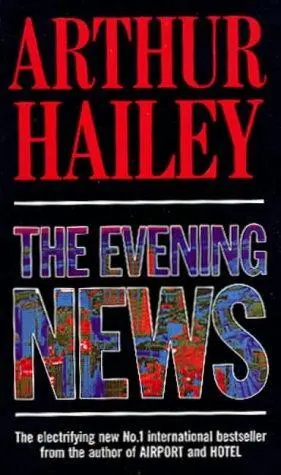
- Название:Evening News
- Автор:
- Жанр:
- Год:неизвестен
- ISBN:нет данных
- Рейтинг книги:3.5 / 5. Голосов: 2
-
Избранное:Добавить в избранное
- Отзывы:
-
Ваша оценка:
Evening News: краткое содержание, описание и аннотация
Предлагаем к чтению аннотацию, описание, краткое содержание или предисловие (зависит от того, что написал сам автор книги «Evening News»). Если вы не нашли необходимую информацию о книге — напишите в комментариях, мы постараемся отыскать её.
Evening News — читать онлайн бесплатно полную книгу (весь текст) целиком
Ниже представлен текст книги, разбитый по страницам. Система сохранения места последней прочитанной страницы, позволяет с удобством читать онлайн бесплатно книгу «Evening News», без необходимости каждый раз заново искать на чём Вы остановились. Поставьте закладку, и сможете в любой момент перейти на страницу, на которой закончили чтение.
Интервал:
Закладка:
Sloane knew that in other circumstances Jessica would object to the question as an intrusion. At this moment, though, he didn't see how he could avoid answering it.
”Our son does love music, always has, and his teachers say he's advanced for his age. As to his being a concert pianist or anything else, only time will tell.”
At length, when the questions seemed to be winding down, Leslie Chippingham stepped forward and declared the session at an end.
Sloane was immediately surrounded by some who wanted to shake his hand and wish him well. Then, as quickly as he could, he slipped away.
* * *
Miguel, having seen all the news he wanted, switched the television off and considered carefully what he had learned.
First, neither the Medellin cartel nor Sendero Luminoso was suspected of involvement in the kidnappings. At this point, that was helpful. Second, and equally helpful, was the fact that no descriptions existed of himself or the other six conspirators. If the authorities had somehow obtained descriptions, almost certainly they would have been made public by now.
All of which, Miguel reasoned, made slightly less dangerous what he proposed to do next.
He needed more money and, to get it, he must telephone tonight and arrange a meeting at, or near, the United Nations tomorrow.
From the beginning, getting sufficient money into the United States had been a problem. Sendero Luminoso, which was financing this operation, had plenty of money in Peru. The difficulty was in circumventing Peru's exchange control laws and transferring hard currency in U.S. dollars to New York, at the same time keeping the movement of money—its source, routing and destination—secret.
It had been done ingeniously, with help from a revolutionary sympathizer, a Sendero ally highly placed inside the Lima Peru, banking system. His accomplice in New York was a Peruvian diplomat, a senior aide to Peru's ambassador to the United Nations.
The amount of operating funds allocated during planning by Sendero and Medellin was $850,000. This included payments to personnel, their transportation and living expenses, leasing a secret headquarters, the purchase of six vehicles, medical supplies, the funeral caskets, payments in the Little Colombia district of Queens for covert aid and firearms, commissions in Peru and New York on money transfers, plus bribes to an American woman banker. There would also be the cost of flying the captives by private aircraft from the U.S. to Peru.
Almost all the money spent in New York had been drawn in cash by Miguel, through the United Nations source.
The way it worked was that the Lima banker surreptitiously converted the funds entrusted to him by Sendero Luminoso into U.S. dollars, $50,000 at a time. He then made transfers to a New York bank at Dag Hammarskj6ld Plaza near United Nations headquarters, where the money was placed in a special sub-account of the Peruvian UN delegation. The account's existence was known only to Jose Antonio Salaverry, the UN ambassador's trusted aide, who had authority to sign checks, and to the bank's assistant manager, Helga Efferen. The woman banker personally took care of the special account.
Jose Antonio Salaverry was another secret supporter of Sendero, though not above taking a commission on the transferred funds. Helga was sleeping regularly with the duplicitous Salaverry and both were living a lavish New York lifestyle beyond their means, partying and keeping up with the free-spending United Nations diplomatic crowd. For that reason the extra money they made by secretly channeling the incoming funds was warmly welcomed.
Whenever Miguel had needed money he telephoned Salaverry and stated the amount. A meeting was then arranged for a day or two later, usually at UN headquarters, occasionally elsewhere. In the meantime Salaverry would obtain a briefcase full of cash. Miguel would walk away with it.
Only one thing bothered Miguel. On one occasion Salaverry let slip that while not knowing the money's specific purpose or where Miguel and the others from Medellin were hiding out, he had a pretty good idea of their objective. This, Miguel realized, could only mean there had been a security leak in Peru. At this point there was nothing he could do, but it made him wary of contacts with Jose Antonio Salaverry.
Miguel glanced at the cellular phone beside him. For a moment he was tempted to use it, but knew he shouldn't and must go out. In a cafe eight blocks away was a pay phone he had used before. He checked his watch: 7:10 P.m. With luck, Salaverry would be in his mid-Manhattan apartment.
Miguel put on a topcoat and walked quickly, keeping a lookout for any sign of unusual activity in the area. There was none.
During the walk he thought again about the televised press conference with Crawford Sloane. Miguel had been interested in the reference to a book by Sloane which apparently included statements about never paying ransom and that "hostages should be expendable.” Miguel hadn't known about the book nor, he was sure, had others in the Medellin cartel or Sendero Luminoso. He doubted, though, if the knowledge would have affected the decision to abduct Sloane's family; what someone wrote for publication and what they felt and did in private were often different. But either way, it made no difference now.
Something else of interest coming out of the press conference was the description of the mocoso Sloane brat as a possible concert pianist. Without any clear notion of how he might use it, Miguel tucked the nugget of information away.
When he reached the cafe Miguel could see that only a few people were inside. Entering, he headed for the phone, which was at the rear, and dialed a number he had memorized. After three rings Salaverry answered.”Allo,” he said with a strong Spanish accent.
Miguel tapped three times on the phone mouthpiece with a fingernail, a signal that identified him. Then he said, keeping his voice low, "Tomorrow morning. Fifty cases.” A "case”was a thousand dollars.
He heard a quick gasp at the other end. The voice which came back sounded frightened.”You are crazy phoning here tonight? Where are you? Can this call be traced?”
Miguel said contemptuously, "Do you think I am a pendejo ?” At the same time he realized that Salaverry had connected him with today's events; therefore meeting him would be dangerous. Still, there was no alternative. He needed cash to purchase—among other things—the additional casket for Angus Sloane. Also, Miguel knew there was plenty left in the New York account and wanted some extra money for himself before leaving the country. He was certain that more than just commissions had stuck to Jose Antonio Salaverry's grubby fingers.
”We cannot meet tomorrow,” Salaverry said.”It is too soon, and too short notice for the money. You must not . . .”
" Do not waste my time.” Miguel gripped the phone tightly, controlling his anger, still speaking softly so others in the cafe would not hear.”I am giving you an order. Get the fifty cases early. I will come to you in the usual way, shortly before noon. If you fail, you know how furious our mutual friends will be, and their arm has a long reach.”
"No, no! There is no need for their concern.” There was a hasty, conciliatory change in Salaverry's voice. A threat of vengeance by the infamous Medellin cartel was not to be taken lightly.”I will do my best.”
Miguel said curtly, "Do better than that. I will see you tomorrow.” He hung up the phone and left the cafe.
* * *
Inside the Hackensack hideaway the three captives remained sedated under Socorro's watchful guard. Throughout the night she administered additional dosages of propofol as Baudelio had instructed; she monitored vital signs and kept a record. Shortly before daylight Baudelio awakened from his own sedated sleep. After studying Socorro's medical log he nodded approval, then relieved her.
Читать дальшеИнтервал:
Закладка:
Похожие книги на «Evening News»
Представляем Вашему вниманию похожие книги на «Evening News» списком для выбора. Мы отобрали схожую по названию и смыслу литературу в надежде предоставить читателям больше вариантов отыскать новые, интересные, ещё непрочитанные произведения.











Обсуждение, отзывы о книге «Evening News» и просто собственные мнения читателей. Оставьте ваши комментарии, напишите, что Вы думаете о произведении, его смысле или главных героях. Укажите что конкретно понравилось, а что нет, и почему Вы так считаете.