Arthur Hailey - Evening News
Здесь есть возможность читать онлайн «Arthur Hailey - Evening News» весь текст электронной книги совершенно бесплатно (целиком полную версию без сокращений). В некоторых случаях можно слушать аудио, скачать через торрент в формате fb2 и присутствует краткое содержание. Жанр: Современная проза, на английском языке. Описание произведения, (предисловие) а так же отзывы посетителей доступны на портале библиотеки ЛибКат.
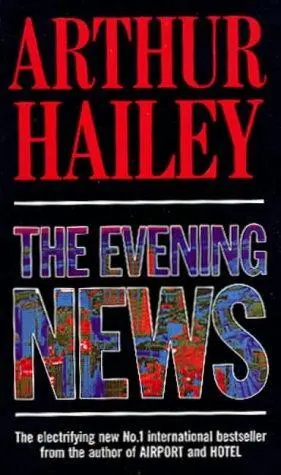
- Название:Evening News
- Автор:
- Жанр:
- Год:неизвестен
- ISBN:нет данных
- Рейтинг книги:3.5 / 5. Голосов: 2
-
Избранное:Добавить в избранное
- Отзывы:
-
Ваша оценка:
Evening News: краткое содержание, описание и аннотация
Предлагаем к чтению аннотацию, описание, краткое содержание или предисловие (зависит от того, что написал сам автор книги «Evening News»). Если вы не нашли необходимую информацию о книге — напишите в комментариях, мы постараемся отыскать её.
Evening News — читать онлайн бесплатно полную книгу (весь текст) целиком
Ниже представлен текст книги, разбитый по страницам. Система сохранения места последней прочитанной страницы, позволяет с удобством читать онлайн бесплатно книгу «Evening News», без необходимости каждый раз заново искать на чём Вы остановились. Поставьте закладку, и сможете в любой момент перейти на страницу, на которой закончили чтение.
Интервал:
Закладка:
“I'd like to hear.”
Owens, the workhorse, plodding, junior producer who had already come up with a series of ideas and whose painstaking probing had identified the terrorist as Ulises Rodriguez, consulted notes on a four-by-six card, his standard data bank.
”We were told in the Sendero Luminoso document that five tape cassettes, intended to replace our National Evening News, will be delivered to CBA—the first on Thursday of next week, the others following day by day. Unlike the tape of Mrs. Sloane which we watched tonight, those tapes will apparently be delivered to CBA only.”
"I know all that,” Chippingham said.
Jaeger smiled as Owens continued at his own pace, unperturbed.”What I'm suggesting is that we continue to hold off disclosing any CBA reaction until Tuesday. Except that on Monday, to keep interest alive, you could say there'll be an announcement the following day. Then on Tuesday that announcement would be: No further comment until we receive the tape promised for Thursday, and after that we'll make our decision known.”
"Where does all that get us?”
"It gets us to Thursday, six days from now. Then let's assume the Sendero tape comes in.”
"Okay, so it's in. What then?”
"We put it in a safe where no one can get to it, and right away go on the air—breaking into programming, generally making a big fuss—saying we've received the tape, but it's defective. It must have got damaged on the way; most of the content got wiped out. We tried to play it, then fix it, but we can't. As well as putting all that on TV, we'll feed it to the press and wire services, making sure the message is repeated to Peru, so it gets back to Sendero Luminoso.”
"I think I follow your reasoning,” Chippingham said.”But tell me anyway.”
"The Sendero gang won't know whether we're lying or not. What they will know—just as we do—is that that kind of thing can happen. So maybe they'll give us the benefit of doubt and send another tape, which could take several days . . .”
Chippingham finished the sentence for him.”. . . and would mean we couldn't possibly start their broadcasts on the day they specified.”
"Exactly.”
Jaeger added, "I guess Karl would get to this eventually, Les. But what he's saying is we'll have gained several extra days' reprieve—if it works, and it just might. What do you think?”
Chippingham said, "I think it's brilliant. It makes me glad we got the nitty-gritty shifted back to news.”
* * *
Throughout the weekend the news about Sendero Luminoso's demands and the videotape of Jessica stayed prominently in the news, with growing interest around the world. Calls flooded in to CBA requesting some comment from the network, preferably in the form of an official statement. By arrangement, all such calls were routed to CBA News. Other CDA executives and managers were advised not to respond to questions on the subject, even off the record.
At CBA News three secretaries, summoned for special weekend work, handled the calls. In every case their response to questions was the same: CBA had no comment and, no, it was not possible to say when a comment would be made.
The absence of a CBA reaction, however, did not stop others from expressing opinions. A majority view seemed to be, Hold the line! Don't give in!
A surprising number, though, saw no harm in the kidnappers' demands being met as a price of the prisoners' release, prompting Norm Jaeger to comment in disgust, "Can't those birdbrains grasp the principles involved? Don't they see that by creating a precedent we'd invite every lunatic group in the world to kidnap television people?”
On the Sunday TV talk shows "Face the Nation ... .. Meet the Press” and "This Week with David Brinkley,” the subject was debated and extracts from Crawford Sloane's book The Camera and the Truth, read aloud, particularly:
Hostages . . . should be regarded as expendable.
The only way to deal with terrorists is . . . not striking bargains or paying ransom, directly or indirectly, ever!
Within CBA, those who had promised Les Chippingham to keep secret the ultimate decision not to accept Sendero Luminoso's terms appeared to have kept their word. In fact, the only one to break it was Margot Lloyd-Mason who, on Sunday, advised Theodore Elliott by telephone of everything that had transpired the night before.
No doubt Margot would have argued she was acting correctly in keeping the Globanic chairman informed. Unfortunately, right or wrong, her action paved the way for a devastating leak.
5
Globanic Industries World Headquarters occupied a mansion style office complex set in its own private park at Pleasantville, New York, some thirty miles outside Manhattan. The intent in choosing that locale had been to remove high-level thinking and policy making from the daily pressure-cooker atmosphere of Globanic subsidiaries in industrial or financial areas. Globanic Financial, for example, which was managing the Peru debt-to-equity deal, occupied three floors of One World Trade Center in the Wall Street area.
In reality, however, many ancillary matters affecting Globanic outposts spilled into the Pleasantville headquarters. This was why, at 10 A.M. on Monday morning, Glen Dawson, a preppy young reporter for the Baltimore Star, was waiting to interview Globanic's chief comptroller on the subject of palladium. Currently the precious metal was in the news and a Globanic company owned mines producing palladium and platinum in Minas Gerais, Brazil, where labor riots were threatening supplies.
Dawson waited outside the comptroller's office in an elegant circular lounge which gave access to the suites of two other high Globanic officers, one of them the conglomerate's chairman and CEO.
The reporter, seated in an inconspicuous comer, was still waiting when one of the other office doors opened and two figures emerged. One was Theodore Elliott whom Dawson recognized instantly from photographs he had seen. The face of the other man was familiar, though Dawson couldn't place it. The two were continuing a conversation begun inside, the second man speaking.
”. . . been hearing about your CBA. Those threats from the Peru rebels put you in a difficult spot.”
The Globanic chairman nodded.”In one way, yes . . . carry on, I'll walk you to the elevator . . . We've made a decision, though it hasn't been announced. What we're not going to do is let a bunch of crazy Commies push us around.”
"So CBA won't cancel their evening news?”
"Absolutely not! As for running those Shining Path tapes, not a hope in hell . . .”
The voices faded.
Using a magazine he had been glancing through as cover for a notepad, Glen Dawson quickly scribbled the exact words he had heard. His pulse was racing. He knew he had exclusive information which countless other journalists had been seeking unsuccessfully since Saturday night.
”Mr. Dawson,” a receptionist called over, "Mr. Licata will see you now.”
On his way past her desk, he stopped and smiled.”That other gentleman with Mr. Elliott—I'm sure I've met him, but couldn't place his face.”
The receptionist hesitated; he sensed her disapproval and renewed the smile.
It worked.”It was Mr. Alden Rhodes, the Under Secretary of State.”
"Of course! How could I forget?”
Dawson had seen the Under Secretary of State for Economic Affairs once before—on television, appearing before a House committee. But all that mattered at this moment was that he had the name.
The interview with Globanic's comptroller seemed endless to Dawson, though he tried to conclude it as quickly as he could. The subject of palladium had not interested him much, anyway; he was an ambitious young man who wanted to write on subjects of wide interest, and what he had stumbled on seemed a timely ticket to a more exciting future. The comptroller, however, was unhurried in describing the history and future of palladium. He dismissed the labor unrest in Brazil as temporary and unlikely to affect supplies, which was what Dawson had principally come to find out. At length, pleading a deadline, the reporter made his escape.
Читать дальшеИнтервал:
Закладка:
Похожие книги на «Evening News»
Представляем Вашему вниманию похожие книги на «Evening News» списком для выбора. Мы отобрали схожую по названию и смыслу литературу в надежде предоставить читателям больше вариантов отыскать новые, интересные, ещё непрочитанные произведения.








Обсуждение, отзывы о книге «Evening News» и просто собственные мнения читателей. Оставьте ваши комментарии, напишите, что Вы думаете о произведении, его смысле или главных героях. Укажите что конкретно понравилось, а что нет, и почему Вы так считаете.