Gao Xingjian - Soul Mountain
Здесь есть возможность читать онлайн «Gao Xingjian - Soul Mountain» — ознакомительный отрывок электронной книги совершенно бесплатно, а после прочтения отрывка купить полную версию. В некоторых случаях можно слушать аудио, скачать через торрент в формате fb2 и присутствует краткое содержание. Год выпуска: 2001, Издательство: Harper Perennial, Жанр: Современная проза, на английском языке. Описание произведения, (предисловие) а так же отзывы посетителей доступны на портале библиотеки ЛибКат.
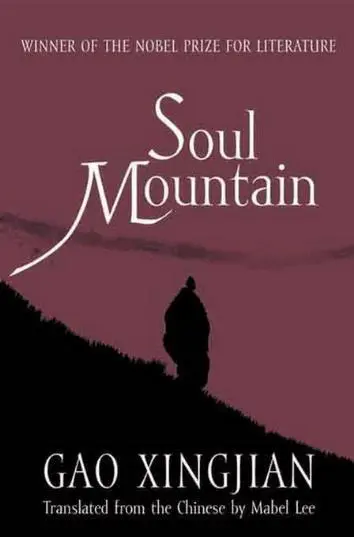
- Название:Soul Mountain
- Автор:
- Издательство:Harper Perennial
- Жанр:
- Год:2001
- ISBN:нет данных
- Рейтинг книги:5 / 5. Голосов: 1
-
Избранное:Добавить в избранное
- Отзывы:
-
Ваша оценка:
Soul Mountain: краткое содержание, описание и аннотация
Предлагаем к чтению аннотацию, описание, краткое содержание или предисловие (зависит от того, что написал сам автор книги «Soul Mountain»). Если вы не нашли необходимую информацию о книге — напишите в комментариях, мы постараемся отыскать её.
.
Bold, lyrical, and prodigious,
probes the human soul with an uncommon directness and candor and delights in the freedom of the imagination to expand the notion of the individual self.
“Chinese literature [of the future] will have to contend with the creative energy and the daring of Gao Xingjian.”
— “It is a relief to come to a book that celebrates the pleasures of literature with such gusto and knowingness.”
— “His largest and perhaps most personal work…Gao has created a sui generis work, one that, in combining story, reminiscence, meditation and journalism, warily comes to terms with the shocks of both Maoism and capitalism.”
—
Soul Mountain — читать онлайн ознакомительный отрывок
Ниже представлен текст книги, разбитый по страницам. Система сохранения места последней прочитанной страницы, позволяет с удобством читать онлайн бесплатно книгу «Soul Mountain», без необходимости каждый раз заново искать на чём Вы остановились. Поставьте закладку, и сможете в любой момент перейти на страницу, на которой закончили чтение.
Интервал:
Закладка:
“Bring some liquor,” he says, “we can drink at my house, I have a Daoist robe and all the regalia there.”
“Do you have the sword of office to drive away demons?”
“That’s essential.”
“And do you also have the command tablet for deploying spirits and despatching generals?”
“There are also gongs, drums and other things, these are all vital for Daoist rituals. I’ll put on a performance for you.”
“Excellent!” I strike the table, get up and go out the door with him. “Is your house in town?” I ask.
“It’s not far, it’s not far, I’ll just leave my pole with someone, you go on ahead and wait for me at the bus stop.”
In less than ten minutes he comes hurrying along, pointing to a bus that is about to leave and telling me to quickly get on. I hadn’t expected the bus to keep going without any stops along the way and watch through the bus window as the lingering rays of the sun pale and vanish behind the mountains. The bus arrives at the small town destination twenty kilometres from the county town, immediately turns around, and departs. It is the last bus.
This town has only the one little street, at most it is fifty metres long, and I have no idea whether or not there is an inn. He tells me to wait for a while and goes into one of the houses. I think to myself, since I am here I might as well just relax, and that bumping into such a character who turns out to be so enthusiastic is a stroke of good luck. He comes out of the house holding in both hands a washbasin half filled with bean curd and tells me to follow him.
Outside the small town, the road is a dirt road. It is already dark.
“Is your home in a village near this small town?” I ask.
“It’s not far, it’s not far,” he says.
Gradually the farm houses by the road can no longer be seen, the darkness of night has descended and in the paddy fields all around is the croaking of frogs. I am anxious, but feel awkward asking so many questions. Suddenly from behind comes the chugging of a motor, a bulldozer is upon us. He immediately calls out to it and chases it, half-running and half-jumping, and I clamber after him onto the shovel. On the dirt road, we are tossed about in this shovel like dried beans in a sieve for a distance of almost ten li . It is completely dark with just the bulldozer’s single beam of yellow light, like a one-eyed dragon, illuminating ten or twenty paces of bumpy dirt road, there is no-one else around. He talks non-stop in a loud voice with the driver in the local dialect. I can’t make out a single sentence and can only hear the deafening noise of the motor. If they are talking about butchering me, I can only let fate take its course.
Eventually we get to the end of the road and a house without a light appears — it is the house of the driver of the bulldozer. The old man opens the door of the house and gives the man a few big pieces of bean curd. Following him I feel my way in the dark along a small winding track between the paddy fields.
“Is it still a long way off?” I ask.
“It’s not far, it’s not far.” He still says the same old thing.
Luckily, he is walking in front and has to put down the washbasin of bean curd to do breathing exercises. I know that all the old Daoists know martial arts and if I were to turn and run I’d probably fall into the paddy fields and get covered in mud. The croaking of frogs becomes less frequent and the reflected light on the terraced fields behind shows that we are on a mountain. I try to think of things to say to engage him in conversation, and I ask him about the harvest and about the hard life of working in the paddy fields. He says truly, if one relies on working in the fields one needn’t think of becoming rich. This year he spent three thousand yuan converting two mu of paddy fields into fish ponds. I ask if he raises soft-shell turtles and say it’s trendy to eat them in the cities at present: some say they prevent cancer and others say they’re a tonic for men. They fetch a high price. He says he’s only put in small fingerlings, if he puts in soft-shell turtles won’t they eat all the fish? He says he’s got the cash but it’s hard to get timber — he has seven sons and only the eldest is married, the other six are all waiting to build houses so that they can have separate households. Then he’ll be able to relax, lie down, look at the stars in the sky, and enjoy the night scenery.
In the grey gloomy shadows of the mountain is a cluster of flickering lights. He says that’s where we are headed.
“I told you it wasn’t far, didn’t I?”
I think village people have their own concepts of distance.
At ten o’clock at night we finally reach a little mountain village. Incense is burning in the hall of his house, offerings to the large number of wooden and stone carvings. They are all broken and damaged, he probably rescued them from the Daoist temple some years ago when the “four olds” were destroyed and temples and monasteries were smashed. He now has them on display and there are Daoist talismans hanging on the rafters. Six sons come out, the eldest of these is eighteen and the youngest just eleven, and only the eldest married son isn’t present. His wife is a small woman, and his mother, who is eighty, is still quite agile. His wife and sons busy themselves for a while and suddenly I am an honoured guest. They fetch hot water for me to wash my face, get me to wash my feet and put on a pair of the old man’s cloth shoes, then bring me a cup of strong tea.
Before long the six sons bring out gongs, drums, small cymbals and also two gong-chimes, a large one and a small one, hanging on wooden frames. Suddenly all the drums sound and the old man comes down the stairs. He is wearing a tattered old purple Daoist robe adorned with the insignia of the Yin-Yang fish and the Eight Trigrams, and is carrying the command tablet, the sword of office and an ox horn. He looks totally different, majestic, and walks with slow measured steps. He lights a stick of incense and bows with it to the altar in the hall. Men, women and children from the village, startled by the drums and gongs, crowd at the doorway. Immediately, a bustling Daoist ritual commences. He hasn’t been leading me on.
First he takes a bowl of clear liquid and, chanting, flicks the watery liquor into the four corners of the house. When he flicks it onto the feet of the crowd at the door, everyone roars with laughter. He is expressionless — his eyes partly close, his mouth slackens and his face takes on a serious look, as if he is communicating with the spirits. At this the crowd laughs even more. Suddenly he shakes the sleeve of his Daoist robe and slams the command tablet on the table. The laughter instantly stops. He turns and says to me, “These texts are all sung: ‘Year of the Big Journey Song’, ‘Nine Stars of Good Fortune and Bad Fortune Song’, ‘Sons and Grandsons Song’, ‘Transformations Song’, ‘Arithmetic Chants for Negating the Four Inauspicious Stars’, ‘Deity Names of the Door Gods’, ‘Salutary Texts for the Sacrifices to the God of the Earth’, ‘Invoking the Spirit of the Northern Dipper’. Which would you like to hear?”
“Please sing ‘Invoking the Spirit of the Northern Dipper’ first,” I say.
“This is to protect small children and to expel illness and calamity. Which of you children will give your name and the time of your birth?”
“Get Little Doggie to come out,” someone interjects.
“No.”
A small boy sitting on the doorstep gets to his feet and quickly worms his way through to the back. Everyone breaks out laughing again.
“What are you frightened of? After old grandpa does it you won’t get sick anymore,” a middle-aged woman outside the door says.
Читать дальшеИнтервал:
Закладка:
Похожие книги на «Soul Mountain»
Представляем Вашему вниманию похожие книги на «Soul Mountain» списком для выбора. Мы отобрали схожую по названию и смыслу литературу в надежде предоставить читателям больше вариантов отыскать новые, интересные, ещё непрочитанные произведения.




Обсуждение, отзывы о книге «Soul Mountain» и просто собственные мнения читателей. Оставьте ваши комментарии, напишите, что Вы думаете о произведении, его смысле или главных героях. Укажите что конкретно понравилось, а что нет, и почему Вы так считаете.