Gao Xingjian - Soul Mountain
Здесь есть возможность читать онлайн «Gao Xingjian - Soul Mountain» — ознакомительный отрывок электронной книги совершенно бесплатно, а после прочтения отрывка купить полную версию. В некоторых случаях можно слушать аудио, скачать через торрент в формате fb2 и присутствует краткое содержание. Год выпуска: 2001, Издательство: Harper Perennial, Жанр: Современная проза, на английском языке. Описание произведения, (предисловие) а так же отзывы посетителей доступны на портале библиотеки ЛибКат.
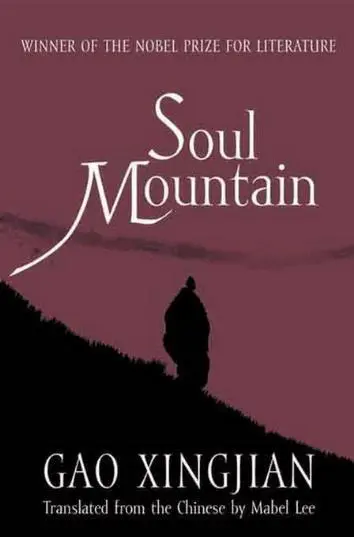
- Название:Soul Mountain
- Автор:
- Издательство:Harper Perennial
- Жанр:
- Год:2001
- ISBN:нет данных
- Рейтинг книги:5 / 5. Голосов: 1
-
Избранное:Добавить в избранное
- Отзывы:
-
Ваша оценка:
Soul Mountain: краткое содержание, описание и аннотация
Предлагаем к чтению аннотацию, описание, краткое содержание или предисловие (зависит от того, что написал сам автор книги «Soul Mountain»). Если вы не нашли необходимую информацию о книге — напишите в комментариях, мы постараемся отыскать её.
.
Bold, lyrical, and prodigious,
probes the human soul with an uncommon directness and candor and delights in the freedom of the imagination to expand the notion of the individual self.
“Chinese literature [of the future] will have to contend with the creative energy and the daring of Gao Xingjian.”
— “It is a relief to come to a book that celebrates the pleasures of literature with such gusto and knowingness.”
— “His largest and perhaps most personal work…Gao has created a sui generis work, one that, in combining story, reminiscence, meditation and journalism, warily comes to terms with the shocks of both Maoism and capitalism.”
—
Soul Mountain — читать онлайн ознакомительный отрывок
Ниже представлен текст книги, разбитый по страницам. Система сохранения места последней прочитанной страницы, позволяет с удобством читать онлайн бесплатно книгу «Soul Mountain», без необходимости каждый раз заново искать на чём Вы остановились. Поставьте закладку, и сможете в любой момент перейти на страницу, на которой закончили чтение.
Интервал:
Закладка:
Before long the door opens and the nun, holding sutra beads and clad in her nun’s robe, arrives in the hall at precisely the moment when the incense sticks in the censer burn right down. As black smoke from each stick vanishes she unhurriedly replaces it.
The Grand Marshall seems to be waking from a dream and, intrigued, is compelled to ask her about it. The nun is unmoved and replies: If you sir are thinking of usurping the state the situation will be like this. On hearing this, the ambitious Grand Marshall, who had indeed been planning to usurp the state, can’t help feeling disappointed, but doesn’t dare to act improperly and remains a loyal minister.
This story is a political warning.
You say if the ending of the story is changed it could become a morality tale to warn people against lechery and lust.
The story could also be turned into a religious tale to exhort people to convert to Buddhism.
The story can also serve as a philosophy for getting on in society — to teach the morally superior man that each day he should investigate his own personal conduct, or that human life is suffering, or that suffering in life derives from the self. Or the story could be developed into numerous intricate and complex theories. It all depends on how the storyteller tells it.
The Grand Marshall protagonist of the story has a name and surname so a great deal of textual research, examining historical texts and old books, could be carried out. But as you are not a historian, don’t have political aspirations, and certainly neither wish to become an expert in Buddhism, nor to preach religion, nor to become a paragon of virtue, what appeals to you is the superb purity of the story. Any explanation is irrelevant, you simply wanted to retell it in the spoken language.
48
In an old street of this county town, he has his calligraphy stall set up on planks laid on two wooden benches outside a general store. Strips of lucky couplets written on red glossy paper hang from the planks. “Dragon and phoenix manifest good fortune. Marriage celebrations arrive at the house”, “Going out the door happy events occur. Right on the ground silver is sprouting”, “Business flourishing as far as the four seas. Riches in abundance reaching the three rivers” — these are all old sayings which had for many years been replaced by revolutionary slogans and the sayings of Mao Zedong. There are also two strips with the words “Whoever you meet, laugh, and you will be happy. Whatever the problem, shrug it off, and misfortune will vanish”, which he could have thought up himself or which could be based on the accumulated experiences of his ancestors for getting along in society. This couplet has been written in a fancy style, the characters are well structured and look like those on Daoist talismans.
He is seated behind the planks, an old man in an old-style jacket fastened down the front who looks quite comical with his faded old army hat perched on the back of his head. I notice the Eight Trigram compass he is using as a paperweight and go up to chat with him.
“Venerable elder, how’s business?”
“All right.”
“How much does a set of characters cost?”
“Some are two yuan and some are three yuan , it costs more for more characters.”
“What about the single character for good fortune?”
“That would cost one yuan .”
“But wouldn’t that be only one character?”
“I’d have to write it for you on the spot.”
“What about drawing a talisman to dispel disaster and ward off evil?”
He looks up at me and says, “Can’t be done.”
“Why?”
“You’re a cadre, surely you know.”
“I’m not a cadre,” I say.
“But the state feeds you,” he says emphatically.
“Venerable elder,” I begin, I need to win him over, “are you a Daoist priest?”
“I gave it up a long time ago.”
“Of course,” I say. “Venerable elder, I’m asking if you know how to perform Daoist rituals.”
“Yes. But the government doesn’t allow the performance of superstitious practices.”
“Nobody’s asking you to. I’m collecting the music of scriptural texts which are sung, can you sing them? The Qingcheng Mountain Daoist Association has been re-registered and is open again, what are you afraid of?”
“That’s a big temple, we torchlight Daoists aren’t allowed to practise.”
“Folk Daoists like you are just the people I’m looking for.” My interest has been further aroused. “Would you sing a couple of pieces for me? For example, scriptures for the Daoist funeral rites or for exorcising demons and spirits?”
He sings a couple of sentences but suddenly stops, and says, “Ghosts and spirits shouldn’t be disturbed without good reason and incense has to be burnt to invite them.”
While he was singing a crowd had gathered and someone shouts out, “Hey, old man, sing us a bawdy ditty!” The crowd laughs.
“I’ll sing you a mountain love song instead,” the old man says good-naturedly, declaring his boldness.
The crowd shouts, “Good for you! Good for you!”
The old man suddenly bursts into loud song.
Young girl on the mountain picking tea,
Your young man is down cutting brushwood,
In both places startled mandarin ducks fly up,
Young girl quickly marry your young man.
The crowd shouts bravo, then someone insists, “Give us a bawdy song!”
“Come on, give us one, old man!”
The old man shrugs his shoulders and shakes his hands to the crowd. “No, no. It’s against the regulations.”
“It’s all right, old man, come on, sing us one.” The crowd clamours and the little street becomes jammed with people and bicycles can’t get through and are ringing their bells.
“But it’s you who have put me up to it!” Egged on by the crowd the old man stands up.
“Sing ‘Horse-Monkey Wearing a Skullcap Steals Into the Maiden’s Bedroom!’” Someone has picked a title. The crowd yells bravo and starts clapping.
The old man wipes his mouth and is about to sing when suddenly he says in a low voice, “The police are here!”
People turn to look — a big hat with a white brim edged with red is moving about not far behind the heads of the crowd.
“What does it matter?” the crowd says.
“What’s wrong with having a bit of fun?”
“As if the police can look after so many things?”
“It’s all very well for you to talk, you’ll be able to go off but will I be able to stay in business?” The old man sits down, refusing to give in to the crowd.
The policeman comes up and the grumbling crowd scatters. After the policeman leaves, I say, “Venerable elder, could I invite you to my lodgings to sing some songs? When you’ve closed up the stall, how about I treat you to some food and liquor?”
The old man is still excited and hasn’t calmed down, he immediately agrees, “Good! I’m closing right now, I’ll pack up my things, just wait while I return the planks.”
“I’m stopping you from making money.” I want to let him know I feel bad about it.
“It’s all right, I’m making a friend. I don’t depend on this to eat. If I come into town I sell a few pieces while I’m here to get a bit of extra cash. If I relied on selling calligraphy to eat wouldn’t I starve to death?”
I go into a restaurant diagonally opposite and order some liquor and food. Before long the old man turns up with a set of baskets on a carrying pole.
Hot food is brought and we talk and eat. He says when he was ten his father sent him to a Daoist monastery to help attend to the stove and the cooking, as promised by his father when he was ill. He can still recite the textbook Daily Lessons for Daoists which the old Daoist priest had used to enlighten him. When the old priest died he managed the monastery so he knows the procedures for all the Daoist rituals. Later on during the land reforms when the land was divided up and he could no longer practise as a Daoist priest, the government ordered him to return to his village and he worked in the fields again. I ask him about Yin-Yang and geomancy, the Five Thunder Finger Techniques, the Constellation Dances, physiognomy and massage. He explains each of these with such eloquence that I am positively elated. However the restaurant is full of peasants who are making a lot of noise. They have finished trading for the day, made a bit of money, and are drinking, playing drinking games and shouting loudly. I tell him I have a tape recorder in my bag. What he is telling me is valuable material, after eating I would like him to come to my lodgings to make some recordings, it will be quieter when he sings.
Читать дальшеИнтервал:
Закладка:
Похожие книги на «Soul Mountain»
Представляем Вашему вниманию похожие книги на «Soul Mountain» списком для выбора. Мы отобрали схожую по названию и смыслу литературу в надежде предоставить читателям больше вариантов отыскать новые, интересные, ещё непрочитанные произведения.


Обсуждение, отзывы о книге «Soul Mountain» и просто собственные мнения читателей. Оставьте ваши комментарии, напишите, что Вы думаете о произведении, его смысле или главных героях. Укажите что конкретно понравилось, а что нет, и почему Вы так считаете.