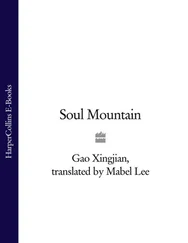
Gao Xingjian - Soul Mountain
Здесь есть возможность читать онлайн «Gao Xingjian - Soul Mountain» — ознакомительный отрывок электронной книги совершенно бесплатно, а после прочтения отрывка купить полную версию. В некоторых случаях можно слушать аудио, скачать через торрент в формате fb2 и присутствует краткое содержание. Год выпуска: 2001, Издательство: Harper Perennial, Жанр: Современная проза, на английском языке. Описание произведения, (предисловие) а так же отзывы посетителей доступны на портале библиотеки ЛибКат.
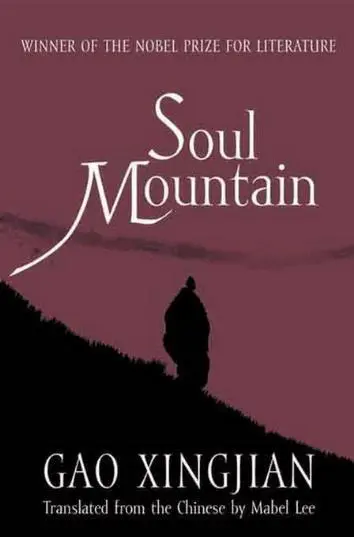
- Название:Soul Mountain
- Автор:
- Издательство:Harper Perennial
- Жанр:
- Год:2001
- ISBN:нет данных
- Рейтинг книги:5 / 5. Голосов: 1
-
Избранное:Добавить в избранное
- Отзывы:
-
Ваша оценка:
Soul Mountain: краткое содержание, описание и аннотация
Предлагаем к чтению аннотацию, описание, краткое содержание или предисловие (зависит от того, что написал сам автор книги «Soul Mountain»). Если вы не нашли необходимую информацию о книге — напишите в комментариях, мы постараемся отыскать её.
.
Bold, lyrical, and prodigious,
probes the human soul with an uncommon directness and candor and delights in the freedom of the imagination to expand the notion of the individual self.
“Chinese literature [of the future] will have to contend with the creative energy and the daring of Gao Xingjian.”
— “It is a relief to come to a book that celebrates the pleasures of literature with such gusto and knowingness.”
— “His largest and perhaps most personal work…Gao has created a sui generis work, one that, in combining story, reminiscence, meditation and journalism, warily comes to terms with the shocks of both Maoism and capitalism.”
—
Soul Mountain — читать онлайн ознакомительный отрывок
Ниже представлен текст книги, разбитый по страницам. Система сохранения места последней прочитанной страницы, позволяет с удобством читать онлайн бесплатно книгу «Soul Mountain», без необходимости каждый раз заново искать на чём Вы остановились. Поставьте закладку, и сможете в любой момент перейти на страницу, на которой закончили чтение.
Интервал:
Закладка:
“It’s more peaceful and relaxed than in the village,” he calmly replies, unaware that I’m trying to provoke him. “I also study every day,” he adds.
“May I ask what you are studying?”
He pulls out a stone-block-print copy of Daily Lessons for Daoists from under his bedding.
“I was reading some fiction because on rainy days like this I can’t work,” he explains when he sees me looking at the magazine on his bed.
“Do these stories affect your study?” I am curious to find out.
“Ha, they’re all about common occurrences between men and women,” he replies with a dismissive laugh. He says he went to senior high school and studied some literature and when there’s nothing to do he reads a bit. “In fact human life just amounts to this.”
I can’t go on to ask him whether he ever had a wife and I can’t question him about the private concerns of one who has renounced the world. The pelting rain is monotonous but soothing.
I shouldn’t disturb him any further. I sit with him for a long time in meditation, sitting in forgetfulness in the sound of the rain.
I don’t notice the rain has stopped. But when I do, I get up, thank him, and bid him farewell.
He says, “No need to thank me, it is fate.”
This is on Qingcheng Mountain.
Afterwards, at the old stone pagoda on the island in the middle of the Ou River, I encounter a monk with a shaven head wearing a crimson cassock. He presses his palms together then kneels and prostrates himself in front of the pagoda. Sightseers crowd around to watch. He unhurriedly completes his worship, removes his cassock, puts it into a black artificial leather case, picks up his umbrella, which has a curved handle and doubles as a walking stick then turns and leaves. I follow him, then, some distance from the crowd of sightseers who were watching him pray, I go up and ask, “Venerable Master, can I invite you to drink tea with me? I would like to ask your advice about some Buddhist teachings.”
He thinks about it, then agrees.
He has a gaunt face, is alert, and looks to be around fifty. His trouser legs are tied at the calves and he walks briskly so that I have to half run to keep up.
“The Venerable Master seems to be leaving for a distant journey,” I say.
“I’m going to Jiangxi first to visit a few old monks, then I have to go to a number of other places.”
“I too am a lone traveller. However, I am not like the Venerable Master who is steadfastly sincere and has a sacred goal in his heart.” I have to find something to talk about.
“The true traveller is without goal, it is the absence of goals which creates the ultimate traveller.”
“Venerable Master, are you from thi s locality? Is this journey to farewell your native village? Don’t you intend coming back?”
“For one who has renounced society all within the four seas is home, for him what is called native village does not exist.”
This leaves me speechless. I invite him into a tea stall in the park and choose a quiet corner to sit down. I ask his Buddhist name, tell him my name and then hesitate.
It is he who speaks first. “Just ask what you wish to know, there is nothing one who has renounced society cannot talk about.”
I then blurt out, “If you don’t mind, I wish to ask, Venerable Master, why you renounced society.”
He smiles, blows at the tea leaves floating in his cup and takes a sip. Then, looking at me he says, “It seems that you are not on an ordinary trip, are you on a special mission?”
“I’m not carrying out any sort of investigation but wh I saw the Venerable Master’s serene person, I was filled with admiration. I don’t have a specific goal but I still can’t abandon it.”
“Abandon what?” A smile lingers on his face.
“Abandon the human world.” After I say this, he and I both laugh.
“The human world can be abandoned just by saying it.” His response is straightforward.
“That’s indeed so,” I say nodding, “but I would like to know how the Venerable Master was able to abandon it.”
Without holding anything back, he then tells me about his experience.
He says that when he was sixteen, and still at junior high school, he ran away from home to join the revolution and fought for a year as a guerilla in the mountains. At seventeen he went with the army into the city and was put in charge of a bank. He could have become a party leader but he had his mind set on studying medicine. After graduating he was allocated work as a cadre in the city health bureau although he really wanted to continue to work as a doctor. One day he offended the branch party secretary of the hospital and was expelled from the party, branded a rightist element and sent to work in the fields in the country. It was only when the village built a commune hospital that he got to work as a doctor for several years. During this time he married a village girl and three children in succession were born. However for some reason he wanted to convert to Catholicism and when he heard that a Vatican cardinal had arrived in Guangzhou, he travelled there to ask the cardinal about the faith. He ended up not seeing the cardinal and instead came under suspicion for illicit dealings with foreigners. For this crime he was expelled from the commune hospital and he had no option but to spend his time studying traditional medicine on his own and mixing with vagrants in order to eat. One day he came to a sudden realization — the Pope was far away in the West and inaccessible, so he might as well rely on Buddha. From that time he renounced society and became a monk. When he finishes telling this he gives a loud laugh.
“Do you still think of your family?” I ask.
“They can all feed themselves.”
“Don’t you have some lingering fondness for them?”
“Those who have renounced society have neither fondness nor hatred.”
“Then do they hate you?”
He says he never felt inclined to ask about them but some years after he entered the monastery, his eldest son came to tell him he had been exonerated from the charge of being a rightist element and having illicit dealings with foreigners. If he returned he would be treated as a senior cadre and veteran revolutionary, reinstated in his former position and also receive a large sum of unpaid salary due to him. He said he didn’t want any of the money and they could divide it up. The fact that his wife and children had not been unjustly treated could be considered recompense for his devotion to the Buddhist faith and thereafter they should not come again. After that he started wandering and they had no means of knowing his whereabouts.
“Do you now seek alms along the way to support yourself?”
He says people are mean-spirited nowadays. Seeking alms is worse than begging, if you seek alms you don’t get anything. He mainly supports himself by practising as an itinerant doctor. When practising he wears ordinary clothes, he doesn’t want to damage the image of the Buddhist order.
“Does Buddhism allow this flexibility?” I ask.
“Buddha is in your heart.” His face is serene and I believe he has achieved liberation from the worries of the inner heart. He is setting out on a distant journey and he is very happy.
I ask him how he finds lodgings on the way. He says wherever there are temples and monasteries he only needs to show his monk’s certificate to be accorded hospitality. However the situation at present is bad everywhere. There are not many monks and all of them have to work in order to feed and clothe themselves: generally long stays aren’t possible because no-one is providing support. Only the big temples and monasteries get any government subsidies but these are only minuscule amounts and, naturally, he doesn’t want to add to people’s burdens. He says he’s a traveller and has already been to many famous mountains. He thinks he is in good health and that he can still walk a ten-thousand li journey.
Читать дальшеИнтервал:
Закладка:
Похожие книги на «Soul Mountain»
Представляем Вашему вниманию похожие книги на «Soul Mountain» списком для выбора. Мы отобрали схожую по названию и смыслу литературу в надежде предоставить читателям больше вариантов отыскать новые, интересные, ещё непрочитанные произведения.



Обсуждение, отзывы о книге «Soul Mountain» и просто собственные мнения читателей. Оставьте ваши комментарии, напишите, что Вы думаете о произведении, его смысле или главных героях. Укажите что конкретно понравилось, а что нет, и почему Вы так считаете.