Mircea Cărtărescu - Blinding - Volume 1
Здесь есть возможность читать онлайн «Mircea Cărtărescu - Blinding - Volume 1» весь текст электронной книги совершенно бесплатно (целиком полную версию без сокращений). В некоторых случаях можно слушать аудио, скачать через торрент в формате fb2 и присутствует краткое содержание. Год выпуска: 1996, ISBN: 1996, Издательство: Archipelago, Жанр: Современная проза, на английском языке. Описание произведения, (предисловие) а так же отзывы посетителей доступны на портале библиотеки ЛибКат.
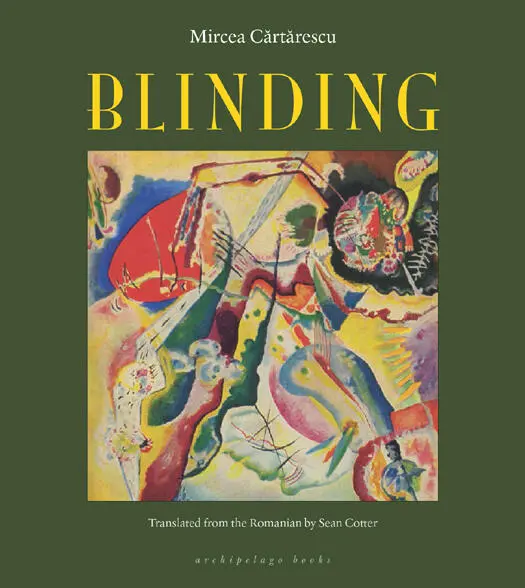
- Название:Blinding: Volume 1
- Автор:
- Издательство:Archipelago
- Жанр:
- Год:1996
- ISBN:9781935744856
- Рейтинг книги:3 / 5. Голосов: 1
-
Избранное:Добавить в избранное
- Отзывы:
-
Ваша оценка:
Blinding: Volume 1: краткое содержание, описание и аннотация
Предлагаем к чтению аннотацию, описание, краткое содержание или предисловие (зависит от того, что написал сам автор книги «Blinding: Volume 1»). Если вы не нашли необходимую информацию о книге — напишите в комментариях, мы постараемся отыскать её.
was one of the most widely heralded literary sensations in contemporary Romania, and a bestseller from the day of its release. Riddled with hidden passageways, mesmerizing tapestries, and whispering butterflies,
takes us on a mystical trip into the protagonist’s childhood, his memories of hospitalization as a teenager, the prehistory of his family, a traveling circus, secret police, zombie armies, American fighter pilots, the underground jazz scene of New Orleans, and the installation of the communist regime. This kaleidoscopic world is both eerily familiar and profoundly new. Readers of
will emerge from this strange pilgrimage shaken, and entirely transformed.
Blinding: Volume 1 — читать онлайн бесплатно полную книгу (весь текст) целиком
Ниже представлен текст книги, разбитый по страницам. Система сохранения места последней прочитанной страницы, позволяет с удобством читать онлайн бесплатно книгу «Blinding: Volume 1», без необходимости каждый раз заново искать на чём Вы остановились. Поставьте закладку, и сможете в любой момент перейти на страницу, на которой закончили чтение.
Интервал:
Закладка:
But Catana didn’t seem to care about the beautiful room he shared with his shrewish wife. He had been building, for a lifetime, another room, one that would ferry him into eternity like an ark of ivory. The tenants found out about his obsession from Madame Catana herself, who, in one of her ferocious drunken rampages, had dumped dishwater on the old man and screamed her head off at him for stealing her youth and wasting her parents’ fortune. “He thinks he needs a tomb! A tomb! When we are barely getting by! You go around in rags from Dămăroaia, ay, saving money for a tomb? You rigged the scales in your shop and you’re thinking about the world to come? Haoleu, when the demons get you and shoot hot oil up your ass, the worms will eat you up and your tomb, too. You sinning bastard! Good people, do you know what this murderer has done with his life? Him, the little lamb right here? He killed a girl he was living with, when he had a shop in Buzău, he set her on fire and kept the ashes, and every morning he ate her with a spoon, from a bowl as big as this, and after this bastard finished he went to the police, and they beat him stupid for a week, even though he’d confessed, and he did twelve years in prison, look, this bastard, the one you see right here in the doorway. You say I’m crazy, but if you knew what this man did to my life, it’s a wonder he didn’t put me in the grave, too. And you need a tomb? Pink marble? Stone angels? People, it would have been better if he was a drunk, if he drank all the money, then we’d know what to do, but no, he’s spent forty years saving up for a tomb. For the past twenty years the masons have been feasting on his coins. Do you know what this pig has on his plot at Bellu? It’s no tomb, people, it’s a palace. You could drive a cart through there. And the statues! and the doilies! and the rooms! so many! A whole nation of people could stay there until the last judgment. Couldn’t you have built a row of houses, so we could live like regular people, put clothes on your children, the mob you made, that you were so good at, you with the goods, me with the bads. Why couldn’t you do that? Why heat your tomb if you’re going to croak? If they’ll throw you in the street for dogs to eat? If you’re in a marble tomb, what’s the difference? What are you going to know about it? That you died, idiot, you’ll be dead, that’s all you’ll know. Kicked the bucket! Thank God I’m younger than you. Tomorrow, the day after, I’m going to lay you out on the table in the dining room, stiff and cold, and man I’m gonna laugh. I’m going to dance a jig around you, just like this! Hup hup! And I’m going to grab your nose and pull your cock out for everyone to see, you better believe it. Murderer! Idiot! Do you really think you’ll ever see the inside of your marble tomb? When I see my own neck. Count yourself lucky if I bury you under the elderberries. You, my whole life you poisoned my soul, motherfucker!” The tenants watched them like a freak show and laughed, and the venerable old man nodded with clenched eyes and said gently: “That’s right, what she says is right, good people. Forgive me, good people,” but his words were drowned out by other insults from his wife.
A few years later, Maria found out that the delirious old woman wasn’t lying — on the contrary, when she reduced Catana’s tomb to a palace, her obtuse mind had not been fully able to grasp reality. When the old man died, in 1962, as a Christian, with a priest and candles in the final triumph, he was mourned by the entire courtyard as a neighborhood saint. He left nothing behind except the houses and a 50 bani coin in a felted box, on the table with the fabulous fringe. Despite her ferocious promises to the contrary, the landlady held the funeral with full pomp and circumstance, following the most impressive slum traditions. A procession of six gypsies playing funeral marches on bent and dented brass instruments and a big drum walked behind the elaborately carved wooden hearse with windows that were thin from being polished so much, drawn by horses in black masks. Some of the gypsies wore funeral banners discolored by weather, and another was hanging at the courtyard entrance. Then came Madame Catana and the rest of the family, in heavy, black clothes, holding on to the back of the hearse and wailing, followed by the whole crowd from the yard and the street, eating sunflower seeds and chattering. Maria had heard from Crazy Leana, who sometimes stopped by the new house on Ştefan cel Mare, that Catana had died, and she came to see him off on his final journey, and to see her former neighbors. She was already thin and sour on life. She saw Catana in his white, satin-lined coffin, among the crowns of crepe-paper roses: it was like God himself was being buried. The funeral train took Colentina to Obor, then Moşilor, passed through the center of the city and, five hours later, reached the alleyways stuffed with final resting places, the Bellu cemetery. The stone houses decorated with marble and tarnished bronze, statues and oval pictures, their windows and doors barred, gave the place the impression of a city where a different species dwelled, with different needs and different bodies than human beings. Sad cypresses offered up their leaves toward the sky. The hearse twisted and turned through the graves and tombs, and arrived in front of a strange construction.
It was a pink house, glistening nostalgically in the twilight. In that wet November, evening had come quickly, aided by gloomy, yellow clouds. The tomb had an austere triangular pediment, with a round window in the center. The door was framed by two niches, with two statues of polished brass. What human beings did those bronzes represent? What humility before the mystery of death? The statues were silently screaming, mad with horror or a terrible laceration of the bowels. You could see the roofs of their mouths and the molars at the backs of their throats, and there, behind their uvulae, they turned pink (in the twilight, perhaps) as though their throats and gullets were made of flesh, as if the terrible bronze encased still-living human bodies, with soft, palpitating organs, blood beating through the ducts of their veins, and minds feeling endless agony in every neuron. The bronze statues were frozen in defensive, blocking gestures, their fingers sprawled, their ribs visible, and their paunches clenched, desperate to break off their pedestals and run away through the endless cemetery. Only once, when the priest sprinkled everything with holy water did the strange building lose its enchantment. Rubbing their eyes, the people saw that, in fact, the two bronze Adonises were angels. Their mouths were open in song, and their eyes were lifted toward heaven. The service was long and tedious, and afterward (darkness had fallen completely, irradiated by the temple’s rosy crystal) the coffin was lowered down the steps of the tomb. A blackened iron door, very heavy and well oiled, opened into an empty room and a stone staircase leading to a basement. The pallbearers carefully shuffled the coffin on their shoulders, and the relatives followed. Maria thought that there would not be room for anyone else. She, in any case, did not want to go in. She had never liked funerals, or priests. She did not believe in the afterlife, or rather, she never thought about it. “Did anyone ever come back and say what it’s like? If you’re okay with yourself in your soul, there’s no reason to be afraid. Whatever will be will be.” But little by little, the crowd around her thinned out, everyone else climbed down, and there seemed to still be room inside. Soon, she was alone, in the creepy darkness and cold. The irregular architecture of the surrounding tombs, now pitch black, bit into the sky like the teeth of a saw. Here and there a statue (an angel blowing a trumpet with its wings outstretched) made a brown profile against the yellow dregs of the horizon. The cypresses looked like they were painted with bitumen, and their sinister branches shook. Maria, frozen with fear, climbed down the stairs.
Читать дальшеИнтервал:
Закладка:
Похожие книги на «Blinding: Volume 1»
Представляем Вашему вниманию похожие книги на «Blinding: Volume 1» списком для выбора. Мы отобрали схожую по названию и смыслу литературу в надежде предоставить читателям больше вариантов отыскать новые, интересные, ещё непрочитанные произведения.










Обсуждение, отзывы о книге «Blinding: Volume 1» и просто собственные мнения читателей. Оставьте ваши комментарии, напишите, что Вы думаете о произведении, его смысле или главных героях. Укажите что конкретно понравилось, а что нет, и почему Вы так считаете.