Mircea Cărtărescu - Blinding - Volume 1
Здесь есть возможность читать онлайн «Mircea Cărtărescu - Blinding - Volume 1» весь текст электронной книги совершенно бесплатно (целиком полную версию без сокращений). В некоторых случаях можно слушать аудио, скачать через торрент в формате fb2 и присутствует краткое содержание. Год выпуска: 1996, ISBN: 1996, Издательство: Archipelago, Жанр: Современная проза, на английском языке. Описание произведения, (предисловие) а так же отзывы посетителей доступны на портале библиотеки ЛибКат.
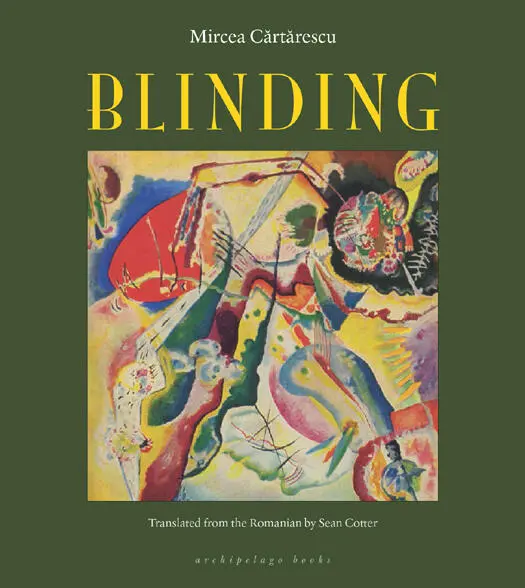
- Название:Blinding: Volume 1
- Автор:
- Издательство:Archipelago
- Жанр:
- Год:1996
- ISBN:9781935744856
- Рейтинг книги:3 / 5. Голосов: 1
-
Избранное:Добавить в избранное
- Отзывы:
-
Ваша оценка:
Blinding: Volume 1: краткое содержание, описание и аннотация
Предлагаем к чтению аннотацию, описание, краткое содержание или предисловие (зависит от того, что написал сам автор книги «Blinding: Volume 1»). Если вы не нашли необходимую информацию о книге — напишите в комментариях, мы постараемся отыскать её.
was one of the most widely heralded literary sensations in contemporary Romania, and a bestseller from the day of its release. Riddled with hidden passageways, mesmerizing tapestries, and whispering butterflies,
takes us on a mystical trip into the protagonist’s childhood, his memories of hospitalization as a teenager, the prehistory of his family, a traveling circus, secret police, zombie armies, American fighter pilots, the underground jazz scene of New Orleans, and the installation of the communist regime. This kaleidoscopic world is both eerily familiar and profoundly new. Readers of
will emerge from this strange pilgrimage shaken, and entirely transformed.
Blinding: Volume 1 — читать онлайн бесплатно полную книгу (весь текст) целиком
Ниже представлен текст книги, разбитый по страницам. Система сохранения места последней прочитанной страницы, позволяет с удобством читать онлайн бесплатно книгу «Blinding: Volume 1», без необходимости каждый раз заново искать на чём Вы остановились. Поставьте закладку, и сможете в любой момент перейти на страницу, на которой закончили чтение.
Интервал:
Закладка:
13
MARIA left the U-shaped courtyard and walked into autumn. Above the yard, the sky was an intense azure with milky clouds frozen in curls. The green and pink oleanders painted their blue shadows on the whitewashed wall of the left-hand house, and further away, the semi-gypsy population sweated in the smell of roux, like fleshy growths on a coral reef. Once the courtyard gate closed, however, all of it stopped — the boiling, the smells, even the sounds — and Maria found herself on Silistra, walking through dead leaves and puddles that reflected the stormy sky. A wet, cold wind blew, seeming to blur the houses and passersby. But she was not cold. She continued walking in her summer dress among people with umbrellas and raincoats. An old woman with an empty bag over her head and shoulders (since cruel, ice-cold drops had begun to drizzle on the pavement) glanced at her strangely and went into a nearby courtyard. A glazier stopped at another gate, setting down his green burden, which reflected the sadness and desolation of the day.
How strange, how bright that cheap lipstick was, candy-flavored, on her young lips, below her chestnut eyes! Under the sky racing overhead like unraveling black smoke, she was the only thing with any color or life. Two eyes without mascara and a mouth in the shape of a heart. A few curls done with an iron fluttering under a scarf. Maria smiled. Her smile was good and honest, like the white collar on her pleated, polka-dot summer dress, the one we know, the only summer dress she could afford as a young working woman. She didn’t want to think about Costel yet, so she thought (and smiled) about her sister, Vasilica, and their old godmother, how one day the godmother, who couldn’t see well any more, put scouring powder on the cakes instead of powdered sugar (she had made some “Aunt Mimis,” her specialty, with a delicious cream center that smelled like lemon), and Vasilica had bitten a scented rhombus, and the powder scratched her teeth, but she didn’t dare say anything until her godmother took a bite and said, “Oh no, Vasilica! how silly, I put Comet on the squares instead of powdered sugar!” — and the two of them laughed until they fell over. A laugh slipped out of Maria, too, in the middle of the street. What a nut, the old godmother! But so was her whole family. Her godfather, Nenea Butunoiu, had been a merchant in his time. He’d had a haberdashery in Bucharest Noi. Now he repaired accordions and fumed about the Russians — only at home, of course, and in a whisper. As for the young godmother and her daughter Aura, Maria couldn’t stand them. She had never met more disgusting people, or seen more perfidious looks than those from their cloudy-green eyes, mother and daughter alike, two girls from the wrong side of the tracks primped up like they were something special. Marian, Vasilica’s boy, always wound up with a scratch under his eye when his godparents brought Aura over. A picture in her sister’s house showed the two children standing, holding hands in an odd way (Marian’s right hand in Aura’s left, meeting diagonally between them), Marian smiling foolishly and Aura frowning, with a face of unspeakable evil for a girl only five years old. Aura’s other hand held a hoop and her hair had a silly pompom, and Marian clutched a striped rubber ball to his chest.
How had she managed to end up with this brood of relatives? When had she had the time to surround herself with these people, who lived in Bucharest long before she came? Maria had arrived in the city during the war, when she found a tailoring apprenticeship with the Verona shop, at the same time as Vasilica. She had left behind her native Tântava. The shop was behind the ARO block, beside the white house with the veranda and multicolored marquee that belonged to the famous variety actress, Mioara Mironescu. The two little peasant girls, fifteen-year-old Maria and seventeen-year-old Vasilica, slept together upstairs in a single bed. They were shattered after hours and hours at the machines, and they dreamed all night of Singer machines and elegant young men, civil servants with panama hats and bamboo canes. They would wake up embracing each other, cheek to cheek, eager to go back into the bustling big city. They had Sundays off, and then they walked the streets, among apartment blocks framed by boulevards and lines of cars and carriages. They gazed, amazed and enchanted, at the stores, with their windows full of furniture and jewelry, at the dizzying heights of the Telephone Palace (how they wanted to be telephone operators! — in American movies the operator always met a young millionaire), at the offices where dusty youths at Yost typewriters hammered out letters and all kinds of documents, at the elegant old ladies who wore minks around their throats and looked like vamps from the movies. In the evenings, garlands of lights adorned the entryways to beer gardens, movie houses, and theaters. The girls toured these wonders with wide eyes. They were not part of their world, nor did the girls wish they were, since they could go to the cheap movie theaters in the neighborhood, full of workers who spit sunflower seeds and whistled when the boy kissed the girl on screen and sometimes, as though by accident, laid a heavy hand, smelling of lathe grease, on the thigh of the girl next to them. Often these idiots made the sisters change places in the dark hall, creaking across the wooden floor washed with petrosin. They also went to fairs, on the edge of town, crossing the rusty railway tracks and the fields of chamomile, to squeeze into a sea of people in front of childishly painted billboards, with wild animals and snake swallowers, spider-women, dwarves, and shameless girls who showed men their white, bare breasts, covered with moles … Children wore fezzes made of glossy cardboard, and blew colored trumpets. The sisters would buy themselves a bag of popcorn or a candy necklace, and like children, they enjoyed the whole motley day — their own youth, the freshness of the world. What did everyone back in the country know of these wonders? Nothing. Work and more work was all they had known their entire lives. Not even a year had passed since the sisters had become Bucharesteans, and they already despised the peasants, those who had “their head in a sack,” and they felt sorry for their sister, Anica, who had married in Tântava and would have to stay there all her life, with her cow and pig, working rows of tomatoes and green peppers. Once they’d had enough of wandering through the fair, the girls would ride the chain carousel, screaming until their throats gave out, spinning the world around them until they thought they would collapse. A boy on a chair nearby would catch the chair as they passed, then let it go, making them sway wildly, while they laughed until they cried and everything around them turned into a whirl of colors. In the evenings, they’d go to a cheap beer garden, one with different kinds of happy people, and they’d eat steaming mititei sausages in the hint of a distant accordion brought by the wind. They’d come home arm-in-arm, giggle up the spiral staircase and return to their bed with iron slats and the corner basin, their empty but intimate room, with a window to let the moon in. The girls would stay up late, talking under the sheet, in the blue, moonlit air that made their faces strange and pale, like in the movies. Maria was not pretty, but she was prettier than Vasilica. Her sister had the keen and cunning face of a squirrel, which no amount of effort would have made resemble the movie idols of the 40s, whom the two of them saw every day, on billboards over the theaters and in the newspaper ad pages. Maria decided in secret that Vasilica would never be more than a cute seamstress who charmed her upscale clients.
Now she looked through the back window of tram number 4’s last car as it rang through the smoke-filled intersection at Obor. A railway man who held a bundle of stove pipes in the middle of the crowd kept pushing her and blew the stench of sausages into her face. Because the tram was so full, people argued and whined like carnival barkers, but Maria — looking absently at the bars full of peasants with woven bags and braids of garlic, and at the stores selling windows and mirrors, or keys, or hardware, or fabric — paid them no attention. Stoically, she bore the patterned iron pipe stuck in her shoulder, and in the roar of horse-drawn trucks and trams crisscrossing and stopping sometimes nose to nose, throwing pale sparks into the dark air, she jumped from one thought to another, chilled by the raindrops pelting the window.
Читать дальшеИнтервал:
Закладка:
Похожие книги на «Blinding: Volume 1»
Представляем Вашему вниманию похожие книги на «Blinding: Volume 1» списком для выбора. Мы отобрали схожую по названию и смыслу литературу в надежде предоставить читателям больше вариантов отыскать новые, интересные, ещё непрочитанные произведения.












Обсуждение, отзывы о книге «Blinding: Volume 1» и просто собственные мнения читателей. Оставьте ваши комментарии, напишите, что Вы думаете о произведении, его смысле или главных героях. Укажите что конкретно понравилось, а что нет, и почему Вы так считаете.