Mircea Cărtărescu - Blinding - Volume 1
Здесь есть возможность читать онлайн «Mircea Cărtărescu - Blinding - Volume 1» весь текст электронной книги совершенно бесплатно (целиком полную версию без сокращений). В некоторых случаях можно слушать аудио, скачать через торрент в формате fb2 и присутствует краткое содержание. Год выпуска: 1996, ISBN: 1996, Издательство: Archipelago, Жанр: Современная проза, на английском языке. Описание произведения, (предисловие) а так же отзывы посетителей доступны на портале библиотеки ЛибКат.
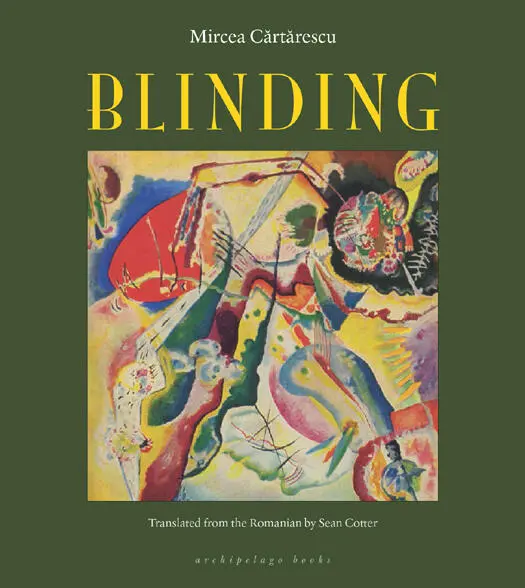
- Название:Blinding: Volume 1
- Автор:
- Издательство:Archipelago
- Жанр:
- Год:1996
- ISBN:9781935744856
- Рейтинг книги:3 / 5. Голосов: 1
-
Избранное:Добавить в избранное
- Отзывы:
-
Ваша оценка:
Blinding: Volume 1: краткое содержание, описание и аннотация
Предлагаем к чтению аннотацию, описание, краткое содержание или предисловие (зависит от того, что написал сам автор книги «Blinding: Volume 1»). Если вы не нашли необходимую информацию о книге — напишите в комментариях, мы постараемся отыскать её.
was one of the most widely heralded literary sensations in contemporary Romania, and a bestseller from the day of its release. Riddled with hidden passageways, mesmerizing tapestries, and whispering butterflies,
takes us on a mystical trip into the protagonist’s childhood, his memories of hospitalization as a teenager, the prehistory of his family, a traveling circus, secret police, zombie armies, American fighter pilots, the underground jazz scene of New Orleans, and the installation of the communist regime. This kaleidoscopic world is both eerily familiar and profoundly new. Readers of
will emerge from this strange pilgrimage shaken, and entirely transformed.
Blinding: Volume 1 — читать онлайн бесплатно полную книгу (весь текст) целиком
Ниже представлен текст книги, разбитый по страницам. Система сохранения места последней прочитанной страницы, позволяет с удобством читать онлайн бесплатно книгу «Blinding: Volume 1», без необходимости каждый раз заново искать на чём Вы остановились. Поставьте закладку, и сможете в любой момент перейти на страницу, на которой закончили чтение.
Интервал:
Закладка:
When I actually saw it, behind the wrought-iron railings, in the U-shaped courtyard, it seemed surprisingly narrow. In my memory, in dream and dream-memory, it was different, vast and teeming with people. In fact, it was not more than six or seven meters wide. Half of its flat and sunny façade was taken up by a blue pathetic-looking Mercedes from the 70s, battered and repaired. I shook with excitement. I was seeing what I thought I never would. The building that shared the yard was irregular, as if its three parts, each with a second floor, had been erected at different times. The right side, where Madame Catana and the old man lived, was like a country house, painted blue, with wood-framed windows, while the one in back was a middle-class house, yellow and flaking, with a wooden hallway upstairs (where the ship was, and Elvira and Uncle Nicu Bă). The dirty-white painted hall also went along the left side of the building, supporting the roof with its wooden pillars. Through the pillars I saw windows with deep-blue wooden shutters. The shutters were torn from their hinges, and the windows were broken, some walled over, and others covered with newspapers yellow with age. Below, a burgundy door opened in the blue wall, the scarlet door of my nightmares, present like a seal of blood over everything I have ever written, and everything my mind describes in sleepless afternoons.
Shaken, with my hair standing on end, I opened the wrought-iron gate and entered the yard. There was no one there. Bright clouds were motionless in the sky. In one corner, a pink oleander, the only living thing in the empty courtyard, exuded a wild smell. I stopped in front of the deep-red door. I leaned my head against it for a moment. I felt like I was draining out of myself, flowing over the courtyard tiles like a shadow. The door was not locked, so I opened it halfway and went in. I was no longer in reality. I knew, I recognized everything. I knew the stairway, also scarlet, that smelled like detergent and Clorox. I walked upstairs slowly, ready at every step to faint. Emotion eclipsed me like an overwhelming pain, one so vast that it became a kind of joy. I reached the next story, the gallery with plank floors, worn by time. I opened another door between shattered windows. I entered a vestibule I knew, one I remembered with a new wave of adrenaline in my arteries. There were three doors here, in a thick green light, where gnats swarmed. I did not hesitate for a moment, because it was the front door, also scarlet, it was the wallpaper with flower baskets, moldy and ripped from the walls, but still recognizable. I opened the door and entered the room. I stopped on the threshold, squinting from so much light.
A blinding morning sun poured into the room, and in the intolerable light, at its center, I saw my mother, young and naked, sitting on the bed, the lupus mark on her hip, her hair tossed onto her shoulders, looking at me with a welcoming smile.
Part Two
12
THE peacock and the peahen, as though scared for their lives, pecked grains of barley from Maria’s hand, to the indignation of Marinache, the turkey, who, watching them with one eye, turned the beads that hung over his beak purple. From time to time he stared, with the same one eye, at the summer sky packed with white clouds, and then his sluggish red eye sparkled like a drop of water. The three birds lived together, because there was no other option, in the slums on the edge of town, in the few U-shaped square meters covered with bird droppings. And if the pair of peacocks, plated in metallic green and deep blue, were the local favorites, the pride of the courtyard, the turkey, in contrast, was heckled and mocked for his belligerent attitude. With a coquettish crown of feathers on her crest, Pompilia walked delicately on her coral feet. She was constantly watching Păunaş, waiting to contemplate, again and again, the cosmogonic spectacle of his spread tail, sprinkled with blue eyes. The courtyard locals were of limited imagination when it came to baptizing the imperial egg makers. Pompilia was a hooker from a neighboring yard, who went out every day at dusk with a purse on her shoulder to hunt for men; as for Păunaş, there were dishcloths on almost everyone’s stoves, so crude you’d think blind people had sewn them, with shepherds playing the pipes or a little peasant girl singing at the stove, around which crooked letters misspelled: “Wherefer theirs pees, God is pleased” or “Păunaş in tha forist, tell me who I love best.” The turkey was pot-bellied and as dirty as Marinache, the gypsy accordion player who rode the tram, pretending to be blind and deafening the travelers, repeating the same saccharine waltzes from the Colentina River to Dristor. He kept his eyes rolled back, so two yellow stripes, like ivory, showed between his eyelids swollen with conjunctivitis. When he left the tram, he didn’t open his eyes again until he had gone around the corner.
The birds watched Maria with their jewel-colored eyes — emerald (the peahen), sapphire, and ruby. She laughed and called to them, or let a “goddamn it” slip out when one pecked her plump, girly fingers. With her permed hair and bold eyes, wearing a white blouse with a lace collar and no cleavage showing, a pleated knee-length skirt, coarse threaded stockings and poor kid’s shoes, and carrying an oval, scarlet bag, held at the hip by a strap that crossed her breasts diagonally, there was something virginal and decent about her. She was like a character from a 1950’s movie (and this was actually anno domini 1955), a black-and-white girl performing on a screen with scratched lines, in a theater that smelled like sunflower seeds and petrosin. Her smile and her earnest, strong eyes lit up the theater, with its broken chairs, unshaven hicks, rats, and the stench of urine from the toilets near the screen.
Maria had just gone into town. On weekdays, the roar of the Donca Simo rug factory followed her day and night, but on Sundays it was quiet. She slept in, upstairs in her bedroom where she cooked and washed. She looked at the sky through the curtain embroidered here and there with red flowers, and, if the sun was strong in her room, she would stand up to stretch and laugh, dazed by dreams and loneliness. She listened a while to the noises in the courtyard — Gioni’s barking, the screaming peacocks, the gypsies squabbling, the boors fighting and the creaking water pump — and then she got ready to go out. She washed her face, armpits, and breasts in the sink, put on her one nice shirt, and dug around in her bag for the cardboard package of cheap lipstick the color of a box of chocolates. She put it on her lips, holding them in the shape of a heart, then spreading it well by rubbing her lips together. The powder looked even more pathetic, and smelled even more like cat urine, but Maria liked it — all of the women she worked with put on this popular powder when they went out, so they all thought it was normal. With a little toilet water from a bottle shaped like a toy car, Maria could step into summer splendor. But she’d only waste the perfume for a date or a movie. When she went to the market or the factory, she remembered what Victoriţa the pickpocket had told her, when she poked her hollow cheeks into her room and wrinkled her nose at the little half-full car on the sill: “What in God’s name, forgive me, is this crap you’re always putting on? Listen to me, soap and water is the best perfume. You know why those ladies and countesses all wore perfume? Because they didn’t wash. Because they stank. Because they had to hide the smell of sweat.” Victoriţa had one cheek that was okay and plump, but the other was just skin stretched over her jaw bone, withered by some disease. Maria wanted to vomit just looking at her. She’d be out a few years, and they’d catch her with her hand in someone’s pocket, and they’d throw her back in prison. She had no husband and no kids, but she was extraordinarily happy. Through the thin walls, Maria could hear her singing with the radio all day, songs by Angela Moldovan:
Читать дальшеИнтервал:
Закладка:
Похожие книги на «Blinding: Volume 1»
Представляем Вашему вниманию похожие книги на «Blinding: Volume 1» списком для выбора. Мы отобрали схожую по названию и смыслу литературу в надежде предоставить читателям больше вариантов отыскать новые, интересные, ещё непрочитанные произведения.











Обсуждение, отзывы о книге «Blinding: Volume 1» и просто собственные мнения читателей. Оставьте ваши комментарии, напишите, что Вы думаете о произведении, его смысле или главных героях. Укажите что конкретно понравилось, а что нет, и почему Вы так считаете.