Péter Nádas - Parallel Stories
Здесь есть возможность читать онлайн «Péter Nádas - Parallel Stories» весь текст электронной книги совершенно бесплатно (целиком полную версию без сокращений). В некоторых случаях можно слушать аудио, скачать через торрент в формате fb2 и присутствует краткое содержание. Год выпуска: 2011, Издательство: Farrar, Straus and Giroux, Жанр: Современная проза, на английском языке. Описание произведения, (предисловие) а так же отзывы посетителей доступны на портале библиотеки ЛибКат.
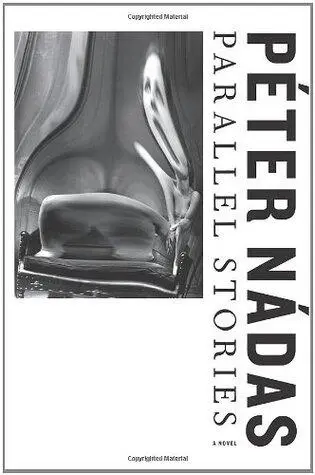
- Название:Parallel Stories
- Автор:
- Издательство:Farrar, Straus and Giroux
- Жанр:
- Год:2011
- ISBN:нет данных
- Рейтинг книги:5 / 5. Голосов: 1
-
Избранное:Добавить в избранное
- Отзывы:
-
Ваша оценка:
Parallel Stories: краткое содержание, описание и аннотация
Предлагаем к чтению аннотацию, описание, краткое содержание или предисловие (зависит от того, что написал сам автор книги «Parallel Stories»). Если вы не нашли необходимую информацию о книге — напишите в комментариях, мы постараемся отыскать её.
Three unusual men are at the heart of
: Hans von Wolkenstein, whose German mother is linked to secrets of fascist-Nazi collaboration during the 1940s; Ágost Lippay Lehr, whose influential father has served Hungary’s different political regimes for decades; and András Rott, who has his own dark record of mysterious activities abroad. The web of extended and interconnected dramas reaches from 1989 back to the spring of 1939, when Europe trembled on the edge of war, and extends to the bestial times of 1944–45, when Budapest was besieged, the Final Solution devastated Hungary’s Jews, and the war came to an end, and on to the cataclysmic Hungarian Revolution of October 1956. We follow these men from Berlin and Moscow to Switzerland and Holland, from the Mediterranean to the North Sea, and of course, from village to city in Hungary. The social and political circumstances of their lives may vary greatly, their sexual and spiritual longings may seem to each of them entirely unique, yet Péter Nádas’s magnificent tapestry unveils uncanny reverberating parallels that link them across time and space.This is Péter Nádas’s masterpiece — eighteen years in the writing, a sensation in Hungary even before it was published, and almost four years in the translating.
is the first foreign translation of this daring, demanding, and momentous novel, and it confirms for an even larger audience what Hungary already knows: that it is the author’s greatest work.
Parallel Stories — читать онлайн бесплатно полную книгу (весь текст) целиком
Ниже представлен текст книги, разбитый по страницам. Система сохранения места последней прочитанной страницы, позволяет с удобством читать онлайн бесплатно книгу «Parallel Stories», без необходимости каждый раз заново искать на чём Вы остановились. Поставьте закладку, и сможете в любой момент перейти на страницу, на которой закончили чтение.
Интервал:
Закладка:
Whenever I felt like this, it was no use holding on to Róza’s strong hand. But I tried not to let her notice any change in me.
This was the last thing I wanted to talk about with anyone, the air, because I saw that the air did not hinder anyone else in any way, maybe they didn’t even feel the air resisting their progress.
People were downright glad of it, positively cheerful, that they could be moving.
Róza would simply grab her large kerchief and run.
Grandfather would begin to whistle, the dog would start fooling around, scurry to get his leash, ready to go, and Grandmother would hail her cab as if going to conquer the city.
Something was going to happen to us.
I was afraid of everything that might happen beyond the high fence around our house.
Things were a little better if we took the bus, which we did when making jam for the winter, cleaning windows, or doing the wash did not give Róza enough time to walk with me. Then the bus instead of me had to overcome infinity and all those things in the air that hindered me. Then it was easier to believe that I might soon return time.
The bus was always crowded.
This bus, the number 37, had one of its terminal stops at the corner of Kerepesi Road; it went to Erzsébet Square and from there over to Buda. It reached our stop jam-packed. In the evenings I saw it go by empty among the dark trees. Its passengers were from Kőbánya or country people from the train station. If we wanted to get on, we had to squeeze between strange legs and bellies. The pressure increased at every stop. Everybody wanted to get on but nobody got off and the conductor never stopped yelling. Róza could not protect me from the pressure of strange bodies. Adults could hold on because they were tall enough to reach the straps, but I was being rattled, blind and deaf in the midst of living flesh and powerful odors.
I also had to be sure people didn’t knock the sheet music out of my hands.
Yet whenever we walked, I could not help telling Róza that it would be better on the bus.
Getting off was simply impossible. We had to get off at the corner of István Road, but sometimes we couldn’t. Or getting off required merciless pushing and shoving forward, which I could not do without feeling ashamed of myself. People around us were yelling at the top of their voices, the conductor could not calm them down and Róza yelled back. They pushed and I had to push too because I couldn’t let Róza do the fighting alone, I used my elbows, stepped on feet, and kept kicking so that they couldn’t kick me.
After fighting our way free at last, we stood on the empty sidewalk like agitated battle-weary animals, panting and exhausted, arranging our disheveled clothes. Our anger and agitation subsided slowly.
I said next time we should come on foot.
That was too much for Róza.
She sputtered that I should make up my mind about what I’d like to do. One can’t do two things at the same time, and I was beginning to get on her nerves.
I could never be cautious enough to avoid provoking somebody’s anger or dissatisfaction.
Standing in the middle of the sidewalk she was yelling that hadn’t we had enough crazies for one day. She certainly had, and it was time I pulled myself together.
I also noticed that the more cautiously I spoke or the more cunningly I phrased what I had to say, the more offended and irritated people became. They never had such problems with my cousins, even though everyone said I was a much better child because I wasn’t as impudent and violent as they were.
It was hard to remain good if my best behavior wasn’t good enough.
They had grown used to me as a child who did not look for excuses, was not obstinate, quickly acquiesced in whatever was asked of him. Perhaps my grandfather was the only one who did not want me to be better than I was. He was indifferent to my behavior, good or ill; he did not want anything from me. Sometimes I thought he also pretended that nothing touched or interested him. Just as I always had to pretend that I had no objection to anything. They always wanted more, demanded more. But there was someone inside me who made giving in very difficult; it was some sort of obstacle, I don’t know what or who it could have been.
I wanted to give in, but because of this being I could not.
Maybe that’s why my cousins accused me of being callous.
Yet I could not remove this last obstacle from the path of my goodness.
Because I was already too polite, too quiet, exceedingly considerate, and attentive. It was as if I were mocking them, and that made me feel insincere and wicked.
Even if they were most satisfied with me at times like this. But I knew that no matter how much they praised me, how much they stroked me, I wasn’t like that. And I was often close to the brink: one more glance, one more word and I might have revealed that I couldn’t go on; I felt dizzy, as if I hadn’t eaten or drunk anything for a long time. Of course they noticed nothing, which made the play I was putting on for myself even sadder. I had no hopes that in the hereafter I would not be such a giddy person, since my fate would be less false; at least I’d be able to understand more of what I couldn’t understand now because of all the falsehoods. I feared the promised great punishment, namely that the only world I knew would one day either slip out from under my feet or come crashing down on my head. They would unveil my dishonesty or suddenly discover that I wasn’t satisfied with anything. Viola and Szilvia could do anything they wanted, and even Ilonka Weisz could go on with her roguery to her heart’s content.
At least she had a mother who defended her when necessary, who lied and raised hell for her and then slapped her around.
I, on the other hand, had to be grateful to my grandparents and other relatives that I could stay with them at all. That they didn’t eject me from their lives. And I had to do my own lying. Occasionally my grandmother saw through me, took pity on me, and helped me lie to the others. But I also saw through her. She helped me with the lies simply to keep me from not loving her, and then she could be even stricter with me.
I barely remember the two years that preceded Grandmother’s final success in reclaiming me from the boarding school on Rózsadomb. Yet the tribulations of those two years determined my so-called good behavior. Because they might always send me back there again — the hour of truth might arrive at any time — and then I’d once again cease to exist. If I don’t behave no one will protect me; I can’t be a burden to people. They’ll take away my name again, the name that my grandmother’s enormous efforts had managed to retrieve in some office where they did not treat her as well as she’d expected they would.
And I remembered this situation clearly; it felt as if I were recuperating, as if the throbbing noise of a high fever had just subsided. The problem was not that my classmates and teachers — all the latter were women — had a hard time acknowledging my new name, but that frequently I myself didn’t know which one was the real name. My old name felt more familiar, felt more like mine, even though I knew it was only a name given to me by those gangsters who had dragged my father away from Aréna Road, my father whom nobody has ever seen again and of whose name they wanted to deprive the world.
I remembered well that day on Aréna Road, because they let me watch from the window as they took him away.
Grandmother got me back from them and retrieved our good name too; she said she’d paid a lot of money for it, a great deal of money, since she had to bribe many crooks and scoundrels. Still, the family name and my real first name lay on me like a curse. It was hard to accept that my new name was, in fact, my old original name, because I no longer remembered that in the boarding school on Rózsadomb they had given me a different one.
Читать дальшеИнтервал:
Закладка:
Похожие книги на «Parallel Stories»
Представляем Вашему вниманию похожие книги на «Parallel Stories» списком для выбора. Мы отобрали схожую по названию и смыслу литературу в надежде предоставить читателям больше вариантов отыскать новые, интересные, ещё непрочитанные произведения.











Обсуждение, отзывы о книге «Parallel Stories» и просто собственные мнения читателей. Оставьте ваши комментарии, напишите, что Вы думаете о произведении, его смысле или главных героях. Укажите что конкретно понравилось, а что нет, и почему Вы так считаете.