Péter Nádas - Parallel Stories
Здесь есть возможность читать онлайн «Péter Nádas - Parallel Stories» весь текст электронной книги совершенно бесплатно (целиком полную версию без сокращений). В некоторых случаях можно слушать аудио, скачать через торрент в формате fb2 и присутствует краткое содержание. Год выпуска: 2011, Издательство: Farrar, Straus and Giroux, Жанр: Современная проза, на английском языке. Описание произведения, (предисловие) а так же отзывы посетителей доступны на портале библиотеки ЛибКат.
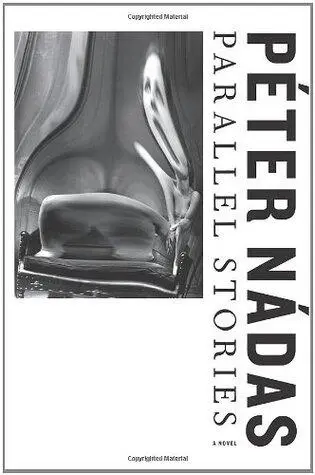
- Название:Parallel Stories
- Автор:
- Издательство:Farrar, Straus and Giroux
- Жанр:
- Год:2011
- ISBN:нет данных
- Рейтинг книги:5 / 5. Голосов: 1
-
Избранное:Добавить в избранное
- Отзывы:
-
Ваша оценка:
Parallel Stories: краткое содержание, описание и аннотация
Предлагаем к чтению аннотацию, описание, краткое содержание или предисловие (зависит от того, что написал сам автор книги «Parallel Stories»). Если вы не нашли необходимую информацию о книге — напишите в комментариях, мы постараемся отыскать её.
Three unusual men are at the heart of
: Hans von Wolkenstein, whose German mother is linked to secrets of fascist-Nazi collaboration during the 1940s; Ágost Lippay Lehr, whose influential father has served Hungary’s different political regimes for decades; and András Rott, who has his own dark record of mysterious activities abroad. The web of extended and interconnected dramas reaches from 1989 back to the spring of 1939, when Europe trembled on the edge of war, and extends to the bestial times of 1944–45, when Budapest was besieged, the Final Solution devastated Hungary’s Jews, and the war came to an end, and on to the cataclysmic Hungarian Revolution of October 1956. We follow these men from Berlin and Moscow to Switzerland and Holland, from the Mediterranean to the North Sea, and of course, from village to city in Hungary. The social and political circumstances of their lives may vary greatly, their sexual and spiritual longings may seem to each of them entirely unique, yet Péter Nádas’s magnificent tapestry unveils uncanny reverberating parallels that link them across time and space.This is Péter Nádas’s masterpiece — eighteen years in the writing, a sensation in Hungary even before it was published, and almost four years in the translating.
is the first foreign translation of this daring, demanding, and momentous novel, and it confirms for an even larger audience what Hungary already knows: that it is the author’s greatest work.
Parallel Stories — читать онлайн бесплатно полную книгу (весь текст) целиком
Ниже представлен текст книги, разбитый по страницам. Система сохранения места последней прочитанной страницы, позволяет с удобством читать онлайн бесплатно книгу «Parallel Stories», без необходимости каждый раз заново искать на чём Вы остановились. Поставьте закладку, и сможете в любой момент перейти на страницу, на которой закончили чтение.
Интервал:
Закладка:
Karakas had been ordered home from Paris for illegal work, but after the German occupation he was no longer safe, his false papers notwithstanding. The potential danger of his situation could hardly have been greater, but neither of them had a choice. He did not know what to do with the news of the red countess’s death. It pained him and made him sentimental. He wanted at least to see the apartment, if he could not comprehend his completely unreasonable attraction. In the last few years, he had been preparing for such a visit, as if he were threatening Mária Szapáry with it.
Yes, of course, I’d be very glad, please come for tea, we’d love to see you, anytime.
They had seen each other exclusively at public places, in theaters, at the opera, film premieres, or state receptions to which the countess was almost always invited officially because of her role in the resistance; sometimes she showed up to have something quickly taken care of, though since 1956 she had let Karakas feel that despite these meetings they would not retrieve their earlier harmony.
Of which neither of them wanted to speak.
To open the wall closet through whose sliding back panels one could gain the flat roof.
From there they reached the steel door of a more distant elevator shaft. When Mária Szapáry was taken away, that is where they holed up for two days and two nights, without food or water. They had to go out to the roof to shit and to urinate. And then they got to the street during the heaviest bombardment, when the front had reached the nearby streets.
According to the first police report, and this reached the highly placed man in the form of a verbal accounting, his secretary whispered what had just been communicated over the telephone, that in the early morning hours Mária Szapáry had taken Elisa Koháry out of the apartment, in a wheelchair, to the corridor, where she had earlier pried open the door to the elevator shaft, using a screwdriver later found in the apartment.
And what she was preparing to do must have been clear to the other woman too.
They also found crude material traces of her resistance and struggle and, given the sensitivity of the case, secured them.
She had pushed her into the elevator shaft along with the wheelchair. It made an enormous noise, and the neighbors heard a woman’s screaming, probably the hapless woman’s last shouts.
Despite the early hour, many people ran out to the echoing corridors.
They heard something, but the noise was actually subsiding; when it completely subsided they heard someone slam and lock the door to Mária Szapáry’s apartment, but they could not say whether it was Mária Szapáry.
With her strong deliberate steps, in her rope-soled Basque slippers she clattered across the hallway, across her workshop, out onto the terrace where now, at the ides of March, the flower boxes were still empty. She was as calm as if she had just let out a tarrying guest.
Indeed, that is how it was.
But a year earlier, when she for the first time had confessed to Mrs. Szemző, Irma Arnót, that this was it, up to here and no further, because she could not go on like this, she no longer had any reserves left for the woman, none, then Irmuska did not say not to do it.
They just kept sitting until it became light outside.
In the widest possible arc, she threw herself over the parapet.
Not to get caught on anything.
This Sunny Summer Afternoon
I don’t know how things had started between us, but Ilonka Weisz always waited for me here on this landing between the first and second floors.
I’d known her from before because she was friends with Viola and Szilvia. Sometimes she visited us in Damjanich Street and occasionally she came with us to City Park. But she would never talk to me, as if I didn’t exist.
Viola and Szilvia said this was because she positively detested me, that I shouldn’t be surprised if she looked right through me. And the reason they could not make Ilonka Weisz change her mind was that whenever they were close to softening her heart toward me, I would behave callously again. They had to endure my insensitivity because they were my cousins, and one puts up with a lot when it comes to relatives, but I shouldn’t expect Ilonka to tolerate it. And they asked me confidentially to stop behaving so callously, at least with her, even if I went on being callous with them.
I would have been glad to comply, if only I had understood what they were talking about.
I was amazed at them, at how they could prattle all this nonsense to me while Ilonka Weisz sat on another bench, dangling her feet and pretending not to know what the girls and I were talking about. This is how people talked in Damjanich Street, and this sort of talking was understood in Dembinszky Street too, but I had a lot of trouble with their words. People there used different words and actually behaved differently from the way people did on Stefánia Boulevard. I could not imagine what callous behavior was or what I should do so as not to be callous. I also didn’t understand why on earth anyone should be softened, or what was meant by softening her heart toward me. Steel could be softened; or we say that cheese, water, or a spring breeze is soft. To soften a person implies that the person first is hard. Ilonka Weisz wasn’t hard, just a common little girl with a big mouth.
Except she detested me for some reason and that was pretty confusing. Her detestation was attractive in a way, but I didn’t know what to do with it.
On Stefánia Boulevard, one would say to something like this, well, that’s her problem.
The change might have occurred one day when she was coming from her lesson just as I was going to mine, and to my huge surprise I saw she did not detest me so much. She said something to me or, I don’t know, maybe she asked me something, and I answered her politely. I didn’t understand why she had changed so suddenly. Before that, she’d turned her head away whenever we met by chance in the staircase or on one of the landings and then, to be sure I had no doubts about her feelings, she’d make a face to show me that my sheer presence disgusted her.
Or maybe they had already planned what they were going to do and that’s why she was friendlier, out of plain calculation. From then on she always had something to say about the piano teacher, the lesson, Szilvia and Viola. One day she said I should go up to their place after my lesson because her mother would be going to work then.
The piano teacher gave her free lessons, and she practiced on the teacher’s piano because they didn’t have their own.
Because of all the beds in their apartment, they couldn’t fit in even an upright piano, Viola said, and they didn’t have the money for it either.
The image of the congestion in their apartment scared me and did not make me want to go there, though she repeated her invitation many times and always added that she would be alone.
Come on, Szilvia said, they’d have plenty of money for a piano if only they knew how to economize. The reason we have money for everything is because Daddy makes sure every penny goes a long way.
They squander everything, I’m telling you, they’re a bunch of spendthrifts.
But we’re telling this only to you, confidentially.
We’d never say this straight to Ilonka, not for anything in the world.
The truth is they haven’t got enough money to rent even a lousy old upright for her.
On the Stefánia, no one would have said anything like this. And if the girls talked so arrogantly and conceitedly about Ilonka Weisz, then why did they call themselves her best friends.
It always seemed to me that Aréna Road was a real border between the two sections of the city. On the other side of this border, one did not understand many things.
Читать дальшеИнтервал:
Закладка:
Похожие книги на «Parallel Stories»
Представляем Вашему вниманию похожие книги на «Parallel Stories» списком для выбора. Мы отобрали схожую по названию и смыслу литературу в надежде предоставить читателям больше вариантов отыскать новые, интересные, ещё непрочитанные произведения.












Обсуждение, отзывы о книге «Parallel Stories» и просто собственные мнения читателей. Оставьте ваши комментарии, напишите, что Вы думаете о произведении, его смысле или главных героях. Укажите что конкретно понравилось, а что нет, и почему Вы так считаете.