Péter Nádas - Parallel Stories
Здесь есть возможность читать онлайн «Péter Nádas - Parallel Stories» весь текст электронной книги совершенно бесплатно (целиком полную версию без сокращений). В некоторых случаях можно слушать аудио, скачать через торрент в формате fb2 и присутствует краткое содержание. Год выпуска: 2011, Издательство: Farrar, Straus and Giroux, Жанр: Современная проза, на английском языке. Описание произведения, (предисловие) а так же отзывы посетителей доступны на портале библиотеки ЛибКат.
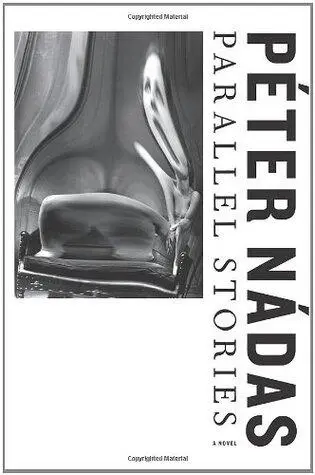
- Название:Parallel Stories
- Автор:
- Издательство:Farrar, Straus and Giroux
- Жанр:
- Год:2011
- ISBN:нет данных
- Рейтинг книги:5 / 5. Голосов: 1
-
Избранное:Добавить в избранное
- Отзывы:
-
Ваша оценка:
Parallel Stories: краткое содержание, описание и аннотация
Предлагаем к чтению аннотацию, описание, краткое содержание или предисловие (зависит от того, что написал сам автор книги «Parallel Stories»). Если вы не нашли необходимую информацию о книге — напишите в комментариях, мы постараемся отыскать её.
Three unusual men are at the heart of
: Hans von Wolkenstein, whose German mother is linked to secrets of fascist-Nazi collaboration during the 1940s; Ágost Lippay Lehr, whose influential father has served Hungary’s different political regimes for decades; and András Rott, who has his own dark record of mysterious activities abroad. The web of extended and interconnected dramas reaches from 1989 back to the spring of 1939, when Europe trembled on the edge of war, and extends to the bestial times of 1944–45, when Budapest was besieged, the Final Solution devastated Hungary’s Jews, and the war came to an end, and on to the cataclysmic Hungarian Revolution of October 1956. We follow these men from Berlin and Moscow to Switzerland and Holland, from the Mediterranean to the North Sea, and of course, from village to city in Hungary. The social and political circumstances of their lives may vary greatly, their sexual and spiritual longings may seem to each of them entirely unique, yet Péter Nádas’s magnificent tapestry unveils uncanny reverberating parallels that link them across time and space.This is Péter Nádas’s masterpiece — eighteen years in the writing, a sensation in Hungary even before it was published, and almost four years in the translating.
is the first foreign translation of this daring, demanding, and momentous novel, and it confirms for an even larger audience what Hungary already knows: that it is the author’s greatest work.
Parallel Stories — читать онлайн бесплатно полную книгу (весь текст) целиком
Ниже представлен текст книги, разбитый по страницам. Система сохранения места последней прочитанной страницы, позволяет с удобством читать онлайн бесплатно книгу «Parallel Stories», без необходимости каждый раз заново искать на чём Вы остановились. Поставьте закладку, и сможете в любой момент перейти на страницу, на которой закончили чтение.
Интервал:
Закладка:
Karakas would not even listen to most of the insidious and cunning suggestions offered in exchange for favors. He despised these people, all of them, these worms, the choice bootlickers and ass kissers, though sometimes, mysteriously mimicking God knows what and making especially nasty remarks, he would be generous enough to accept a clumsy act of some service; he simply bought them.
The lucky petitioners would be beside themselves with joy.
And later, they could not recount these great acts of heroism, since betrayal and bootlicking had generally accepted limits. Yet keeping quiet about them was fearsome, as if they’d regressed to being bedwetting little boys, now with a little pleasure in their loins or anuses.
Today, however, the powerful master had arrived at an unusual time and remained alone.
Perhaps he needed André to avoid feeling so alone or to feel the privileged magnificence of his loneliness.
Perhaps he wanted nothing from André.
It was good to have a strong man by his side who was not an ass kisser.
Karakas was a mysterious man, nobody could see his cards. It was impossible to tell whether he was siding with the inveterate dogmatists, the Stalinists, the Muscovites, or the dispersed but still vengeful hordes of ÁVH men — in which case his helping various nationalist groups was only an illusion — or the other way around. Perhaps with all these possibilities or despite them, he was trying to maintain, in his Anglophiliac way, some kind of political pragmatism, in which case his common sense was breathtaking. Except for his wife and children, no one thought he had any feelings or emotions, or wanted to share them with anyone in the cause of political action.
He was a basically uneducated man, but once his glance strayed onto something he would note it for good and sense its essence; with lightning speed he would read everything and anything, and understand it.
He was uniformly characterless when it came to his face and his physique. Smooth as a well-sucked lemon drop, his enemies said behind his back, inside and out everything was licked down. He exuded the aroma of some strange soap or not too pleasant cologne that reminded one mostly of mothballs. He spoke to everyone in a conspicuously low tone, with a cordiality both threatening and threatened, frail and vulnerable; he never raised his voice. Perhaps he never lost his temper because in reality very few things interested or touched him.
Although this morning he had received two pieces of terrible news.
The one concerning the mass disaster reached him a little after 9:30. An overhead streetcar cable had snapped in front of the National Museum, killing a number of children — students being taken by their teachers to the celebration — who happened to be crossing the street. And that was not all. Because of some fatal fluke, the snapped cable did not trip the fuse at the big power station on Váci Street; in all probability the still-live cable made contact with the streetcar track, which hungrily conducted the electricity further, and the bodies of the victims had started to glow and smolder. The high-voltage current killed quite a few of the shocked teachers, fellow students, and passersby rushing to the aid of the children, before all the eyewitnesses realized there was absolutely nothing to be done, and they began sobbing and screaming at the top of their lungs in the stormy street where traffic stopped and became hopelessly congested.
In response Karakas ordered a full military and police alert throughout the metropolitan area and a total news blackout; he caused all the roads leading out of the capital to be blocked, public offices and institutions closed, no trains were allowed into the railway stations and no trains were allowed to leave the city. To the president of the state radio, whom he had to treat with kid gloves because she was the only female member of the Political Committee and in that capacity under the personal protection of comrade Kádár,* he suggested maintaining calm and discipline.
Considering the last days’ reports on internal affairs, provocation could not be excluded, he whispered in his most cordial voice over the telephone. He was talking to her on the special line that, at least in theory, was safe from any kind of tapping or interception, and told her that as the result of his consultation with comrades of the highest echelon only a little while ago, those were the proper guidelines, calm and discipline, and everyone concerned should follow them.
She should therefore recall her reporters; no radio personnel or vehicle could remain on the streets.
This is a sabotage action.
He can assure her that this is not his personal opinion.
But not to worry, any possible disturbance will be nipped in the bud, that is the authoritative assessment.
And then he hung up without saying good-bye. He had no time for this priggish hysterical female, about whom the generally accepted view in the highest circles was that she had already lost her head on the evening of October 23, 1956.
She retreated to the space under her desk and issued her orders from there.
Karakas mobilized larger forces to reestablish order at the critical site so that the official celebration could commence, if not exactly at the announced time at least with no more than a half-hour delay, precisely because of the planned radio broadcast. He reported again to the prime minister, who happened to have comrade Kádár in his office. The two men got along well, even though they came from very different social backgrounds and held diametrically opposed views.
They were both slow and jovial, but while the thinking of one was very simple, bordering on simpleminded, that of the other was very convoluted. They listened to the secretary’s report attentively, and with a seriousness appropriate to the situation, and then comrade Kádár opined that comrade Karakas would need the help of a few comrades well trained in carrying out operational tasks, and all of them together should hasten to the scene of the disaster to aid the comrades there.
Karakas had the swarming groups of onlookers and passersby first dispersed by these helpers, then followed and cleared from the nearby streets. He had the windows of buildings giving on the Museum Garden closed; he ordered superintendents to chase everyone away from behind the closed windows. He acknowledged the list of the dead and injured. He ordered the sound crew to play, at the highest possible volume, lively, energetic patriotic songs. While ambulances, firefighters, sanitation workers, and electricians were doing their best, cursing and getting in one another’s way, the entire area resounded with a medley of music — stately palotás dances, wild verbunkos or recruiting dances, and rowdy drinking songs.
He made one mistake. He judged correctly that the schoolchildren, who had been brought from nearby schools and were now forced to wait behind ropes, might be upset by this feverish activity, the quickly spreading news and rumors, and would find it hard to endure quietly a ceremony scheduled to last an hour and a half. It would not be wise to add mass hysteria to the catastrophe. So he ordered that the children should be taken back to their schools but not sent home until further notice.
They should be replaced with other children brought from other schools.
The square had to be filled with celebrants; workers’ militiamen should also be ordered to the square, but in civilian clothes.
The police officer to whom he gave the order did not dare remind Karakas that there were no other children available, since March 15 is a school holiday everywhere in Hungary.
In the Spanish Civil War, Karakas had been adjutant to the current Hungarian prime minister, then the International Brigades’ dreaded commissar of political security. Before 1950, when the prime minister came home for good, they had carried out several well-coordinated cleansing operations together, though sometimes they were not even in the same country or city, and thanks to their mutual support they had managed to be left out of every cleansing campaign and operation since; this did not generate much confidence in them among their dearest friends and best comrades. They were friends, yes, if there were reason to make such a judgment. Yet the same comrades against whom the two had conducted these tough campaigns for decades were the ones who arrested them.
Читать дальшеИнтервал:
Закладка:
Похожие книги на «Parallel Stories»
Представляем Вашему вниманию похожие книги на «Parallel Stories» списком для выбора. Мы отобрали схожую по названию и смыслу литературу в надежде предоставить читателям больше вариантов отыскать новые, интересные, ещё непрочитанные произведения.








Обсуждение, отзывы о книге «Parallel Stories» и просто собственные мнения читателей. Оставьте ваши комментарии, напишите, что Вы думаете о произведении, его смысле или главных героях. Укажите что конкретно понравилось, а что нет, и почему Вы так считаете.