Péter Nádas - Parallel Stories
Здесь есть возможность читать онлайн «Péter Nádas - Parallel Stories» весь текст электронной книги совершенно бесплатно (целиком полную версию без сокращений). В некоторых случаях можно слушать аудио, скачать через торрент в формате fb2 и присутствует краткое содержание. Год выпуска: 2011, Издательство: Farrar, Straus and Giroux, Жанр: Современная проза, на английском языке. Описание произведения, (предисловие) а так же отзывы посетителей доступны на портале библиотеки ЛибКат.
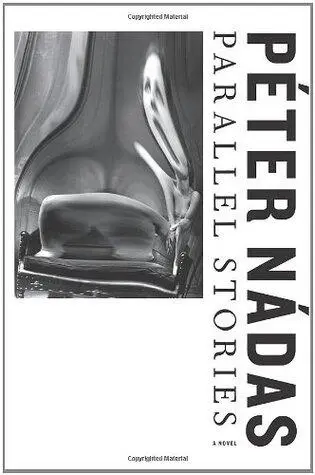
- Название:Parallel Stories
- Автор:
- Издательство:Farrar, Straus and Giroux
- Жанр:
- Год:2011
- ISBN:нет данных
- Рейтинг книги:5 / 5. Голосов: 1
-
Избранное:Добавить в избранное
- Отзывы:
-
Ваша оценка:
Parallel Stories: краткое содержание, описание и аннотация
Предлагаем к чтению аннотацию, описание, краткое содержание или предисловие (зависит от того, что написал сам автор книги «Parallel Stories»). Если вы не нашли необходимую информацию о книге — напишите в комментариях, мы постараемся отыскать её.
Three unusual men are at the heart of
: Hans von Wolkenstein, whose German mother is linked to secrets of fascist-Nazi collaboration during the 1940s; Ágost Lippay Lehr, whose influential father has served Hungary’s different political regimes for decades; and András Rott, who has his own dark record of mysterious activities abroad. The web of extended and interconnected dramas reaches from 1989 back to the spring of 1939, when Europe trembled on the edge of war, and extends to the bestial times of 1944–45, when Budapest was besieged, the Final Solution devastated Hungary’s Jews, and the war came to an end, and on to the cataclysmic Hungarian Revolution of October 1956. We follow these men from Berlin and Moscow to Switzerland and Holland, from the Mediterranean to the North Sea, and of course, from village to city in Hungary. The social and political circumstances of their lives may vary greatly, their sexual and spiritual longings may seem to each of them entirely unique, yet Péter Nádas’s magnificent tapestry unveils uncanny reverberating parallels that link them across time and space.This is Péter Nádas’s masterpiece — eighteen years in the writing, a sensation in Hungary even before it was published, and almost four years in the translating.
is the first foreign translation of this daring, demanding, and momentous novel, and it confirms for an even larger audience what Hungary already knows: that it is the author’s greatest work.
Parallel Stories — читать онлайн бесплатно полную книгу (весь текст) целиком
Ниже представлен текст книги, разбитый по страницам. Система сохранения места последней прочитанной страницы, позволяет с удобством читать онлайн бесплатно книгу «Parallel Stories», без необходимости каждый раз заново искать на чём Вы остановились. Поставьте закладку, и сможете в любой момент перейти на страницу, на которой закончили чтение.
Интервал:
Закладка:
There were three siblings in the Weisz family; Ilonka had two older brothers, Ernő and Dezső, famous hoodlums in the neighborhood who avoided school, but Ilonka was considered such a great and brilliant musical talent that the piano teacher could not let her go to waste. Many people in the building had a great respect for the piano teacher; they called her an unselfish soul. True, the boys lugged up wood and coal from the cellar every Friday afternoon for her, and their mother scrubbed her floors during the spring and fall cleanings, thus giving proof of the family’s gratitude, but the boys showed absolutely no interest in Ilonka’s piano studies.
Neither did her mother, she just let it happen, if it had to happen; she had enough troubles of her own.
I did not talk to anyone about these things, but Viola and Szilvia told me about them along with many other matters. They gave me the impression they never stopped prattling. The moment one of them stopped the other continued, and sometimes they spoke over each other’s words so that I couldn’t understand either of them. I learned important things from them about everyone; without them, I wouldn’t have found out where Ilonka Weisz lived.
When she came from the piano teacher, we met on the landing between the first and second floors; their third-floor apartment opened from the rear staircase. After a while she stopped asking me to go with her to the third floor after my lesson.
One time she said, I am so alone. But I couldn’t go with her, because anybody in the building would have seen my secret. After her lesson she went down to the mezzanine, crossed the courtyard, and from there went up to the third floor by the rear staircase.
People also called the rear staircase the maids’ stairs.
Another time she said I was callous, since I wouldn’t listen to her when she complained of loneliness.
Szilvia claimed she would rather die than have to use the maids’ stairs to go home.
She hadn’t finished saying what she wanted to say and Viola was already annoyed.
Sure, you’d die; come off it, why this foolish talk. Why do you have to make such a tzimmes over the maids’ stairs.
Szilvia began wailing that she didn’t know who was talking more foolishly, but if you really want to know, you’re making the bigger tzimmes.
And would Viola talk so casually if she had to share a toilet with strangers.
Of all the foolish nonsense; somebody, please hold me back. You’re only saying that to protect your sweet little Ilonka.
They were talking as if each of them knew in advance what the other one wanted to say and lost interest the moment she said it.
I don’t remember seeing maids in this building. One recognized maids from far away. I explained this maids’ stairs business to myself by thinking that Ilonka’s mother must have been a maid once, and the name somehow remained stuck to the stairs.
When I told my grandmother about Ilonka’s existence, about the girl whom the piano teacher taught for free and let practice in her own apartment, my grandmother nodded and said that was a very decent thing to do and we too might help the girl by buying her sheet music.
She’d write a letter about this to the piano teacher and give me the money to take to her when the time came.
Somehow I tried to protest, saying that no one had asked us to do this.
I was terribly ashamed of my grandmother’s eagerness and sorry I had told her about it. I told her the story only so I wouldn’t despise Ilonka Weisz as much as she despised me.
Grandmother looked at me severely.
She asked what sort of help I thought was help that had to be asked for. What makes help really help is when we give it without being asked.
But I sensed this wasn’t going to turn out well. Ilonka would detest me even more because of this. And then I had better tell my grandmother what I did not want to tell her.
I asked her if it mattered that Ilonka Weisz detested me.
She said, why shouldn’t it matter, of course it did, it mattered very much.
Then let’s not buy her sheet music.
She did not reply for a long time; she was thinking. It’s impossible to buy someone’s empathy, I was right, we should not give the impression that that was our intention. However, we were talking about two different things and they could be separated sensibly. With this gift we would show our appreciation for Ilonka’s talent. Grandmama would solve this problem in such a way that Ilonka wouldn’t even know about it. And I should somehow make her stop detesting me; I should also think seriously about what I might have done to offend her.
Still, I hoped Grandmother would forget about writing the letter. She and Grandfather always laughed at themselves for forgetting so many things.
But she did not forget, and on her nice butter-yellow handmade letter paper she wrote to the piano teacher, to whom we should be very grateful for her decent behavior during the Hungarian Nazi era. Grandmother had said she would make an arrangement with the teacher in such a way that Ilonka would not know about it. She did not seal the envelope, because she didn’t have to hide the contents from me, but still I didn’t dare look at the words describing the terms of the arrangement she was making. Here was another word, another something I didn’t understand, which people sometimes used to specify what they had agreed, or how they had decided to leave things at that . The term they used was that that , but I could neither memorize nor understand it. I didn’t quite understand the word maids either. The piano teacher had a cleaning woman but she didn’t have a maid, though in her apartment there was a tiny maid’s room in which nobody lived. My grandparents had a maid, Rozália Török, but it would never occur to anybody to talk to her the way my aunt Irén in Damjanich Street and my aunt Erna on Teréz Boulevard talked about their maids, whom they often had to dismiss.
Such a stinking beast, Szilvia would say, and despite our mother’s good intentions we couldn’t keep her on.
And she made a haughty face that perhaps disturbed me more than the word beast .
My grandmother always told me I should be attentive to Rozália. Or she would reprimand me in no uncertain terms for irritating Rozália and warn me not to do it again. I should be more considerate and polite to her than to anyone else because we owed her so very much.
When with her friends they talked about their maids, she always said, well, Róza is a treasure.
And one evening, looking up from the book she was reading, she told Grandfather that she was amazed not so much that we were still alive but that providence had chosen to guide such a soul to us, and it was because of her that we’d survived.
Whenever they talked about this, tears welled up in Grandmother’s eyes.
And she’d say that goodness always makes me shed a few tears.
For a long time Róza went with me to my piano lessons so I wouldn’t have to cross dangerous Aréna Road by myself. When twice a week the time came to set out, I’d feel I was leaving my grandparents’ house forever. I did not protest, but the finality of the act hurt me in advance. Stefánia Boulevard vanished in City Park at the horizon of infinity. And how far away was the incredibly wide Aréna Road; I couldn’t even begin to imagine how far. As if on each occasion one were swallowed up by a foreboding: this can’t happen again, ever. My school on Hermina Street always seemed within reach even when I walked there alone, while Damjanich Street or Teréz Street seemed halfway around the globe. Yet we always managed to reach it. On the way the sun shone on our heads or it was cold, the wind blew, and the air had a certain quality that I had to overcome with every step but couldn’t. It was dense or too rough; we walked within it as though we were making no progress at all.
Читать дальшеИнтервал:
Закладка:
Похожие книги на «Parallel Stories»
Представляем Вашему вниманию похожие книги на «Parallel Stories» списком для выбора. Мы отобрали схожую по названию и смыслу литературу в надежде предоставить читателям больше вариантов отыскать новые, интересные, ещё непрочитанные произведения.







Обсуждение, отзывы о книге «Parallel Stories» и просто собственные мнения читателей. Оставьте ваши комментарии, напишите, что Вы думаете о произведении, его смысле или главных героях. Укажите что конкретно понравилось, а что нет, и почему Вы так считаете.