Péter Nádas - Parallel Stories
Здесь есть возможность читать онлайн «Péter Nádas - Parallel Stories» весь текст электронной книги совершенно бесплатно (целиком полную версию без сокращений). В некоторых случаях можно слушать аудио, скачать через торрент в формате fb2 и присутствует краткое содержание. Год выпуска: 2011, Издательство: Farrar, Straus and Giroux, Жанр: Современная проза, на английском языке. Описание произведения, (предисловие) а так же отзывы посетителей доступны на портале библиотеки ЛибКат.
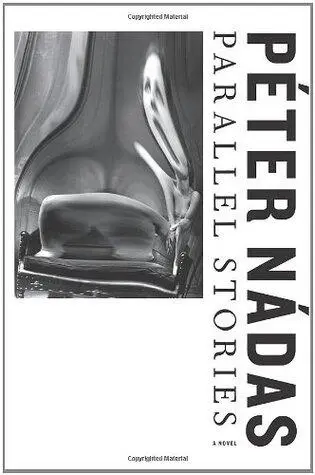
- Название:Parallel Stories
- Автор:
- Издательство:Farrar, Straus and Giroux
- Жанр:
- Год:2011
- ISBN:нет данных
- Рейтинг книги:5 / 5. Голосов: 1
-
Избранное:Добавить в избранное
- Отзывы:
-
Ваша оценка:
Parallel Stories: краткое содержание, описание и аннотация
Предлагаем к чтению аннотацию, описание, краткое содержание или предисловие (зависит от того, что написал сам автор книги «Parallel Stories»). Если вы не нашли необходимую информацию о книге — напишите в комментариях, мы постараемся отыскать её.
Three unusual men are at the heart of
: Hans von Wolkenstein, whose German mother is linked to secrets of fascist-Nazi collaboration during the 1940s; Ágost Lippay Lehr, whose influential father has served Hungary’s different political regimes for decades; and András Rott, who has his own dark record of mysterious activities abroad. The web of extended and interconnected dramas reaches from 1989 back to the spring of 1939, when Europe trembled on the edge of war, and extends to the bestial times of 1944–45, when Budapest was besieged, the Final Solution devastated Hungary’s Jews, and the war came to an end, and on to the cataclysmic Hungarian Revolution of October 1956. We follow these men from Berlin and Moscow to Switzerland and Holland, from the Mediterranean to the North Sea, and of course, from village to city in Hungary. The social and political circumstances of their lives may vary greatly, their sexual and spiritual longings may seem to each of them entirely unique, yet Péter Nádas’s magnificent tapestry unveils uncanny reverberating parallels that link them across time and space.This is Péter Nádas’s masterpiece — eighteen years in the writing, a sensation in Hungary even before it was published, and almost four years in the translating.
is the first foreign translation of this daring, demanding, and momentous novel, and it confirms for an even larger audience what Hungary already knows: that it is the author’s greatest work.
Parallel Stories — читать онлайн бесплатно полную книгу (весь текст) целиком
Ниже представлен текст книги, разбитый по страницам. Система сохранения места последней прочитанной страницы, позволяет с удобством читать онлайн бесплатно книгу «Parallel Stories», без необходимости каждый раз заново искать на чём Вы остановились. Поставьте закладку, и сможете в любой момент перейти на страницу, на которой закончили чтение.
Интервал:
Закладка:
And I did feel as if I had to fall asleep.
But the moment they left the room on tiptoe and stopped making the floor creak, I opened my eyes. They had closed the double door leading to the dining room; the room became dark. That reminded me again of the night, the bridge and that girl, who was me, having to sleep under the bridge.
But why did they lie to us the next morning, saying she had left of her own will.
I felt that I was born to be a girl.
There was always a truth that later turned out to be a lie.
The feeling that I was not who I imagined myself to be, and not who others thought I was, always tormented me. Actually nobody is what he or she appears to be, and I’m not the only one who doesn’t know who he is or to whom he belongs. I observed the torments of others; I wanted to understand how they decided when they had to lie and about what, or what it was they could consider the truth for a while. That was the reason why I later so obsessively followed the half-man trundling himself down Teréz Boulevard on his board with casters, since no one knew where he came from or where he was going every day, or the woman with her big hats and no face left, nothing but a walking burn.
As if by watching them I could crack their secrets.
Since these two were so obviously not what they appeared to be, it never occurred to me that they might not have any secrets. And since I could never shake the thought that my father surely couldn’t have disappeared without a trace as claimed, and our mother couldn’t have just left us — that too had to be a lie, and something entirely different must have happened — it followed that these two, the man on the rolling wooden board and the burned woman, were my father and mother. My mother had survived the war, though she’d suffered terrible burns during the siege of Budapest. And my father had heroically stuck to his truth, and when they saw they were getting nowhere with him and were unable to force false testimony from him about anyone, they simply threw him out of a speeding car.
He was like a living piece of flesh. He could just barely crawl away from where they dumped him.
A stranger took him in, with whom he’d been living ever since, somewhere around Hunyadi Square. It would be nice if Hedda Hiller were that stranger. Since I couldn’t decide what would be better for me, sometimes I imagined that the kind stranger was a man — a more convincing version of my story, since a woman couldn’t have carried the wounded man to her place.
His legs could not be saved. The truth was that in their condition neither of my parents wanted to be a burden to us.
That’s why my mother kept hiding from us, that’s why she pretended when looking out from under her large hat that she didn’t recognize me. I also tended to avoid her because I could not imagine the moment when she’d give up the playacting, take me back, and press me to herself for the first time. I was scared that I might push her away because she had become repugnant, because she had left me, and because I really hated her.
Of course I suspected that this woman, whom I sometimes imagined was my mother, was among those who were crushed when the marquee of the Duna Cinema crashed down. Probably not one of those whom the rescuers scraped out alive from under the rubble after the dust settled and everyone was sobbing, fleeing, helping, or only helplessly screaming and watching the incredible. That would mean I’d lost my mother for the second time. Later some good people carried the corpses to the corner of Antal Nagy Street in Buda, and then, at the cost of subdued altercations on top of the rubble, the line for bread re-formed itself.
They lay side by side where the tank had appeared earlier.
People in the line slowly kicked the rubble off the curb.
The chaos was too great, and I never saw her again on the boulevard or anywhere else.
Somebody said that the marquee was made of cinder blocks, which is why not more people died, since it’s much lighter than regular concrete.
I preferred to continue weaving the story for myself. In my story she was taken away with light injuries by a Russian military ambulance that showed up for the injured. She recovered in a few days but had no doubts that I’d recognized her, and that’s why she left the country in the last days of December, along with other refugees.
My imagination protected me from the pain somewhat, although the more cleverly it worked, the more doubts accumulated in my mind.
I stood there on the landing above the second floor, leaning against the wall, bent forward a little, my legs slightly apart, like someone preparing to throw up but hoping not to soil his suit with his vomit; I was waiting for my imagination to calm down, so that jealousy and senseless physical desire would not drive me mad. I held my unbuttoned coat together with my fists sunk in my pockets. As if afraid that someone on the dark staircase might see what was happening inside my pants. I was clenching one fist hard to keep my fingers from stretching out, from crawling onto my painfully rearing hot cock, to keep my warm palm from closing around it.
But I could not deactivate my imagination. For that I would have had to scrape the pictures off my brain cells. And since I couldn’t do that, there I was all alone with my cock. And they were doing it in their warm bedroom. I saw not her eyes but a single flash of her eyes, a single flash of your eyes, the sadness of her closed lashes, your sadness, her thinly arched eyebrows and naked shoulders. But I had never seen her shoulders. I was not the one who had seen them, but, together with me, this hateful man had. I wanted nothing more than to open my fly in the cold staircase of this familiar building so I could come together with them.
The pain was somewhat mitigated by my imagination, but only gratification could have expelled the tormenting pictures.
If I could do that, I’d be ready for any disgraceful act, that’s what I felt.
And why should fate save me from disgrace.
What I have done until now, along with my stupid scurrying around and my stupid enthusiasm, has been disgraceful enough.
But one can neither deflect oneself nor hold oneself back with self-inflicted moral judgments.
No humiliation can frighten one away from committing ever-worse disgraceful acts. As if a raw desire for pleasure was saying, no matter what you do, your disgrace can still be increased, only make sure you don’t drown in it.
I knew they were not going to come down again.
Maybe Ilonka Weisz would come, said my imagination.
Nobody came.
I opened my fly, not hurrying at all. The way one prepares for a premeditated revenge.
Potential danger always sharpens the sensation of pleasure, I don’t know why that is. With the booming of the wind in my ears, blood pulsing through the cracking and snapping of the gutters. This was the voice of fear, desire, and trembling. In the pulsing of blood, I expected to hear the opening of the door on the third floor, the sound of their light footsteps on the patterned stone floor of the staircase, their chatter, their wrangling, their sensual banter, anything, even their amorous cooing. I was sure they weren’t coming, but I could do nothing but keep on waiting for them. And now waiting not only for Klára but, though I didn’t notice this significant and involuntary change, for Simon too. And if they were to come, I’d surely have enough time to flee silently from them, out of the house.
I’d go to City Park, that’s how I imagined my escape.
Out there, in the storm, I’d betake myself among the wet trees.
Until then, however, it was as if I were cowering at the bottom of a dark lair, waiting for my prey and ready to pounce.
I was cold and I was hot, but I did not dare execute the last movement on my open pants. Another bus went by; the empty courtyard echoed the rough sound of wheels dancing on cobblestones for a long time. My hand kept pawing the slit in my pants, perhaps to move on, perhaps to be ready to button it up again. The yellowish sky was shining above the roofs. There was no light at all in the Weiszes’ three windows on the fourth floor. I thought that Ilonka Weisz must have grown into a beautiful girl in the meantime. The first was the kitchen window, the other two those of the one room.
Читать дальшеИнтервал:
Закладка:
Похожие книги на «Parallel Stories»
Представляем Вашему вниманию похожие книги на «Parallel Stories» списком для выбора. Мы отобрали схожую по названию и смыслу литературу в надежде предоставить читателям больше вариантов отыскать новые, интересные, ещё непрочитанные произведения.











Обсуждение, отзывы о книге «Parallel Stories» и просто собственные мнения читателей. Оставьте ваши комментарии, напишите, что Вы думаете о произведении, его смысле или главных героях. Укажите что конкретно понравилось, а что нет, и почему Вы так считаете.