Paul Theroux - Blinding Light
Здесь есть возможность читать онлайн «Paul Theroux - Blinding Light» весь текст электронной книги совершенно бесплатно (целиком полную версию без сокращений). В некоторых случаях можно слушать аудио, скачать через торрент в формате fb2 и присутствует краткое содержание. Год выпуска: 2006, Издательство: Mariner Books, Жанр: Современная проза, на английском языке. Описание произведения, (предисловие) а так же отзывы посетителей доступны на портале библиотеки ЛибКат.
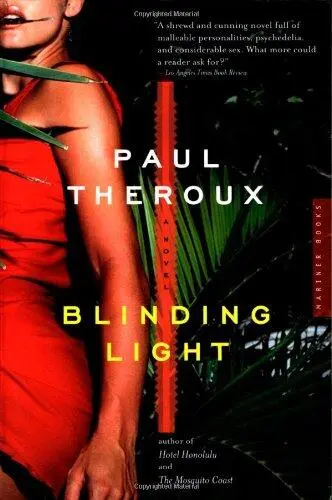
- Название:Blinding Light
- Автор:
- Издательство:Mariner Books
- Жанр:
- Год:2006
- ISBN:нет данных
- Рейтинг книги:5 / 5. Голосов: 1
-
Избранное:Добавить в избранное
- Отзывы:
-
Ваша оценка:
Blinding Light: краткое содержание, описание и аннотация
Предлагаем к чтению аннотацию, описание, краткое содержание или предисловие (зависит от того, что написал сам автор книги «Blinding Light»). Если вы не нашли необходимую информацию о книге — напишите в комментариях, мы постараемся отыскать её.
Blinding Light — читать онлайн бесплатно полную книгу (весь текст) целиком
Ниже представлен текст книги, разбитый по страницам. Система сохранения места последней прочитанной страницы, позволяет с удобством читать онлайн бесплатно книгу «Blinding Light», без необходимости каждый раз заново искать на чём Вы остановились. Поставьте закладку, и сможете в любой момент перейти на страницу, на которой закончили чтение.
Интервал:
Закладка:
“If it weren’t for the light pollution, you’d be able to see Buzzards Bay,” he said.
The woman was not listening. She took his hand in a commanding way and lifted her dress and touched herself between her legs with his fingers. Her wetness had the slippery feel of a sea creature, a small warm squid, like the fish salad he had poked his fingers into earlier, but warmer, wetter, softer.
Then she lifted his hand and helped him taste it and, still holding him, led him back to where the torches still blazed and the president was still speaking to the people, being reasonable and reassuring.
“She’s a fine woman.”
But as the president spoke — and he could only have been referring to the woman who had led him away — the woman vanished.
The president led Steadman up the stairs to the house, and the remaining guests followed. Clutching him like this, the president was still revealing himself. He was wounded, carrying this secret inside him, and the secret made him clumsy.
But he said, “Does Harry Wolfbein know how to get hold of you?”
“Oh, yes,” Steadman said.
And then, seeing Ava approach, the president let go, and embraced her, and told her again how lucky she was.
The president was hoarse and still talking to a group of people as Steadman and Ava left. Waiting in the driveway for the valets to bring his car around, Steadman was approached by Wolfbein.
“I think you’ve made a new friend,” Harry said.
4
AFTERWARD — as early as the next morning, when he woke to squirm in bed and squint in the dirty slanting daylight — the whispers began. So distinct and so insistent were they, he could hear them from his seclusion: the words, the tone, even the hot breath, the beat and glee of the gossips. Was it the timing — the awful event, the shocking news? Steadman believed he got greater sympathy for clinging to life, or seeming to, because the world was in mourning for Princess Diana, while he stood uncomplaining at the periphery of that tragedy.
Steadman’s blindness seemed to make him another object of that outpouring of grief and pity. He was brave, wounded, still alive, a limping survivor, staring at the world with dead eyes. He seemed to represent hope, for there was defiant life in his damaged body, and people were kinder, clinging to him, because of the awful news of this sudden bereavement, the car crash in Paris, which was overwhelmingly the topic in all the newspapers. On the Vineyard everyone was talking about Steadman, too. He drank the datura and the shadow fell over him and he heard them clearly.
The whispers said, Slade Steadman is blind, and some went further, explaining, Slade Steadman, the writer— Trespassing —just like that, lost his sight, as though he had reappeared after many years’ absence. Not just showed up but magically materialized, descended from the heavens, covered in glory, his blind eyes blazing like a luminous sky over Buzzards Bay late on a summer afternoon from a profusion of scudding smoke that was a ballooning jumble of gray-bellied clouds and pink plumes and feathers slipping from a great flock of molting flamingos with green-yellow highlights — appropriately lurid for a wounded artist to burst through and step forth from volumes of smoke backlit by fire, a whole sky of it, and pure gold slipping behind all of it, and in the crucible of rising darkness only the gold remaining to drain into the bedazzled sea.
Those were Steadman’s images, fanciful, because that is what he imagined they saw, a heroic visitation: the ideal way to show up after all that time. People seemed so glad to see him. And Princess Diana’s messy death helped give contrast, for her departure — the public sacrifice of a cheated wife, a slighted heroine, a sidelined royal, a celebrated risk taker — had made him seem a survivor against the odds.
Fearing his affliction, the whisperers wanted to care about his life, they wanted to help, they were manipulative and bossy, they knew eye doctors, they had heard of miracle cures, and they mentioned the possible causes — infected cataracts, macular degeneration, diabetes. Their caring was part of a ritual of warding off the evil of the misfortune. They were so relieved that the shocking ailment was his and not theirs.
The whispering was not all praise, not only amazement. Some of the whisperers were oddly gladdened — because they had been spared, gloating over their good fortune — others were appalled. Some whispers were dark, some blaming, mocking his foppishness, his hat, his cane, his arrogance — his spelling out what he saw in the Sound, like a deaf man whistling Mozart. Some envious guests exaggerated his conceits, for Steadman had been sitting with the president, and what they knew about him they had learned secondhand or had glimpsed in the twilight at the clambake.
The whispers made him a marvel, a freak, a figure of obscure power, somewhat remote even to his friends, known for his arrogance, who was both pitied and feared. He knew that on the Vineyard he was celebrated less for his book than for his being a multimillionaire as a result of the clothing catalogue. So it often happens with such tragedies: in their panic and ignorance people look more closely at each other and notice how frail they are, how damaged and failing, and give thanks for being alive in the shadow of death. Alert to his blindness, saddened by the death of Diana in the mangled car, people went on whispering.
In the succeeding days of gossip Steadman relived the fame he had known as a new resident of the Vineyard, when he had been in the headlines and had kept himself hidden. He was reminded of his notoriety, the fatness of it, his pleasure in the enigma of being satisfied, seeking nothing. Yet there was a great difference, for he was aware that the renewed interest in his work contained a deeper respect, and his writing was now a larger achievement because it was an aspect of his blindness. The handicap he had surmounted was now seen as a strange gift, and in his sad eyes a sort of holiness.
All this in less than a week. Steadman heard the whispers before anyone actually called. He knew that something amazing had occurred, his coincidental link to the death of Princess Diana by his having been sitting at a Wolfbein clambake with the president when the flunky appeared with the fax and the flashlight. The people at the president’s table had been among the first in the entire world to learn the terrible news. These few people were the earliest whisperers, and they approximated the curious admonition of the blinded Steadman, saying to the president and others: Don’t die today. No one will remember.
At last the phone rang, acquaintances called — he had no close friends. Most were the people from the Wolfbeins’ party, the inner circle of celebrities, who lived at such a remove from the ordinary, and kept to themselves, that Steadman was sure the news of his blindness would not travel far, at least for the time being. But because of their celebrity these people would eventually carry the news to the wider world. Soon everyone would know.
In some of the commiserating calls there was a note of concern, less for Steadman than for the speaker, who nearly always sounded fearful and somewhat vulnerable. Steadman wondered if what they feared was the insight granted to him by the crisis of his serious condition — how losing his sight made him especially watchful and alert. He was no longer the aloof and arrogant money man. He was an extraordinary victim. And what could these helpless people say to console him? The truth of the world of mortals is that people fall ill and weaken and die. As a wounded man Steadman was nearer to death than to life, and was reminded of his fate, and so life meant more to him, and he knew more of it and was a hero.
Читать дальшеИнтервал:
Закладка:
Похожие книги на «Blinding Light»
Представляем Вашему вниманию похожие книги на «Blinding Light» списком для выбора. Мы отобрали схожую по названию и смыслу литературу в надежде предоставить читателям больше вариантов отыскать новые, интересные, ещё непрочитанные произведения.










Обсуждение, отзывы о книге «Blinding Light» и просто собственные мнения читателей. Оставьте ваши комментарии, напишите, что Вы думаете о произведении, его смысле или главных героях. Укажите что конкретно понравилось, а что нет, и почему Вы так считаете.