Paul Theroux - Blinding Light
Здесь есть возможность читать онлайн «Paul Theroux - Blinding Light» весь текст электронной книги совершенно бесплатно (целиком полную версию без сокращений). В некоторых случаях можно слушать аудио, скачать через торрент в формате fb2 и присутствует краткое содержание. Год выпуска: 2006, Издательство: Mariner Books, Жанр: Современная проза, на английском языке. Описание произведения, (предисловие) а так же отзывы посетителей доступны на портале библиотеки ЛибКат.
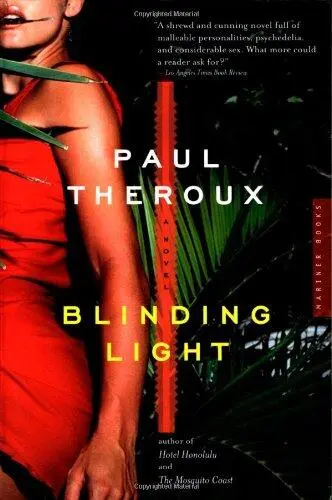
- Название:Blinding Light
- Автор:
- Издательство:Mariner Books
- Жанр:
- Год:2006
- ISBN:нет данных
- Рейтинг книги:5 / 5. Голосов: 1
-
Избранное:Добавить в избранное
- Отзывы:
-
Ваша оценка:
Blinding Light: краткое содержание, описание и аннотация
Предлагаем к чтению аннотацию, описание, краткое содержание или предисловие (зависит от того, что написал сам автор книги «Blinding Light»). Если вы не нашли необходимую информацию о книге — напишите в комментариях, мы постараемся отыскать её.
Blinding Light — читать онлайн бесплатно полную книгу (весь текст) целиком
Ниже представлен текст книги, разбитый по страницам. Система сохранения места последней прочитанной страницы, позволяет с удобством читать онлайн бесплатно книгу «Blinding Light», без необходимости каждый раз заново искать на чём Вы остановились. Поставьте закладку, и сможете в любой момент перейти на страницу, на которой закончили чтение.
Интервал:
Закладка:
“That’s amazing,” someone said, hearing him, and there were supporting murmurs.
“I was at this clambake a few years ago,” Steadman said.
“It’s still amazing. I hadn’t recognized all that stuff until you started describing it.”
“Memory is vision,” Steadman said, still descending the stairs, and as he spoke he heard Ava groan.
At the bottom of the stairs, Ava said in a low scolding tone, “Why are you calling attention to yourself?”
“That’s why I came.”
“How can you be so fucking pompous? ‘Memory is vision.’ Jesus!”
But he was smiling, feeling his way forward. He brushed the piece of paper Ava held in her hand.
“What are you reading?”
“The seating plan.”
“Where am I sitting?” he asked.
“You tell me,” she said, challenging him. “You can see in the dark, right?”
All this in whispers.
He knew Wolfbein as a friend who would have assured him a good seat — and everyone was extra-nice to the blind. He said, “I’m sitting with the president.”
Containing her fury, Ava’s body convulsed: he had guessed right. And then he heard her shoes treading the stones on the foreshore as she stalked off to her own table.
And a woman’s hand rested on his lower back, a woman unseen by Ava.
Steadman said, “Who are you?”
The woman touching him turned quickly and stumbled slightly on the shingly beach, leaving a wisp of fragrance at the level of his head.
He was the first to sit, and so when the others joined him they spoke to Steadman, positioning themselves in front of his face to address him. Although they were friends, and he knew them as soon as they spoke, they said their names, as though he were feeble — Walter and Betsy Cronkite, Olga Hirshhorn, Bill Styron, Millie Wolfbein, and finally the president, who was finishing a conversation with Vernon Jordan.
“You’re going to be fine, man,” Vernon said, looming over Steadman, bestowing his blessing before walking on.
“Hello, girl,” the president said to Millie, and gave her a hug. Then he said, “Slade’s doing good. I think he sees more than we do.”
It was true, and he knew it. The president was uncomfortable, Steadman could tell, which was another reason he wanted to possess the blind man and disarm him. He feared the blank stare behind the dark glasses, he feared Steadman guessing his secret. Steadman did not know the details of the secret, only that it was a woman, and because it was sexual the president was both embarrassed and eager. He was happy, he was pink with confusion, rendered younger and more readable — all the grinning traits of being smitten.
So when the drinks were served and the talk turned to movies, the president reminisced about himself as a boy — the interrupted conversation he had begun earlier in the house, about The Barefoot Contessa.
Styron said, “I went to high school with Ava Gardner. She was a lovely simple girl, just a farm girl. Came over the state line to Newport News from North Carolina. We called her a Tar Heel.”
Steadman said, “You could have taken her to the prom.”
“Well, she was a year behind me. But, yes, I could have,” Styron said, and he stroked his face as he did when he was self-conscious, and gave his deep appreciative laugh.
The president said, “In that scene where she drops her dress and it just falls. Oh, my.”
Everyone at the table was watching the president with pleasure.
He said, “I couldn’t breathe!”
The laughter exploded as soon as he spoke, but Steadman saw the truth of the revelation. It was distinctly confessional, and it was also a dream of yearning and power in a crowded movie theater in Hot Springs. Steadman saw a boy in a seat, wide-eyed and with his mouth open, wanting the world.
As the clambake progressed and the food was distributed, the waiters bringing plates piled with corn and lobster and steamers, a group of young men lined up, a dozen or more in identical red shirts. They paid their respects to the president and greeted the diners. One of them, announcing that they were the Tiger Tones from Princeton, took out a pitch pipe and blew a note, and they began to sing. They sang one song after another, old tunes, “Chattanooga Choo Choo” and “Hey, There” and “What’ll I Do?”
The president watched attentively, smiling appreciatively, and sang along. He was an unspontaneous man who knew that people were constantly looking at him, and he was at pains to demonstrate that he was just what he seemed, an open and benevolent person who had nothing to hide.
The Tiger Tones’ spokesman came to the table and asked the president for his requests — any song he liked.
“You go ahead. You’re doing just fine,” the president said, which was shrewd, because a request was also a giveaway.
Steadman said, “Do you know Chuck Berry songs? How about ‘Maybelline’?”
“Sorry,” the young man said, and repeated it more loudly when he noticed Steadman’s dark glasses and the white cane propped against the table.
They sang “Up on the Roof.”
The president said, “I had Chuck Berry at the White House.”
“That’s great.”
“I could get him for you.”
Steadman was touched — not by the offer but by the spirit of it, the sense he had noticed earlier, that the president was saying not “love me” but “please need me.”
He was mouthing the words of the songs, appearing to know that everyone was looking at him and he was doing the right thing for them. He would never want to be seen doing the wrong thing, which was why his secret was engrossing to him, and it had to be a forbidden woman, for what else could have made him so pink?
The president was so much there, so willing to respond, so quick to read reactions, so present, that he had to be hiding something. Evasion and calculated secrecy were important to him, for he was both puppet and puppet master. But he searched with such close attention, charmed so completely, he took possession.
Only Steadman saw through him, and he was fascinated, as though watching a man balancing on a high wire, while the others at the table spoke to him in such a respectful way. The aged Cronkite, so courtly as he leaned forward, said, “Mr. President, forgive me for wondering, yet I can’t help…” And the president nailed the question with an even more courteous reply.
The man had something on his mind. He was always a fraction late in his responses, as if the lapse were another voice in his head, distracting him and demanding to be heard. What was he thinking about? Perhaps a matter of national importance, yet Steadman felt deeply that it was something else — an embarrassment, a source of shame and strength.
“Is that the ferry out there?”
Aware that he was being observed by Steadman — uncomfortable under his blind gaze — he seemed to be struggling for relief.
“That’s the big ferry,” Olga said.
“Might be the Uncatena ,” Betsy Cronkite said.
“Crossing the Sound with a bone in its teeth,” Walter said.
Steadman said, “To Woods Hole, just to the left of the flashing light. That’s Nobska.”
The people at the table stared at him, and the president hitched his chair back on the sand to have a view of Steadman and the things that Steadman described.
“The lights to the west are the Elizabeth Islands. The scoop of darkness is Tarpaulin Cove. To the east, past Nobska, the Falmouth shore, Falmouth Harbor, Falmouth Heights, East Falmouth, Green Pond Harbor entrance, Waquoit, and Cotuit around that flung-out arm of lights.”
The president was relaxed and grateful, for scrutiny had been suspended, all eyes off him at the moment.
He said, “That’s wonderful. That’s amazing.”
Читать дальшеИнтервал:
Закладка:
Похожие книги на «Blinding Light»
Представляем Вашему вниманию похожие книги на «Blinding Light» списком для выбора. Мы отобрали схожую по названию и смыслу литературу в надежде предоставить читателям больше вариантов отыскать новые, интересные, ещё непрочитанные произведения.












Обсуждение, отзывы о книге «Blinding Light» и просто собственные мнения читателей. Оставьте ваши комментарии, напишите, что Вы думаете о произведении, его смысле или главных героях. Укажите что конкретно понравилось, а что нет, и почему Вы так считаете.