Paul Theroux - Blinding Light
Здесь есть возможность читать онлайн «Paul Theroux - Blinding Light» весь текст электронной книги совершенно бесплатно (целиком полную версию без сокращений). В некоторых случаях можно слушать аудио, скачать через торрент в формате fb2 и присутствует краткое содержание. Год выпуска: 2006, Издательство: Mariner Books, Жанр: Современная проза, на английском языке. Описание произведения, (предисловие) а так же отзывы посетителей доступны на портале библиотеки ЛибКат.
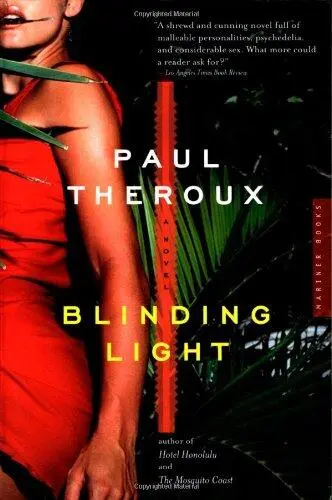
- Название:Blinding Light
- Автор:
- Издательство:Mariner Books
- Жанр:
- Год:2006
- ISBN:нет данных
- Рейтинг книги:5 / 5. Голосов: 1
-
Избранное:Добавить в избранное
- Отзывы:
-
Ваша оценка:
Blinding Light: краткое содержание, описание и аннотация
Предлагаем к чтению аннотацию, описание, краткое содержание или предисловие (зависит от того, что написал сам автор книги «Blinding Light»). Если вы не нашли необходимую информацию о книге — напишите в комментариях, мы постараемся отыскать её.
Blinding Light — читать онлайн бесплатно полную книгу (весь текст) целиком
Ниже представлен текст книги, разбитый по страницам. Система сохранения места последней прочитанной страницы, позволяет с удобством читать онлайн бесплатно книгу «Blinding Light», без необходимости каждый раз заново искать на чём Вы остановились. Поставьте закладку, и сможете в любой момент перейти на страницу, на которой закончили чтение.
Интервал:
Закладка:
Mopeds veered in and out of the stopped cars, cyclists bumped along the side of the road, and two women jogged ostentatiously past, sweat-soaked in their scanty clothes — a dog barked at them, thrusting its loose spittle-flecked jaws out of a car window, sounding outraged. Someone’s radio — the convertible in front? — was very loud, and among the unmoving cars in the still summer air someone’s cigar smoke reached Steadman and Ava.
“The president was puffing a cigar at Wolfbein’s, did you see?” Ava said, just to make conversation, because the delay was so serious and she wanted to calm Steadman’s anxiety about the plane they had to catch.
“What the fuck is this traffic all about?”
Steadman’s anger was a gumminess in his mouth and grit in his eyes and his guts churning with frustration. He felt like an innocent loosed upon a mobbed and noisy world. He was upset and angrier for the way that Ava, with that pointless cigar remark, was trying to distract him from the bikes, smoke, noise, strangers, New York license plates, joggers, the leafy road blocked with cars — and the most annoying thing about slow traffic was the visibility of bumper stickers on the SUVs. The more expensive the vehicle, the more frivolous the message.
“Look at the size of them. They’re made for jungles and deserts.”
Ava said, “That reminds me. The agency wants you to sign off on a proposal from Jeep for some kind of Trespassing Limited Edition. Like the Eddie Bauer Ford Explorer.”
He imagined the vehicle in the Trespassing style, the safari look, the earth tones, the sturdy seats, the loops and brush guards and compartments, the compass, the altimeter, the gear bags, the khaki, the canvas patches, the leather details. All this because he had written a book. He went sad and silent.
Ava said, “Anyway, there’s another flight at noon,” and kept on, sounding hopeful, offering consolation, until she became aware of the silence from Steadman.
Gazing straight ahead, smiling slightly, licking his lips, Steadman held a small bottle in his hands that Ava could tell was empty.
“What did you just go and do?”
Instead of replying to that, he said, “The traffic’s moving”—though it wasn’t — so he added, “A mile down the road,” for he was blind again, in another dimension of understanding, relaxed, seeing past the jammed-up cars and the bikes, and calculating that they would easily make the flight.
At the airport, Steadman was smiling behind his dark glasses as they checked in.
“Just carry-ons,” Ava said to the woman behind the counter tapping the computer keyboard.
Steadman said softly, as though to himself, “That traffic was in my head.”
Swishing his white cane, he loped confidently toward the small plane, ahead of Ava but following the other boarding passengers.
“Brother Steadman, how’re you doing?” a man said from one of the forward seats.
“Bill,” Steadman said, recognizing Styron’s voice and, sensing him begin to rise from his seat, “Please don’t get up.”
“You’re doing just fine,” Styron said. “Wasn’t that a great party at the Wolfbeins’?”
“A historic occasion.”
“You made it so. You’re a brave guy.”
“Cut it out.”
“No, you’re a trouper. I was fetched by the sight of you talking to the president. He was mighty impressed, too.”
Ava’s embarrassment was visceral — Steadman sensed it powerfully, feeling what she felt, tightening like a cramp, reproaching him, and he said, “Please don’t say that, Bill. I’m the same as always, maybe a little brighter.”
“You’re right here, sir,” a woman said — the flight attendant, Steadman knew, directing him to a seat on the aisle. Ava took the window seat.
Steadman was aware of being close to Styron, just behind him, an odor, a mutter, the crunch of Styron’s folding a thick newspaper, the sense of his fragile fingers, his knuckles on the crease.
“You going to Boston, Bill?”
“Just to change planes,” Styron said. “Susanna’s filming Shadrach in North Carolina. She invited me down.”
“I’m seeing a doctor at the Mass. Eye and Ear Infirmary.”
“I hope it’s good news.”
“Whatever. I’m happy.”
“That’s what I mean by brave.”
And again the contraction, the cramp of shame from Ava beside him, though they were not even touching. But he resented her reaction now, like an intrusion into his serenity.
“I’m working on a book.”
“That means everything,” Styron said.
They taxied, the small plane’s wheels bumping; they took off, as though suddenly caught and lifted by a sling of wind, and the aircraft twisted and vibrated, the engine noise filling the compartment until they were well aloft and cruising, bumped by hidden angles of clouds and gulps of air.
“I could fly this thing.”
“Sure you could,” Styron said, with magnanimous authority and a little chuckle.
Steadman threw off his seat belt. He hoisted himself from his seat and walked to the cockpit door, which was propped open.
“Hi, Captain.”
The noise was loudest here, the pile-driver racket of pistons and propellers, but one of the pilots sensed him standing at the door. He smiled when he saw the white slender cane and the dark glasses, the Panama hat, the elbows out, head upright, face forward, ears cocked, in a blind man’s alert posture, a listening animal.
“Why are you flying along the canal? That’s not your usual flight path.”
“Incoming traffic’s stacked up to the west because of weather. We’ve been given a slot on the south-facing runway, so we’ll make an easterly approach. Hey, how did you know our bearing?”
“Sunshine,” Steadman said. “The canal entrance is down there. The Sandwich power plant. The harbor. The marsh. The dunes to the east. Scusset to the west — and now we’re banking toward Plymouth. Duxbury coming up, and we’re hitting the headwind, northwesterly today—”
“Better take your seat, sir.”
“Let me spell you at the controls.”
Shortening his neck in apprehension, one pilot hunched forward, gripping his wheel protectively, while the other pilot kept his gaze on Steadman, looking alarmed at this smiling talkative blind man offering to fly the plane.
“Move over,” Steadman said, nudging the man with his cane.
“I’m going to have to insist that you return to your assigned seat and fasten your seat belt,” the man said, seeing himself and the copilot reflected on the mirror lenses of Steadman’s glasses.
“You think I can’t fly blind? I can fly better blind.”
“We’ll be landing in just a few minutes, sir,” the pilot said, as though to a madman.
“I knew that,” Steadman said, and tapped his cane again. “Marshfield, North River—”
“Step away from the controls!”
At last, Ava touched his arm and said, “Please, Slade.”
Returning to his seat, he brushed the terrified and anxious body of the flight attendant, who asked Ava in a murmur whether he was all right.
Ava was too embarrassed to mention any of this in front of Bill Styron, and was relieved when they had landed and said their goodbyes and were in a cab a few minutes later. She was about to raise the subject of his bizarre behavior in the cockpit when, going through the Sumner Tunnel, Steadman took charge, saying, “Take a hard right after the exit. We’re going to Quincy Market. I’ll tell you where.”
“Nothing wrong with your eyes, sir,” the cab driver said. His own dark eyes and big nose and part of his smile filled the smeared oblong of the rearview mirror.
“Right here,” Steadman said, and then, as if reading the signs but without looking at them, “Martignetti Liquors. La Rosa Deli. Mama’s Pizza. The Big Dig labyrinth.”
Читать дальшеИнтервал:
Закладка:
Похожие книги на «Blinding Light»
Представляем Вашему вниманию похожие книги на «Blinding Light» списком для выбора. Мы отобрали схожую по названию и смыслу литературу в надежде предоставить читателям больше вариантов отыскать новые, интересные, ещё непрочитанные произведения.






Обсуждение, отзывы о книге «Blinding Light» и просто собственные мнения читателей. Оставьте ваши комментарии, напишите, что Вы думаете о произведении, его смысле или главных героях. Укажите что конкретно понравилось, а что нет, и почему Вы так считаете.