Paul Theroux - Hotel Honolulu
Здесь есть возможность читать онлайн «Paul Theroux - Hotel Honolulu» весь текст электронной книги совершенно бесплатно (целиком полную версию без сокращений). В некоторых случаях можно слушать аудио, скачать через торрент в формате fb2 и присутствует краткое содержание. Год выпуска: 2002, Издательство: Mariner Books, Жанр: Современная проза, на английском языке. Описание произведения, (предисловие) а так же отзывы посетителей доступны на портале библиотеки ЛибКат.
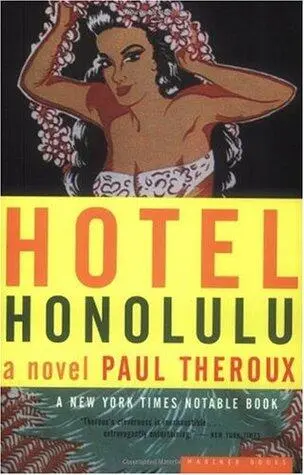
- Название:Hotel Honolulu
- Автор:
- Издательство:Mariner Books
- Жанр:
- Год:2002
- ISBN:нет данных
- Рейтинг книги:4 / 5. Голосов: 1
-
Избранное:Добавить в избранное
- Отзывы:
-
Ваша оценка:
Hotel Honolulu: краткое содержание, описание и аннотация
Предлагаем к чтению аннотацию, описание, краткое содержание или предисловие (зависит от того, что написал сам автор книги «Hotel Honolulu»). Если вы не нашли необходимую информацию о книге — напишите в комментариях, мы постараемся отыскать её.
Hotel Honolulu — читать онлайн бесплатно полную книгу (весь текст) целиком
Ниже представлен текст книги, разбитый по страницам. Система сохранения места последней прочитанной страницы, позволяет с удобством читать онлайн бесплатно книгу «Hotel Honolulu», без необходимости каждый раз заново искать на чём Вы остановились. Поставьте закладку, и сможете в любой момент перейти на страницу, на которой закончили чтение.
Интервал:
Закладка:
Even in their forties the brothers frequently used baby talk, Wayne more than Will.
"Laura has been eating our mangoes" was all Wayne said.
Wayne was just finding out that fact, yet the technical details that lay behind that painting were described in the gallery's press kit and contributed to the popularity of the traveling exhibition. It was a sellout on the mainland and made Will's name.
Wayne usually ignored Laura, though he invented clownish names for her mother, Carol-Ann (a divorcee who lived in a condo in Aina Haina), for presuming to write poetry, saying it was a sign of approaching senility, calling her Anna Banana, reciting her poems in a screechy voice and English accent, beginning, "Welcome to Masterpiece Theatre." He was rude about the mother's boyfriends, her passion for cats, her clothes, her attempts to get parts at the Manoa Valley Theater. "She's shapeless! She's shameless! She's a thespian!"
This cruelty toward her mother isolated and demoralized Laura. Yet Laura went on cooking for the brothers, and sometimes the ailing Lydia, in the family house. Sometimes, pushing his plate aside, Wayne said, "Yup, I think I'll just open a can of Alpo." He seemed to dance around his brother and Laura, pestering, satirizing, making funny faces, talking baby talk. He borrowed money from Will. He often showed up at Will's openings in old clothes, wearing them like a taunt, and if anyone remarked on them, he screamed, "Snob!"
Wayne's pleas for money were like a reproach to Will's success. Will handed over the cash, but when he mentioned that he needed it repaid, Wayne howled, "I can't believe what a cheapskate you are!" and said he was hurt, all the while demanding more, which Will gave him. Laura said, "What about our future?" Long, horrible nights. Wayne's weird vitality. Will was finally so worn down he wanted to pull the plug.
He didn't have to. Laura, the only woman he had ever loved, left him after weeks of tears, and Wayne, relieved, was gentle and consoled his brother. Not long after that, Lydia died and the brothers were alone. Once, Wayne said, "I owe you so much. Please forgive me." But when Will reminded him of it, Wayne said, "How many times do you want me to say it," speaking with such surprising anger that Will stopped using the word "loan." He said, "This is a gift."
Although Wayne called himself a portrait photographer, and cursed the big businesses in Hawaii for not hiring him to make expensive boardroom portraits, his specialty was abstract pictures of cluttered interiors. He claimed they were aspects of his melancholy — attics, cellars, rooms piled high with junk: musical instruments such as hautboys and sackbuts, printed sheets, fever charts, musical scores for unusual duos, brass fittings, stacks of magazines, stuffed toys, tools such as spokeshaves and plumb bobs, wooden printing type, stenciled crates, a cider press, an oryx skull, closely scratched whale teeth, Shaker baskets, smeared palettes, hand looms, elephant bells. The assortment defied interpretation. Baroque conglomerations, the images were allegories, he said, for the room that framed them was the brothers' dark childhood room.
Wayne screamed like a parrot when sarcastic critics listed the objects, cramming them into a mocking paragraph like the one above instead of — as Wayne demanded — interpreting their harmony and significance.
A pitchfork, a cigar box, a cranberry scoop, a stack of cups and saucers, a flintlock, a gramophone, a dagger, a pair of women's riding boots, a Coca-Cola sign, a mildewed book of piano duets, and two leathery balls that might be mummified heads in an anonymous room.
"The heads and the music were the whole point," Wayne said, and, furious, he never exhibited his photographs again. He had piles of photographs. "I am withholding them!" He put away his old plate camera and hardly worked. He grew scruffy and cross. He began to say, "I like the way I smell."
He knew his brother had become, if not famous, then well known outside Hawaii, which was a great and enviable thing. Will was loved for his vivid colors, the creation colors of the Edenlike islands, including the urinous mango-juice yellow, green from crushed hibiscus leaves, dusty purple from wild plum trees on Java, and a peculiar russet in his Country Road, Kamuela was a pigment of red clay he had scraped from the very earth he had depicted.
"Stop brooding, Willy."
"I never brood."
The brothers were truthful in using their lives in their work, never allowing Hawaii to stand for paradise. Hawaii was a real, flawed place, with melted mountains, fallen trees, iron in the soil, crumbled coral. Full of aliens and transplants, the islands were choked with vines and pests, which had destroyed the old native growth. That clutter had been the point of Wayne's photos. There were angry children in Will's paintings, and on Will's fruit there were always teeth marks.
"We are witnesses!" Wayne said.
The mainland exhibit traveled to Honolulu. After Buddy told me about the brothers, I went to the show and saw that the portrait of Wayne was missing. Buddy had no explanation, though he said he had known the brothers as crazy teenagers when they stayed at the hotel with their mother. It seemed that the portrait had been hurriedly removed by the police. After it was examined, the blistery paint was identified as Wayne's blood. The Honolulu papers reported that Will was wanted for questioning in connection with his brother's murder. Among Will's possessions was a photograph that Wayne had taken of him and cruelly retouched. Will was arrested in his room at the hotel and led through the lobby, Buddy said, "laughing like a naughty boy."
46 Domination
Our near neighbor, Dickstein, manager of the Waikiki Pearl, seemed boringly faithful to his mistress. One of the conventional paradoxes of marital infidelity is this absurd loyalty to the one you're cheating with. How could it be love?
Daniel (but this was Hawaii; he dubbed himself "Kaniela") Dickstein was a monster for the way he screamed at his staff. "Verbal abuse" didn't begin to describe it. Dickstein's other habit was spending afternoons upstairs at my hotel with one of his employees. Kendra was her name, a tall, olive-skinned, part-Hawaiian beach queen — gray eyes, small breasts, a surfer's sinewy legs and muscly bum. She carried a gym bag to these weekly assignations. Naturally you'd want to know what was in such a bag. Compared to Dickstein I was passive, yet I felt I had power.
Having a wife and children on the mainland, living at the hotel he'd previously managed, where his wife still worked, did not justify his sleeping with the staff. It was wrong to become involved with employees — not only morally wrong but imprudent, bad for discipline, unfair to the others. And when the affair ended and the rejected sex partner was still on the payroll, what then?
Yet somehow Dickstein managed. I could not bring myself to call him "Dick." Nicknames seemed misleading and overly familiar to me, though
Honolulu was full of them — "Buck" Buchwach, "Gus" Guslander, "Sam" Sandford, "Link" Lindquist. "Kaniela" Dickstein had a big irregular head, a jaw like a backhoe, and the lumpy defiant face of a general in a war movie. He was a screamer, a swearer, and he threw things, anything he happened to be holding. He flung pencils at Kendra and once a coffee cup, which smashed against the door she was closing as she fled. He demanded that she return to clean up the mess. This was her lover.
Dickstein never raised his voice to me. He always greeted me with "Shaloha," his own cross-cultural coinage. He was grateful to me for allowing him to use the employees' entrance and the service elevator so he could slip up to room 710 for three hours every Wednesday afternoon. Scheduling a midweek tryst made it seem unsentimental; there would have been something sweet about their meeting on a Friday, and weekends were romantic. Wednesday was like work, more like an appointment, because they never skipped a week and were seldom late. Nevertheless, something in me said, Lucky dog.
Читать дальшеИнтервал:
Закладка:
Похожие книги на «Hotel Honolulu»
Представляем Вашему вниманию похожие книги на «Hotel Honolulu» списком для выбора. Мы отобрали схожую по названию и смыслу литературу в надежде предоставить читателям больше вариантов отыскать новые, интересные, ещё непрочитанные произведения.




Обсуждение, отзывы о книге «Hotel Honolulu» и просто собственные мнения читателей. Оставьте ваши комментарии, напишите, что Вы думаете о произведении, его смысле или главных героях. Укажите что конкретно понравилось, а что нет, и почему Вы так считаете.