Carole Maso - Ghost Dance
Здесь есть возможность читать онлайн «Carole Maso - Ghost Dance» весь текст электронной книги совершенно бесплатно (целиком полную версию без сокращений). В некоторых случаях можно слушать аудио, скачать через торрент в формате fb2 и присутствует краткое содержание. Год выпуска: 2013, ISBN: 2013, Издательство: Dzanc Books, Жанр: Современная проза, на английском языке. Описание произведения, (предисловие) а так же отзывы посетителей доступны на портале библиотеки ЛибКат.
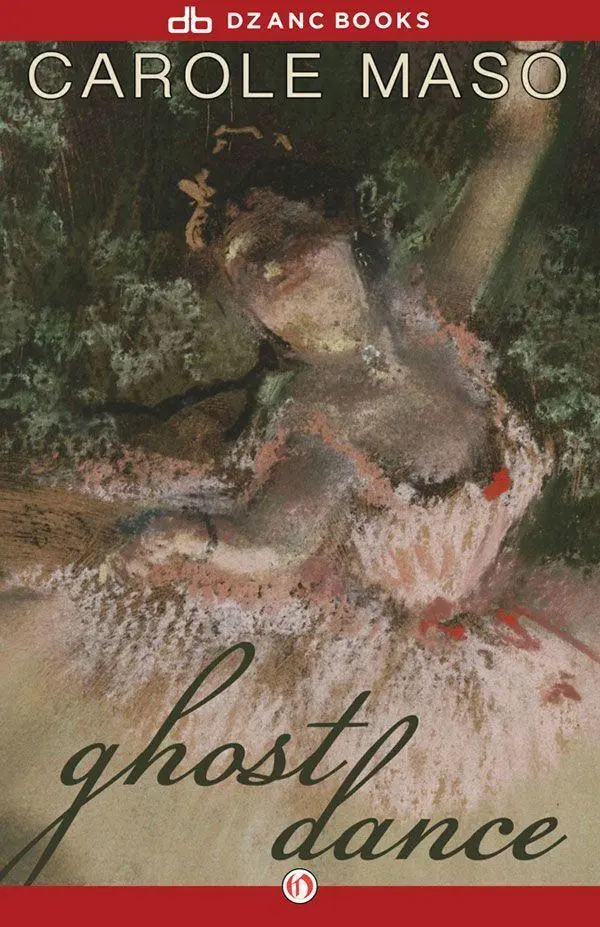
- Название:Ghost Dance
- Автор:
- Издательство:Dzanc Books
- Жанр:
- Год:2013
- ISBN:9781480441897
- Рейтинг книги:5 / 5. Голосов: 1
-
Избранное:Добавить в избранное
- Отзывы:
-
Ваша оценка:
Ghost Dance: краткое содержание, описание и аннотация
Предлагаем к чтению аннотацию, описание, краткое содержание или предисловие (зависит от того, что написал сам автор книги «Ghost Dance»). Если вы не нашли необходимую информацию о книге — напишите в комментариях, мы постараемся отыскать её.
has to offer. Like her artist-protagonists, Maso's subject as well as medium is language, and she is brave and dangerous in her command of it. She abandons traditional narrative forms in favor of a shaped communication resembling Beckett and rivalling his evocative skill. Immersed in dilated and intense prose, the readers view is a privilege one, riding the crest of clear expression as it navigates the tangled terrain of loss and desperate sorrow.
Ghost Dance — читать онлайн бесплатно полную книгу (весь текст) целиком
Ниже представлен текст книги, разбитый по страницам. Система сохранения места последней прочитанной страницы, позволяет с удобством читать онлайн бесплатно книгу «Ghost Dance», без необходимости каждый раз заново искать на чём Вы остановились. Поставьте закладку, и сможете в любой момент перейти на страницу, на которой закончили чтение.
Интервал:
Закладка:
Amanda began neighing like a horse the way she always did when she was upset.
And in the bathroom Debbie unrolled roll after roll of toilet paper and stuffed it into the toilet.
The whole house was in chaos, my brother having to leave the job, unexpectedly, without notice.
The first postcard came from Maine. On it a fisherman stands on a wharf holding up two lobsters. The sky is a brilliant blue, like his eyes, which shine out from a haggard face.
“Eli Lilly,” Fletcher scrawls on the back, “manufacturers of the drug DES. Wrongfully marketed for use in preventing miscarriage. No preliminary lab tests done on pregnant mice. Consequences: all plaintiff’s reproductive organs and more than half her vagina removed. 1953 prenatal exposure to DES, which was ingested by the mother while pregnant with plaintiff, is proximate cause of cancer that developed seventeen years after her birth.”
Sarah Stafford, age twenty-two, having become accustomed to the movement of the boat, felt dizzy stepping onto the earth. It seemed to her years since she had left England; with the boat’s first motion forward, the land’s first tilt, she had left behind the idea of the world, and it had been oddly comforting to her. She had grown to love the oceans of blue and lavender and pewter.
Now, landing here, she could scarcely believe that this was the dream that had propelled the tiny ship forward: paradise. How the idea of paradise must have varied among the one hundred and fifty tossed through the water on the courageous Godspeed . Now they were here. So this was paradise: a land you could not stand on, a tangle of trees. All right, then, she thought. But it was not all right. It seemed far, far away from anything she had conjured. Her children clung to her skirt. Some of the men shouted. Others laughed with delight at their first sight of the New World. Some sighed as if with a lover. Her children began to cry. A dark shape rose in her.
My mother moves her feet across the polished floor — one, two, cha-cha-cha.
“Miami Beach,” Grandpa Sarkis sighs, wiping sweat from his forehead. “There are those pink birds that stand on one foot,” Lucy says, pointing to the picture on soiled newsprint. “Flamingos,” her mother says to her.
“And blue dolphins,” Christine whispers.
“I’ve heard that at the hotels in Miami Beach,” the father says, “men dressed in w hite bring cushions out for you so that you can sit by the pool. And just for signing a paper they will bring you banana and strawberry drinks with parasols in them.”
“Really? Parasols!” my mother says.
“Oh, yes,” her father nods solemnly. “That’s what I’ve heard.”
The next time I heard from my brother, he was in Fall River, Massachusetts, where he continued to name names. “Johns-Manville,” he wrote on the back of a postcard picturing the house of the famous ax-murderess, Lizzie Borden, “was fully aware of the hazards of asbestos in the 1930s but actively suppressed the information, making ‘a conscious, cold-blooded business decision, in utter flagrant disregard of the rights of others, to take no protective or remedial action.’”
This is the part of the story Grandpa hated to tell: It was a cold night. Ice was already thick on the creek called Wounded Knee. The crystalline trees seemed to bend further and further into the earth. It was 1890 and winter was coming on.
A white flag hoisted at the center of the Indian camp promised to the white man that there would be peace, harmony, safety. But the men with faces like snow moved into the camps anyway, hundreds of them, in great drifts like sorrow.
“Everywhere the Indians are dancing,” the men said, as they came nearer and nearer, mistaking the Ghost Dance for a rite of war, not noticing the white flag, not noticing that women, too, danced side by side with the men. “We begged for life, and the white man thought we wanted theirs,” Red Cloud cried.
The soldiers demanded the Indians’ guns, searched their tepees, spilled food from bowls, tore animal skins from sleeping children. Women screamed. Yellow Bird blew an eagle-bone whistle and told his people not to fear — they would be protected by their Ghost Shirts.
The soldiers found about forty old guns, but not Black Fox’s, which he carried under his blanket. The women chanted and cried. And seeing this, all of this, Black Fox took out his gun and fired into the line of soldiers he hated.
Immediately the troops retaliated, shooting at point-blank range at the unarmed Indians. Some Indians had knives or war clubs and fought hand to hand for their lives. At this time another troop positioned up the hill joined in — firing nearly fifty rounds a minute into the women and children who had gathered together and were standing off to the side.
Yet another ring of soldiers killed those who tried to escape into the hills. From four sides the white men fired. Within minutes hundreds were dead. Women and children who attempted to escape by running up the dry ravine were followed and slaughtered. Their bodies afterward were found for more than two miles. A few survivors, mostly children, hidden in the brush, were told they had nothing to fear. Little boys who crept out were surrounded and butchered.
Later, a member of the burial party said that many of the women were found dead with their shawls pulled up over their heads, covering their faces in that last second as the soldiers raised their guns and took aim.
They were buried in a mass grave. Most were naked. Souvenir hunters had taken the bloody Ghost Shirts from their backs. Soon after the massacre was complete, a great blizzard swept over the Plains and covered the dead with snow. It was hard to get some of them into the grave, frozen as they were into the various grotesque postures of violent death.
It was New Year’s Day, I89I.
If you had listened carefully, you could have heard through the snow, some distante away, a chorus of auld langsyne.
“It was so thick on the engine-room floors that we used to walk through it like snow.”
Bill had been a welder at the shipyard. He sat with us now at dinner. He was gaunt and haggard and he gasped for breath. My father put food on his plate.
“Please eat,” Dad said in a whisper.
“They gave us asbestos clothes to wear for protection. In ‘7 2 they started paying us dirty money to work in certain areas.”
“I’ve got people dying here every two weeks,” the business agent for Local 24 said, Fletcher told us.
“Please try to eat something,” my father said.
He was dying from a disease called mesothelioma.
I did not know then how much was ended. When I look back now from the high hill of my old age, I can still see the butchered women and children lying heaped and scattered all along the crooked gulch as plain as when I saw them with eyes still young. And I can see something else died there in the bloody mud and was buried in the blizzard. A people’s dream died there. It was a beautiful dream.
Black tlk
“Johns-Manville,” he carved into a postcard, “made a conscious, cold-blooded business decision, in utter flagrant disregard of the rights of others.”
“A. H. Robins, manufacturers of the Dalkon Shield, an intrauterine device.”
“You sip these incredible drinks through a straw,” Grandpa Sarkis says, “and the men dressed in white dinner jackets pass out cards for bingo. You can play bingo all afternoon in the sun if you want — or put your chips on the Wheel of Fortune.”
“The white man shall never kill me. If they try to, it is they who will die. They will fall down as if they had no bones. They will suffocate in a great landslide. They will be burned by an enormous wall of fire. They could put bullets through me, they could chop me up into little pieces, they could burn me until I glittered in the palm of their hands, and still I would live.”
Читать дальшеИнтервал:
Закладка:
Похожие книги на «Ghost Dance»
Представляем Вашему вниманию похожие книги на «Ghost Dance» списком для выбора. Мы отобрали схожую по названию и смыслу литературу в надежде предоставить читателям больше вариантов отыскать новые, интересные, ещё непрочитанные произведения.










Обсуждение, отзывы о книге «Ghost Dance» и просто собственные мнения читателей. Оставьте ваши комментарии, напишите, что Вы думаете о произведении, его смысле или главных героях. Укажите что конкретно понравилось, а что нет, и почему Вы так считаете.