Carole Maso - Ghost Dance
Здесь есть возможность читать онлайн «Carole Maso - Ghost Dance» весь текст электронной книги совершенно бесплатно (целиком полную версию без сокращений). В некоторых случаях можно слушать аудио, скачать через торрент в формате fb2 и присутствует краткое содержание. Год выпуска: 2013, ISBN: 2013, Издательство: Dzanc Books, Жанр: Современная проза, на английском языке. Описание произведения, (предисловие) а так же отзывы посетителей доступны на портале библиотеки ЛибКат.
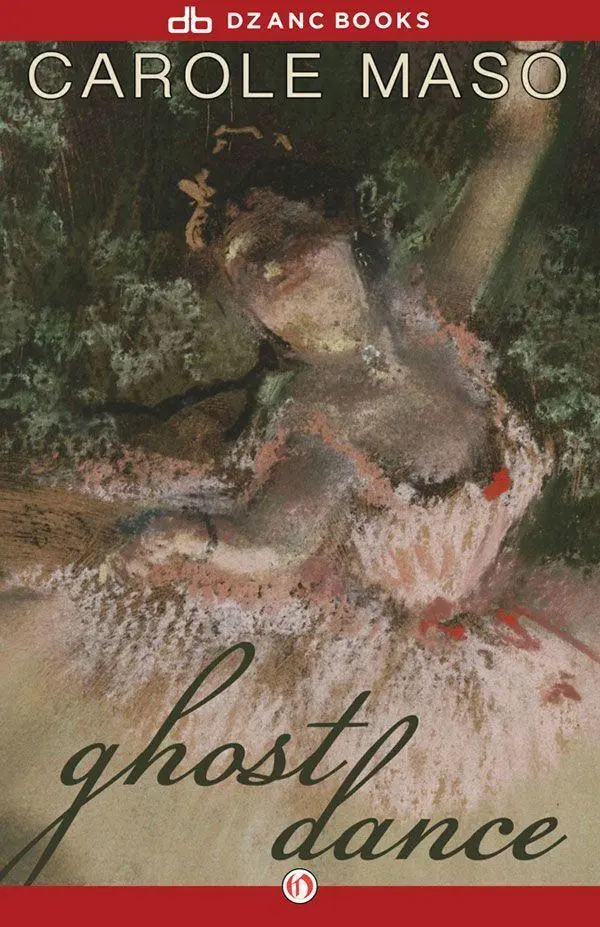
- Название:Ghost Dance
- Автор:
- Издательство:Dzanc Books
- Жанр:
- Год:2013
- ISBN:9781480441897
- Рейтинг книги:5 / 5. Голосов: 1
-
Избранное:Добавить в избранное
- Отзывы:
-
Ваша оценка:
Ghost Dance: краткое содержание, описание и аннотация
Предлагаем к чтению аннотацию, описание, краткое содержание или предисловие (зависит от того, что написал сам автор книги «Ghost Dance»). Если вы не нашли необходимую информацию о книге — напишите в комментариях, мы постараемся отыскать её.
has to offer. Like her artist-protagonists, Maso's subject as well as medium is language, and she is brave and dangerous in her command of it. She abandons traditional narrative forms in favor of a shaped communication resembling Beckett and rivalling his evocative skill. Immersed in dilated and intense prose, the readers view is a privilege one, riding the crest of clear expression as it navigates the tangled terrain of loss and desperate sorrow.
Ghost Dance — читать онлайн бесплатно полную книгу (весь текст) целиком
Ниже представлен текст книги, разбитый по страницам. Система сохранения места последней прочитанной страницы, позволяет с удобством читать онлайн бесплатно книгу «Ghost Dance», без необходимости каждый раз заново искать на чём Вы остановились. Поставьте закладку, и сможете в любой момент перейти на страницу, на которой закончили чтение.
Интервал:
Закладка:
“Maybe,” I said. “What does it matter to you?”
“Don’t die, Vanessa. Please don’t die,” he said, and I heard a great wailing. “Invent the wav to live with this. Do anything you have to,” he whispered, kissing me. “Save yourself.”
The day we bought the bord the sun was shining, and the car salesman, who wore a plaid seersucker jacket, whistled “For Once in My Life” as he watched my mother slip one long leg then the other into the small red car. The glare was so great that day that my parents seemed to disappear in it when the Pinto’s doors were shut and they took the car for a trial run around the block.
This cannot go on, Fletcher — you an old man carrying your bitter root across the country in a jute sack. Let it go. Bury it deep in the sand. Let it grow downward into darkness now as it curls from the bag into your arms and crawls onto your back, as it wraps all around you. I always believed you: that somehow there might be a way to live.
Back in Detroit, you, too, loved Wagner and crept to the closet at night, after everyone was asleep, to reach up for him. On those nights something stretched in me, too, and I turned in my crib and cried out. And a few years later, when you lifted your dinner of meat and noodles to your mouth, I shuddered, knowing you were somewhere, waiting for me.
Father and Fletcher sat in the front and Mother sat in the back seat where she liked it best. She closed her eyes. She would try to rest in the car, enjoy life more, spend more time with the children.
Miss Cameron, the associate professor of English, pauses in front of me and smiles, helping me to gather the strength to go on.
As she lit a cigarette from the new pack she had just bought, we tell ourselves that she wanted to live forever.
There were three phone calls that night. The first came from her mother, regal even through the dirty receiver, her image instantly conjured with the sound of her voice. She was wondering whether France, rather provincial, she thought, on her last visit, was the right place for her daughter to pursue her studies in the history of art. Florence undoubtedly would have been the more logical choice. But there was nothing to worry about, her daughter assured her, then asked about her father and promised to write. After a few more monosyllabic minutes she hung up because, as she told her mother, she feared the sound of her disembodied voice.
We know now because we know the end of the story that she will die later on in this small room, but after the second call we forget; we cannot see how it is possible. The second call was to a man, age thirty-eight, named Paul Racine, a fashion designer she had met while in Paris a few weeks before. A flamboyant man, witty, energetic, the type of person Natalie liked to be around: he forced her into animation. The conversation was long and leisurely, and they discussed many things: the upcoming fashions — the shorter skirts, the longer hair, the use of color for spring, the lines of the future, cosmetics — and her chances of being a model. It was a call made by someone who planned to see the spring, someone with plans far beyond this cold January night. “Drugs were never once mentioned,” Paul said when asked afterwards.
“I want to take it back — the idea of my tongue in your mouth, the idea that I could ever love you,” she said to someone whose name we cannot get — the third call.
Some time after the third call the drug was injected, we now believe. As close as we can tell, it was somewhere between nine and eleven o’clock. She then began preparing to go out, combing her hair, putting it up, loosening it, taking it down, putting it up again. She applied and reapplied makeup to her ghost face, painting on cheeks and eyes, composing a mouth. But no matter how much color she added, she remained white as the heroin climbed her arms and reached up for her. Giving up, she put a few lipsticks into her purse — an incomplete work, untitled vet.
When she gets to the bar she buys a new pack of cigarettes, which she smokes to the rhythm of Frene h pop music, and then she fumbles across the dance floor. Two women stop her to talk. She lies clearly and without hesitation to one lover about another, loses interest in the lie midway, forgets the ending, walks away. Slowly she finds her way to the bathroom, refusing help every few steps, her divorce with the body almost final now. She blacks out several times but somehow manages to get herself home. Her dazzling eyes light the way. She moves forward, quicker than she had previously, open-armed, toward light, toward a large, white American car. She nearly runs into it, like a cat giving away its last life.
Back in the apartment she falls to the bed, farther away with each breath now from her intentions, her fingertips freed from the history of art. Who can remember now, she wonders? longer skirts? Shorter hair? Longer hair? The color white?
Soon the police arrive — two young men. “This happens,” they say, covering the body, steady as surgeons. “This happens.” For them it is the only way to see such things. “This happens,” they mutter to each other, looking at her long, beautiful legs, her flawless face. “It was very pure — the heroin. She probably did not know,” they tell anyone who will listen. “It happens, that’s all. C’est tout. C’est ça.”
Later, there will be police photographers.
Later, in the mind, we will try over and over to see this — her body sculpting itself into its final position — but w e cannot.
“On Natalie’s behalf I quote from a Richard Brautigan poem for you,” Marta said quietly.
I don’t want to see you end up that way
with your body being poured like wounded
marble into the architecture of those who make
bridges out of crippled birds.
“If you feel compelled to remember, try to imagine her hunched over pin-ball.”
“Imagine it differently, Marta,” I told her. “Help yourself out of this.” But Marta could not imagine her way through grief and past it. She sank into it and she took me, too. She had never followed the flight of the Topaz Bird. She had never even heard of it.
Natalie is lying in her apartment on the floor with her head propped against a blank wall, drawing conclusions, summing things up. “Do you think it was right,” she asks herself now, “to come here to France, so far from Marta and everyone else?” She reaches across the floor for a pen but finds only pencils and with them carves a few short lines, last words, as the dresser disappears, the kitchen light dims. Her meditation is long and involved; it does not fit on the page and cannot be captured completely by the slowing pace of her hand. The complex thoughts of an abstracting mind flood her whole system.
“Do not picture it that way,” Marta says, “Natalie apologizing, Natalie thanking those she’d always meant to, Natalie saying good-bye, making the ordinary, the simple gestures of love. Do not think of it that way. For some, the most simple things are not possible.
“She probably welcomed sleep, because she was so restless always and had gone without sleep for so long. She probably was thinking about the color red or a new way to cut her hair.”
She probably never once thought of the growing space in front of her eyes. A song from the bar that would not leave her head was probably the last thing on her mind, locked forever inside her skull after the brain closed down. Surely, she could not have known that she was about to die.
“And if someone had told her,” Marta says, “she probably would have laughed and shrugged her shoulders. She probably would not have been listening.”
“My palms once said unjust criticism would follow my death. My palms are gone, their lines incorporated into the world you now see, along with all the dead.”
Читать дальшеИнтервал:
Закладка:
Похожие книги на «Ghost Dance»
Представляем Вашему вниманию похожие книги на «Ghost Dance» списком для выбора. Мы отобрали схожую по названию и смыслу литературу в надежде предоставить читателям больше вариантов отыскать новые, интересные, ещё непрочитанные произведения.





Обсуждение, отзывы о книге «Ghost Dance» и просто собственные мнения читателей. Оставьте ваши комментарии, напишите, что Вы думаете о произведении, его смысле или главных героях. Укажите что конкретно понравилось, а что нет, и почему Вы так считаете.