Peter Buwalda - Bonita Avenue
Здесь есть возможность читать онлайн «Peter Buwalda - Bonita Avenue» весь текст электронной книги совершенно бесплатно (целиком полную версию без сокращений). В некоторых случаях можно слушать аудио, скачать через торрент в формате fb2 и присутствует краткое содержание. Год выпуска: 2015, ISBN: 2015, Издательство: Crown Publishing Group, Жанр: Современная проза, на английском языке. Описание произведения, (предисловие) а так же отзывы посетителей доступны на портале библиотеки ЛибКат.
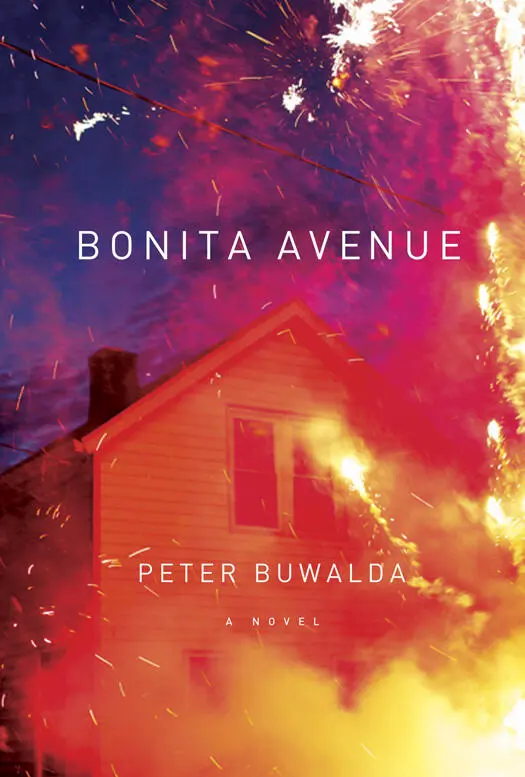
- Название:Bonita Avenue
- Автор:
- Издательство:Crown Publishing Group
- Жанр:
- Год:2015
- ISBN:978-0-553-41786-9
- Рейтинг книги:4 / 5. Голосов: 1
-
Избранное:Добавить в избранное
- Отзывы:
-
Ваша оценка:
Bonita Avenue: краткое содержание, описание и аннотация
Предлагаем к чтению аннотацию, описание, краткое содержание или предисловие (зависит от того, что написал сам автор книги «Bonita Avenue»). Если вы не нашли необходимую информацию о книге — напишите в комментариях, мы постараемся отыскать её.
A riveting portrait of a family in crisis and the ways that even the smallest twists of fate can forever change our lives,
is an incendiary, unpredictable debut of relationships torn asunder by lies, and minds destroyed by madness.
Bonita Avenue — читать онлайн бесплатно полную книгу (весь текст) целиком
Ниже представлен текст книги, разбитый по страницам. Система сохранения места последней прочитанной страницы, позволяет с удобством читать онлайн бесплатно книгу «Bonita Avenue», без необходимости каждый раз заново искать на чём Вы остановились. Поставьте закладку, и сможете в любой момент перейти на страницу, на которой закончили чтение.
Интервал:
Закладка:
It’s already afternoon when Tineke gets home, packed tightly in a cap and his scarf, but still she’s freezing, with eyes that have clearly been crying. He warms up pea soup for her, she seems less upset than yesterday evening, she asks why he doesn’t go to the police, the threats seems serious enough, they’ve come from a recidivist, give me just one good reason why not?
“Joni.”
“Joni?”
“Yes, Joni. Just think of her , will you. She’s done her best to keep that website a secret, and now you want to go to the police with it? We’ll have to tell them everything. There might be a court case. We’ll have to talk to her about it. Exactly what she doesn’t want. Even Wilbert understands that. Not to mention the danger of it leaking out.”
She stands with her broad back to the fireplace, palms of her hands turned toward the fire. “Those people are bound to secrecy.”
“Tineke,” he says theatrically, “don’t be so incredibly naïve. She’s the daughter of the Minister of Education. You want it juicier? OK. Then ring up Bill Clinton.”
“Cut it out, Siem.”
“Honey,” he says, “we’re talking about Joni’s future. That’s what concerns me.”
17
“How’d the interview go?”
“You have to get off here.”
“Was she bitchy?”
“ Off here . Not especially. She was clever. Interested.”
“But she’s a woman. Women have ulterior motives.”
“Course not.”
“A woman talks nice to you and only sticks it to you later. Once she’s back home sitting at her laptop with a cup of tea, she’ll skin you alive.”
“Speed limit’s fifty here.”
“Skin us alive.”
“Rusty, I’m a woman too, remember? You’re talking crap. FYI, I know exactly what I said.”
Too much, that’s what. That Mary Jo Harland was a pro; first she plied me with intense empathy, then she tipped me over like a tub of dishwater. Within half an hour she’d got on tape that my father had committed suicide and I hadn’t gone to the funeral. It took a certain amount of wangling over the phone to see that this didn’t get into the article. That compassion of hers was probably still lying in the rental car.
“Did you give her a tour?”
“Of course I gave her a tour. You invited her out to Coldwater. What: ‘Sorry, off limits, we’re making WMDs here’?”
“I assumed you’d take her to whatsit across the street. Or to Starbucks. That’s what I’d have done.”
A couple of minutes of silence. Then I said: “Take Alameda here, get onto Harbor Freeway only after Little Tokyo. Why aren’t we picking Vince up? He lands at LAX, right? Might have been nice.”
Rusty’s protégé ran his own site somewhere in Cleveland, Ohio. The first interview was a bit strange; Vince seemed like a capable guy, he expressed himself clearly and concisely— if he expressed himself, that is, because he was as taciturn as an oracle, and so bone-dry and listless that I was afraid he’d slip into a coma. On the open notebook page in front of me during the interview was a single, boldly inked word: “DULL.”
“You think I’m nice, Joy? Let ’im take a taxi. So what’d she say?”
“Who?”
“Harland! What did she say? Y’know, when you showed her around.”
“Not much, really, Rusty. This article was all her idea. She was crazy about it, believe me. She knew our sites, so there wasn’t a whole lot she hadn’t seen already. I hope Bobbi realizes she’s going to Compton, though.”
“Oh? Do I hear worry? Ha! Joy’s worried about our swanky new location. Now that’s interesting.”
I kept my mouth shut. Of course nobody was dying to move to Compton. A week before the closing somebody left a Gang Territory Map of South Los Angeles on my desk, the area divided into red and blue blocks. According to the key, the blue areas were Crips territory, the red ones Bloods. Some anonymous chickenshit had naïvely printed out the map on one of our color printers: within three minutes I’d spoken to a systems manager who told me it came from Deke, a black cameraman who lived in respectable Burbank with his family, but looked like he’d been born in an NWA T-shirt. “You watch too much MTV,” I e-mailed him, “South L.A. is a product, Deke honey, it’s today’s Disney. Twenty years ago you could buy those Fuck Tha Police pics of yours all over Europe, even out in the sticks. Ever noticed how much Snoop Dogg looks like Goofy? So don’t be such a wuss.”
“I’m not worried . I’m just wondering how she’ll get in.”
“We should be getting there first.”
The words were barely out of his mouth when traffic started slowing down, until we had almost stopped. Rusty lowered the window of his Maybach and wriggled out up to his waist. Gas fumes wafted into the red-leather interior. The police were cordoning off the two left lanes. Now Bobbi would probably have to kill a half hour on the streets of Compton — not a pleasant thought, I had to admit. Of course I was bluffing with Deke. What did I know? L.A. was a metropolis of ten million people, nine million of whom pretended that Compton and Hawthorne and Inglewood didn’t exist. I never set foot there. Three times a year I sped through that rotting cavity on the way to a girlfriend in Long Beach, and that was that. Deke and his gangland guide had me worried enough to spend a whole evening watching Bloods and Crips posts on YouTube, and I had to admit that Goofy wasn’t his good old self anymore. The Compton Goofys strutted bare-chested and bandana’d through their down-and-out neighborhood, toting sawed-off shotguns and yelling whom — in random order — they were planning to murder or fuck. (The police, our bitches, us.)
Rusty flopped back into his hand-stitched bucket seat with a springy slap. “A semi jackknifed. They’re pulling a rice rocket out of the guard rail.” That’s what he called Japanese cars, in fact all cars smaller than his — this grotesque German tank of which there were fewer than 100 in the whole of America, most of them belonging to elderly millionaires for shuffling to and from their gated communities. Rusty’s Maybach was finished in black gloss with gold-leaf trim, a hearse for transporting wedding cakes.
“Did you see Bobbi last Friday?” he asked once we started moving again.
“On Tyra? Sure did. She was good.”
“So do you believe it?”
“Believe what?”
“What she said about that movie.”
“Could be. Bobbi’s no bullshitter.”
“She’s shooting her mouth off, I suspect.”
“I’ll bet they’ve called her. This exit.”
Rusty looked over his shoulder and swerved, cursing, around an SUV with blacked-out windows that had “Music is my life” printed on it in swirly letters. “We might still be on time.”
Even for the tenth time the sight of it was impressive. From the sharp curve of the crumbling concrete off-ramp we had a bird’s-eye view of the Barracks on the white-hot horizon. Alongside us, a dented mocha-colored Dodge sped up and then slammed on its brakes. In the passenger seat sat a black kid wearing a cap made out of a stocking, staring at the Maybach like it was a grilled chicken. Half a mile later, after passing Rosecrans Avenue’s derelict low-rise buildings, vacant sandy lots, boarded-up fast-food joints, and a gas station pretty much rusted down to nothing, the side view of a dark fortress stretching a good 100 yards long by 150 wide rose up on the corner of Avalon Boulevard.
“ That’s where I work, Mama,” said Rusty.
As we approached, the hundreds of narrow windows in the bastion wall came into view; every one of them, without exception, was smashed. I had worked myself into a tight corner: during a tough talk with the city council I’d promised to have the glass replaced and the frames painted within a year. I guaranteed that the bare sidewalks — where the drug-dealing and streetwalking started right after Sesame Street , and which were strewn with cardboard packaging, broken glass, dog shit, human shit — would be planted with young trees. The exterior walls would be fitted with stainless-steel lighting fixtures so that the residents of this urban jungle — the crazies, the homeless, the junkies lying around in doorways — would no longer have to rely on self-made fires and could have a nice read before settling down for the night.
Читать дальшеИнтервал:
Закладка:
Похожие книги на «Bonita Avenue»
Представляем Вашему вниманию похожие книги на «Bonita Avenue» списком для выбора. Мы отобрали схожую по названию и смыслу литературу в надежде предоставить читателям больше вариантов отыскать новые, интересные, ещё непрочитанные произведения.






Обсуждение, отзывы о книге «Bonita Avenue» и просто собственные мнения читателей. Оставьте ваши комментарии, напишите, что Вы думаете о произведении, его смысле или главных героях. Укажите что конкретно понравилось, а что нет, и почему Вы так считаете.