J. Ledgard - Submergence
Здесь есть возможность читать онлайн «J. Ledgard - Submergence» весь текст электронной книги совершенно бесплатно (целиком полную версию без сокращений). В некоторых случаях можно слушать аудио, скачать через торрент в формате fb2 и присутствует краткое содержание. Год выпуска: 2011, ISBN: 2011, Издательство: Random House UK, Жанр: Современная проза, на английском языке. Описание произведения, (предисловие) а так же отзывы посетителей доступны на портале библиотеки ЛибКат.
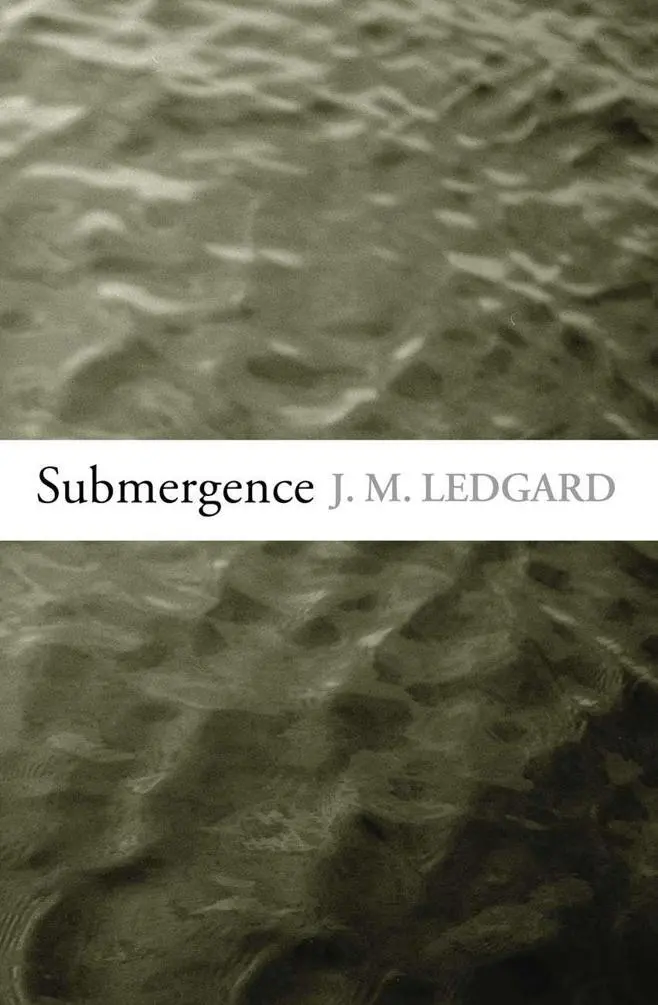
- Название:Submergence
- Автор:
- Издательство:Random House UK
- Жанр:
- Год:2011
- ISBN:9781446496831
- Рейтинг книги:5 / 5. Голосов: 1
-
Избранное:Добавить в избранное
- Отзывы:
-
Ваша оценка:
Submergence: краткое содержание, описание и аннотация
Предлагаем к чтению аннотацию, описание, краткое содержание или предисловие (зависит от того, что написал сам автор книги «Submergence»). Если вы не нашли необходимую информацию о книге — напишите в комментариях, мы постараемся отыскать её.
Both are drawn back to the previous Christmas, and to a French hotel on the Atlantic coast, where a chance encounter on the beach led to an intense and enduring romance. For James, his mind escapes to utopias both imagined and remembered. Danny is drawn back to beginnings: to mythical and scientific origins, and to her own. It is to each other and to the ocean that they most frequently return: magnetic and otherworldly, a comfort and a threat.
Submergence — читать онлайн бесплатно полную книгу (весь текст) целиком
Ниже представлен текст книги, разбитый по страницам. Система сохранения места последней прочитанной страницы, позволяет с удобством читать онлайн бесплатно книгу «Submergence», без необходимости каждый раз заново искать на чём Вы остановились. Поставьте закладку, и сможете в любой момент перейти на страницу, на которой закончили чтение.
Интервал:
Закладка:

The mosquito net was the only barrier between James and the monkeys. A colobus grabbed the netting in its small fists and began to tear it. He batted it away and was surprised at its flimsiness, how little it weighed.
He reflected on the violence in his life. Not the violence of his youth, in combat operations, but in his more recent intelligence work. He was like anyone else. He had different faces.
You hit fast and hard. A flurry of punches was best. He had dealt with two Welsh mercenaries who wanted to sell arms to Somali jihadists. One was from a pit village, the other was of Somali extraction. Instead of going through procedures, he found a Ugandan to beat the men and pour sand in their eyes. He tricked them into thinking it was the work of the jihadists.
It was no longer safe to travel to Chiamboni: he was told that Yusuf had gone to Kenya and from there to Tanzania. Water became a problem at the camp. The filters were broken. There was no more iodine. The water from the well was boiled. Still, it was spewed up. They sucked on sweet fruit and drank coconut milk, but could not quench their thirst. The spring water served in metal cups at the shepherd’s hut in the badlands was a luxury from a past life. The hope was always for rain. The downpours saved them. The thirstier the fighters were, the more solicitous they became. How must we store the rainwater? How do we keep it clean? He told them. When the rain filled their makeshift cisterns, he shouted out until they gagged him. It was pathetic. His anger was ridiculous. But they were so puerile. They had ambitions of dominion, but could not feed themselves. They were like hyenas in an African story who stack themselves up into the sky, one atop the other, because they had been told the moon was a sweetmeat they could reach up and eat.
The gunmetal Thames, the jinn pit, his swimming pool in Muthaiga — then there was Winckler, the French spy he cooperated with, standing there, winking at him. Winckler? There was nothing to remember about the man. They had met in busy bars in Nairobi and other African capitals. Their business was conducted quickly. Winckler always insisted on buying beer in bottles. It was Winckler who had got him smoking again. What else? Winckler wheezed. He had a facial tic that made his eyelids flutter. Yellow bridgework. There was no more. It was like the bony Russians. There was no reason. Winckler swimming, Winckler underwater; fleshy, grey lips, snaggy teeth, an abyssal fish with a lantern shedding bioluminescence where his balding forehead had been.
One time he looked up and saw a passenger jet flying unusually low. It looked like a Yemeni Airways plane. It was probably heading for Sana’a. Just to sense the world moving about him seemed very important. He tried to remember what it was like to be a small child and all the little things his mother had done for him which he had forgotten. Bedtime again, much earlier: feeding him, bathing him, reading to him, laying down next to him until he fell asleep.
He was taken to wash himself in the creek in the evenings. He watched the boys catching crabs on its banks. They were featherweight, yet sank to their hips in smooth mud. They took long hooked sticks and worked them into the crab holes. They pulled quickly when a crab attacked the stick. A single jerk, not allowing the crab to dig itself deeper in. They held the crabs by their back legs. It was one of the only times he saw them laugh, holding the crabs away from them, and watching them snip the air.
He was finally the man with bones made of mists who could find no solid banks. There were flies, a whirring of beetles. He wanted to be done with it and put his head in the water. It was silent. He imagined the fighters in the water. Most of them could not swim. They would go blindly, flailing, not ever barrelling forward, their penises would be small and curled up like seahorses, and water would pour in when they opened their mouths.
*
The embers of a fire were burning low in the dark. He saw mouths moving. One exclaimed, another told it to shut up. There were theological disputes. There were martyrs’ tales.
One night he was allowed to sit with the group while Saif told the story of how Sheikh Ahmed Salim Swedan was killed by an American air strike in Pakistan. May the blessings of Allah be upon him.
He smiled. Swedan was a Kenyan who had run a transport business in Mombasa and been recruited into al-Qaeda through a football team run by Usama al-Kini. The team targeted young men from poor families — frustrated because there were no jobs and no money for them to get married.
The aft-hangar was large enough to hold a helicopter. The Nautile sat on a cradle inside of it. French rock music blasted out.
It was her turn — she was to dive in the morning — but she hung back and let the crew get on with it. The Nautile dived a hundred times a year. The preparations had become routine. The submersible was washed down with freshwater to reduce corrosion, then everything was methodically checked: valves, radios; the computer booted up, the floats attached, finally the science payload in baskets, snorkel bottles, cameras, thermal-imaging devices and the robotic arm which was to stretch out to scrape a sample. When they tested the lights on the craft it was like a UFO landing inside the hangar.
‘Professor Flinders? We’re ready now.’
She examined the payload. She had her checklist. She went through it. When she was finished she smiled.
‘Perfect! Thank you.’
She gifted them some bottles of wine and they went outside the hangar and drank and smoked together. It was a treasure sky just then, streaked with gold. There was a barbecue. They grilled fish that had been caught on the hooked lines hung off the sides of the boat. She ate a salmon steak with salad and a baguette and washed it down with wine. Everyone spoke English. A Norwegian scientist poured out glasses of aquavit. She might have fallen for someone in a moment like that; in the Arctic, so capacious, so soothing. But she felt herself to be half of a whole and was no longer interested.
She was focused: for the hours she was underwater she wanted to be as sharp in her thinking as it was possible to be.
There was a red lever under the floor in the bottom of the craft which when pulled in an emergency caused it to jettison its floats and gear and shoot to the surface. It was not a joyride. The Nautile could get trapped. It could break. If it did, she thought, she would be lifted up by the flooding water and banged around at the top of the sphere. The cold would trigger in her the same mammalian diving reflex found in seals. Her heart would slow, blood would pour into the thoracic cavity to prevent her lungs collapsing, and the instinct to open her mouth and breathe would be more than the certain knowledge that doing so meant death. She would open and her larynx would constrict. Her nose and throat would be filled with water. The laryngospasm would not relax. Her lungs would be sealed off, and she would die a dry drowning by acidosis and hypoxia, head thrown back, eyes glassy and fearful like a doll’s.
Saif got into the habit of laying down next to James in the evenings and talking at him. The most eloquent aside he made was about the plans to build the tallest building in the world in Jeddah.
‘Have you been to New York?’
Читать дальшеИнтервал:
Закладка:
Похожие книги на «Submergence»
Представляем Вашему вниманию похожие книги на «Submergence» списком для выбора. Мы отобрали схожую по названию и смыслу литературу в надежде предоставить читателям больше вариантов отыскать новые, интересные, ещё непрочитанные произведения.





Обсуждение, отзывы о книге «Submergence» и просто собственные мнения читателей. Оставьте ваши комментарии, напишите, что Вы думаете о произведении, его смысле или главных героях. Укажите что конкретно понравилось, а что нет, и почему Вы так считаете.