J. Ledgard - Submergence
Здесь есть возможность читать онлайн «J. Ledgard - Submergence» весь текст электронной книги совершенно бесплатно (целиком полную версию без сокращений). В некоторых случаях можно слушать аудио, скачать через торрент в формате fb2 и присутствует краткое содержание. Год выпуска: 2011, ISBN: 2011, Издательство: Random House UK, Жанр: Современная проза, на английском языке. Описание произведения, (предисловие) а так же отзывы посетителей доступны на портале библиотеки ЛибКат.
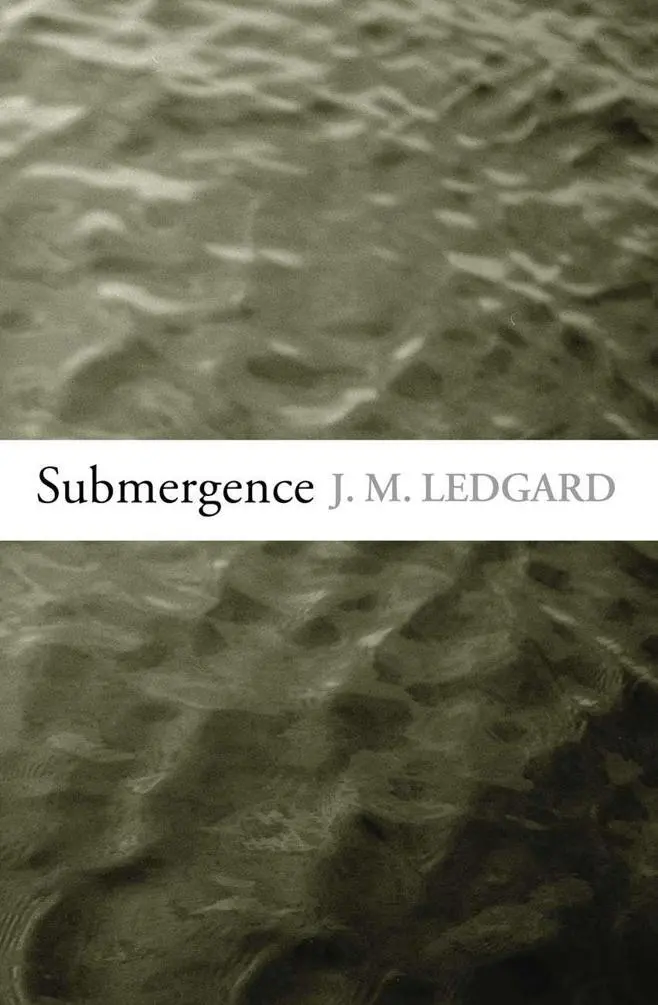
- Название:Submergence
- Автор:
- Издательство:Random House UK
- Жанр:
- Год:2011
- ISBN:9781446496831
- Рейтинг книги:5 / 5. Голосов: 1
-
Избранное:Добавить в избранное
- Отзывы:
-
Ваша оценка:
Submergence: краткое содержание, описание и аннотация
Предлагаем к чтению аннотацию, описание, краткое содержание или предисловие (зависит от того, что написал сам автор книги «Submergence»). Если вы не нашли необходимую информацию о книге — напишите в комментариях, мы постараемся отыскать её.
Both are drawn back to the previous Christmas, and to a French hotel on the Atlantic coast, where a chance encounter on the beach led to an intense and enduring romance. For James, his mind escapes to utopias both imagined and remembered. Danny is drawn back to beginnings: to mythical and scientific origins, and to her own. It is to each other and to the ocean that they most frequently return: magnetic and otherworldly, a comfort and a threat.
Submergence — читать онлайн бесплатно полную книгу (весь текст) целиком
Ниже представлен текст книги, разбитый по страницам. Система сохранения места последней прочитанной страницы, позволяет с удобством читать онлайн бесплатно книгу «Submergence», без необходимости каждый раз заново искать на чём Вы остановились. Поставьте закладку, и сможете в любой момент перейти на страницу, на которой закончили чтение.
Интервал:
Закладка:
‘Yes,’ James said.
‘This will be better. Twice the height of the Twin Towers! It will be a purity never seen before. Islam and the future will mix up in the sky. The lifts will play religious verse. You can be on the ground floor and watch the sun setting and then take a lift to the top and watch it set again.’
Mostly, Saif preached martyrdom. ‘I expect to die soon,’ he said, sucking on a mango skin. ‘I welcome it. I expect you’ll be killed too.’ Saif turned to him. ‘That is why I want you to convert to Islam.’
‘No,’ James said, firmly.
There was no chance he would convert. It was not just a question of Islam, it was the way life was constructed. A man lived his threescore years and ten, less than a whale, less than a roughy fish, and the only way to come to terms with his mortality was to partake in something that would outlive him; a field cleared of stones, a piece of jewellery, a monument, a machine. Every man was a loyalist for what he knew. Even tramps fought for the tramping life. Life was too short for him to renounce the English parish church, once Catholic, with their knights’ tombs, prayer cushions, flower arrangements, the brass lectern in the shape of an eagle. No, the quiet of those places — the ancient front door, the graveyard, the meadow, the damp — gave him a sense of belonging. He was loyal to them. It was too late to abandon the English canon, from Chaucer to Dickens, the First World War poets, Graham Greene typing through the smog and drizzle … He had said it before: he was an intelligence officer who reached out, spoke Arabic, read widely, but if the Crusades were invoked — and Saif was invoking them — then he was a Crusader. If he had to die at the hands of fanatics, he wished to remain familiar and coherent to those whom he loved and who loved him.
*
There existed around them a closeness of birds and silver bars of tarpon fish and elephants at their crossing. The tides turned. If you were lucky, the rain fell. It was very green. The question of paradise presented itself. Saif did not speak of the intercourse with houris due to those who were martyred in Ramadan (to which he was entitled), but of the many nightingales that were in paradise, the scented flowers, the lawns stretching away. It was Persian and unconvincingly iridescent, and more so coming from a Saudi who knew of gardens only as the strips of grass at the back of hotels and office blocks in Jeddah and Riyadh which were watered with treated sewage before dawn. Saif, the lion, had been happier in the wadi, eating camel meat, because the life there was closer to the steady state universe of prayer mat and sand, and the heating up and cooling down of days.

English Catholics often regard Foxe’s Book of Martyrs as Protestant propaganda. Some may even agree with a Jesuit view at the time which held it to be ‘a huge dunghill of your stinking martyrs’.
Foxe was a fanatic, yet also a kindly and gentle man, a good friend, by many accounts. He was tutor to the children of Henry Howard, Earl of Surrey, who was executed for treason in 1547. Among those children were Thomas, 4th Duke of Norfolk; Jane, Countess of Westmoreland; Henry, Earl of Northampton and their cousin Charles, commander of the English fleet against the Spanish Armada. Despite his close connection with the Catholic Howards, Foxe was involved in suppressing the cult of the Virgin Mary. He escaped from England during the reign of the Catholic Queen, Mary Tudor, and lived in poverty among the Protestants in Antwerp, Rotterdam, and Frankfurt. He wrote his first account of Christian martyrs in Geneva, with particular attention to the Protestant martyrs, and returned to England when Elizabeth took the throne. The cathedrals and all the wealthy churches purchased a copy of the book, as did every bishop and vaulting churchman. Foxe became a literary celebrity. Later editions of the Book of Martyrs ran to thousands of pages and listed the death sequence of each martyr with formality and a level of detail no jihadist will ever match. Indeed, if the standard of martyrology is set by the dim standards of al-Qaeda, Foxe could by comparison be held up as a trustworthy historian.
He was an English Catholic, far removed from Saif’s gap-toothed insistence. He was descended from St Thomas More and, on his mother’s side, from the Blessed William Howard, who was executed in Titus Oate’s Popish Plot and beatified by Pope Pius XI. He revered Donne, read the republican Milton, and celebrated his recusant ancestors and the whaling captains who followed, also lawyers, farmers, priests and vicars, Jesuits who worked on the English Mission and who were buried in Rome, many Benedictine nuns who entered the convents in Leuven and Cambrai, colonial officers, newspapermen, spies for Rome, and spies for London; his father was Thomas More XVI.
God help him. He was a pocket of moisture, emptying into the sand.
He wanted to make a run for it like the French security officer in Mogadishu, who tiptoed away from his captors while they slept, and escaped barefoot through the streets of the shattered city at night, making it after several hours to the safety of Villa Somalia, which serves as the Presidential Palace of the Somali Transitional Government.
England had lost him, Britain had. Everything was green above and around him, but it was no paradise. The quarrel of leaves, vines, sloughs and quicksand brought him back to the comics he had read as a boy, which often dealt with the fight against the Japanese in Burma in the Second World War. The Japanese wore thick glasses, always squinted, and paced through the jungle with their bayonets attached, like insects, until there was a shout of ‘Tommy let them have it!’ in the caption box and the British and the Americans fired and those Nips, as the comic had it, exploded backwards with a resounding aieeee ! Aieeee: a word which as a boy he thought was Japanese.
The American naval base at Manda Bay was even closer than Lamu. A few hours by speedboat. Hidden inside, he knew, was a helipad and huts belonging to a covert unit which flew SEALS and other specialised personnel into Somalia after an air strike on the enemy. The unit was charged with proof of kill: getting DNA samples from corpses after an air strike.
The sky could always open up. In 2010, one of the leading al-Qaeda commanders, Saleh Ali Nabhan, was killed by an American missile. He had been travelling in a convoy on a coastal road between Mogadishu and Kismayo. A few minutes after the kill the men from Manda Bay rappelled down from helicopters. Grazing Somalia only with their boots, not ever unclipping their harnesses, they zipped Nabhan’s corpse and another into body bags, and took them up into the helicopters.
It was macabre how many fingers and parts of Muslim martyrs the United States of America had held on to. They were frozen solid and given a number. Who knew where these relics were stored, or for how long, or if a Muslim chaplain was ever brought to pray over them?
There was no way for him to signal the Americans. The camp was undetectable by satellite, unless you had an idea where to look. Even if they found it, it would be almost impossible for them to kill the holy warriors and save him alone.
There were prayer beads, sweat, raindrops. The men sat cross-legged on the sheeting. In their disillusionment talk of battles increased. He was raised to be merciful, but combat always reverted to blockbuster action. His captors deserved to die. Let them be martyrs. It was import ant to kill them before they launched another attack on innocents as they had in Kampala in 2010. The jihad could not win.
Читать дальшеИнтервал:
Закладка:
Похожие книги на «Submergence»
Представляем Вашему вниманию похожие книги на «Submergence» списком для выбора. Мы отобрали схожую по названию и смыслу литературу в надежде предоставить читателям больше вариантов отыскать новые, интересные, ещё непрочитанные произведения.


Обсуждение, отзывы о книге «Submergence» и просто собственные мнения читателей. Оставьте ваши комментарии, напишите, что Вы думаете о произведении, его смысле или главных героях. Укажите что конкретно понравилось, а что нет, и почему Вы так считаете.