J. Ledgard - Submergence
Здесь есть возможность читать онлайн «J. Ledgard - Submergence» весь текст электронной книги совершенно бесплатно (целиком полную версию без сокращений). В некоторых случаях можно слушать аудио, скачать через торрент в формате fb2 и присутствует краткое содержание. Год выпуска: 2011, ISBN: 2011, Издательство: Random House UK, Жанр: Современная проза, на английском языке. Описание произведения, (предисловие) а так же отзывы посетителей доступны на портале библиотеки ЛибКат.
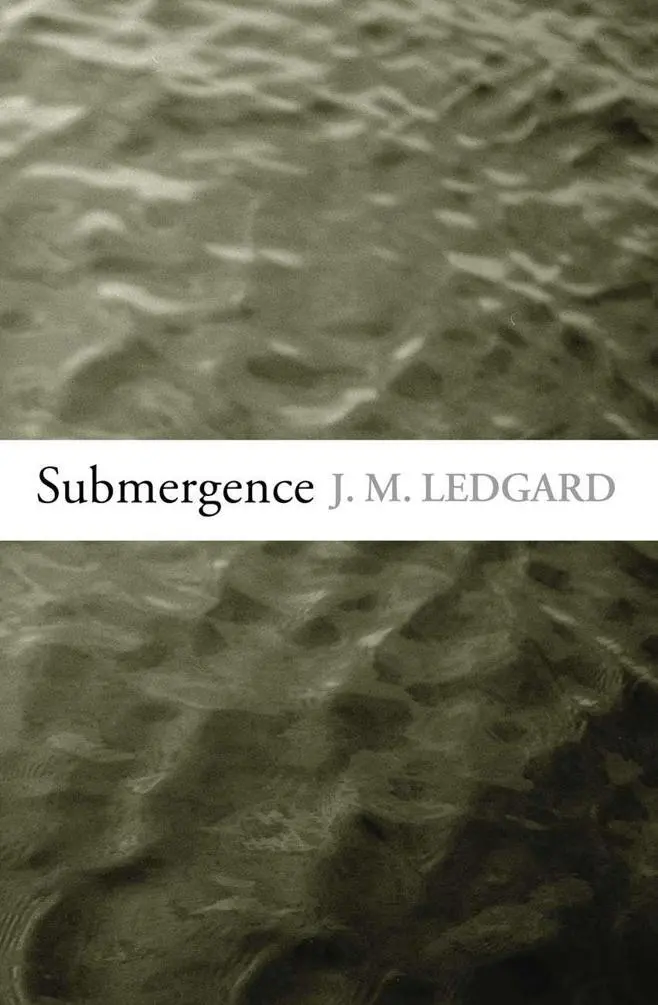
- Название:Submergence
- Автор:
- Издательство:Random House UK
- Жанр:
- Год:2011
- ISBN:9781446496831
- Рейтинг книги:5 / 5. Голосов: 1
-
Избранное:Добавить в избранное
- Отзывы:
-
Ваша оценка:
Submergence: краткое содержание, описание и аннотация
Предлагаем к чтению аннотацию, описание, краткое содержание или предисловие (зависит от того, что написал сам автор книги «Submergence»). Если вы не нашли необходимую информацию о книге — напишите в комментариях, мы постараемся отыскать её.
Both are drawn back to the previous Christmas, and to a French hotel on the Atlantic coast, where a chance encounter on the beach led to an intense and enduring romance. For James, his mind escapes to utopias both imagined and remembered. Danny is drawn back to beginnings: to mythical and scientific origins, and to her own. It is to each other and to the ocean that they most frequently return: magnetic and otherworldly, a comfort and a threat.
Submergence — читать онлайн бесплатно полную книгу (весь текст) целиком
Ниже представлен текст книги, разбитый по страницам. Система сохранения места последней прочитанной страницы, позволяет с удобством читать онлайн бесплатно книгу «Submergence», без необходимости каждый раз заново искать на чём Вы остановились. Поставьте закладку, и сможете в любой момент перейти на страницу, на которой закончили чтение.
Интервал:
Закладка:
The ocean was being fished out, poisoned and suffering acidification. Quite apart from the vessels there were sonar arrays and other electronics that ruptured the orientation of sea mammals. And if sea mammals could become so disorientated as to beach themselves, so could man exterminate himself. Man had hardly taken breath from the Stone Age and yet was altering the flow of rivers, cutting up hills and discarding the materials that would be easily identifiable to future geologists. The anthropocene: a geological age marked by plastic.
There was not enough funding for ocean research. If the financial crisis continued, there would be even less money available: the Greenland Sea expedition was her best chance to gather data for years to come. There was a faulty sense of perspective, she thought. The looking up, the looking out. Through difficulty to the stars, never to the deep. The worry for the skin, not the lungs. The ocean was too immediate, too familiar. You did not need a launch pad, you could just drop into it: it could wait.
Yet there could be no serious work on climate change without understanding marine living systems. The change was real, she was certain of that. The water under the ship, carried through the Fram Strait on the East Greenland Current, had warmed by 1.9 degrees Celsius since 1910. That was 1.4 degrees Celsius more than the increase during the tenth- to thirteenth-century Medieval Warm Period.
She was doing her part. She had been a proponent and a player in the Census for Marine Life and the Deep Water Chemosynthetic Ecosystems. She was an adviser in Southampton, at IFREMER and at the Deep Submergence Facility in Woods Hole. She believed manned submersibles were vital. They provided the necessary leap of imagination, the human connection to the deep. Machines could complement them. Hundreds of drones could fly far under the sea, quietly, at all hours, providing a constant flow of information to the surface.
Then there was the biological revolution. It was possible to see creatures that had never been noticed before, the living matter of the minestrone, of which only one recently discovered species of pico-phytoplankton in the upper layers of the ocean was reckoned to have a biomass equivalent to the insect life in the Congo River basin. The diversity was overwhelming. She was interested in numbers, in percolation, but almost by accident she had discovered new species. She had overseen the mapping of their DNA, given them a genetic barcode and put them in the book of life (others said the hard drive of life). One of the papers she co-authored with Thumbs had incidentally reinforced the view of some biologists that there were microbes in the sea that were deliberately rare. These microbes were waiting for conditions to change so they could become abundant. She found this a very powerful thought. It changed her idea of what a lifespan meant. A microbe waiting a million years, holding to a different rhythm through those many sunrises and sunsets. What was that rhythm?
The Pourquoi Pas? rolled and the portholes were washed with seawater. It rolled back and she saw how the glass shone the length of the ship. The fog closed in. She sang to herself:
In South Australia, my native land
Full of rocks and thieves and sand
I wish I was on Australia’s strand
With a bottle of whisky in my hand.
It was a shanty her father liked to sing. If the world forgot its sea shanties, forgot the sea, it would be even harder to speak of the strangeness of what was under the waves.
They passed through the fog bank and Jan Mayen appeared then with the clarity of a photograph taken with the highest quality camera; thin beaches, blues and greys of augite and pyroxene. The volcano looked like Mount Fuji, only more spectral. The cone coughed up cinders. The fire inside of it glimmered on the underside of the clouds. The iron ore on the slopes, the snowfields and shreds of mist about the rim were the sulphurous way in. Looking at it, considering how it plunged into the sea to a point where it swarmed with seismic tremors and was suppurated with magma, she felt she understood what Saint Brendan said when he had seen the volcano on his incredible sixth-century voyage: that this way into hell, the opening to the infernal regions every damned soul must take.
She pulled a notepad from her bag and a felt-tip pen. She began to write James a letter. It felt good to write to him. These big thoughts were like blackened icebergs. Even in her, with her commitment, they were too big to hold onto. Yet the more she worked on them the less desperate she felt. They effected in her an almost religious sentiment. It was not sub mission — she would work — it was a Buddhist sense of resignation and a feeling of responsibility to her own living form. To Danny Flinders. The very precariousness of her condition and more generally the condition of mankind made her body and choices more precious to herself. It was incumbent upon her to live fully; to give and to receive. The thought of him someplace in Africa brought out a tenderness in her. What she wrote to him then was very intimate, deliberately containing small things which are quickly forgotten: she had a cold, she had managed to avoid having a cabin-mate, Thumbs was in a sweat because he was missing a rock festival and the livestreaming was not working, there were bird droppings on her sleeping bag. It felt good to write with pen on paper in such a place, in such a mood. It felt permanent.
The colours turned pale. It was gelid. Her breath was like steam. Heroic friendships were being formed below decks, the Nautile was being equipped in the aft hangar for its dive the next day, but she was content to remain up above a little longer, wrapped up, staring out at the productive waters, the shearwaters, storm petrels and eider ducks.

If you talk about the acceleration that is in the world, you have to talk about the advances in computational power. There was a recent momentous day when a computer at the Los Alamos National Laboratory in New Mexico achieved petaflop speed. One thousand trillion calculations a second. How to conceive of such a rate? If everyone in the world were given a pocket calculator and ordered to tap out sums for six hours a day, it would take them until the twenty-fourth century to match the calculations a petaflop computer can perform in a day.
The exaflop is the next step in the history of computing: one quintillion calculations a second. Then the zettaflop, yottaflop and the xeraflop. The goal is nothing less than to slow down time and colonise it. Of course, a petaflop computer uses more electricity than the power grid of an African city. Then there is the problem of asking useful questions of it.
The sand around the camp was filled with thorns. There were long acacia thorns and round thorns spiked like depth charges. Even with flip-flops, his feet were punctured at every step.
One of the Boni laid a British Enfield rifle and a Soviet PPS submachine gun on the ground together with a few bullets and strips of dried meat. The Boni beckoned one of his children forward. She could not eat. Her belly was swollen and her skin festered with sores around the ankles and the calves. When the man appealed for help, Saif had him beaten with sticks. A leg cracked under a blow and the beating stopped. It was strange: Saif wanted to see a jinn, but he refused to look the Boni in the eye.
‘You are not good Muslims,’ Saif told them. ‘You worship trees. You eat pigs. You are not welcome on our island. You must go.’
The Boni were expressionless. There was no fear, anger, or bitterness apparent in their faces, just the resignation of the enslaved. They left quickly with the injured hunter and their few possessions: bows and arrows, spears, pots and palm matting. One woman gathered a bundle of clothing and strapped it to her back, while the younger women carried the children. The jihadists gave them kerosene and sugar.
Читать дальшеИнтервал:
Закладка:
Похожие книги на «Submergence»
Представляем Вашему вниманию похожие книги на «Submergence» списком для выбора. Мы отобрали схожую по названию и смыслу литературу в надежде предоставить читателям больше вариантов отыскать новые, интересные, ещё непрочитанные произведения.



Обсуждение, отзывы о книге «Submergence» и просто собственные мнения читателей. Оставьте ваши комментарии, напишите, что Вы думаете о произведении, его смысле или главных героях. Укажите что конкретно понравилось, а что нет, и почему Вы так считаете.