J. Ledgard - Submergence
Здесь есть возможность читать онлайн «J. Ledgard - Submergence» весь текст электронной книги совершенно бесплатно (целиком полную версию без сокращений). В некоторых случаях можно слушать аудио, скачать через торрент в формате fb2 и присутствует краткое содержание. Год выпуска: 2011, ISBN: 2011, Издательство: Random House UK, Жанр: Современная проза, на английском языке. Описание произведения, (предисловие) а так же отзывы посетителей доступны на портале библиотеки ЛибКат.
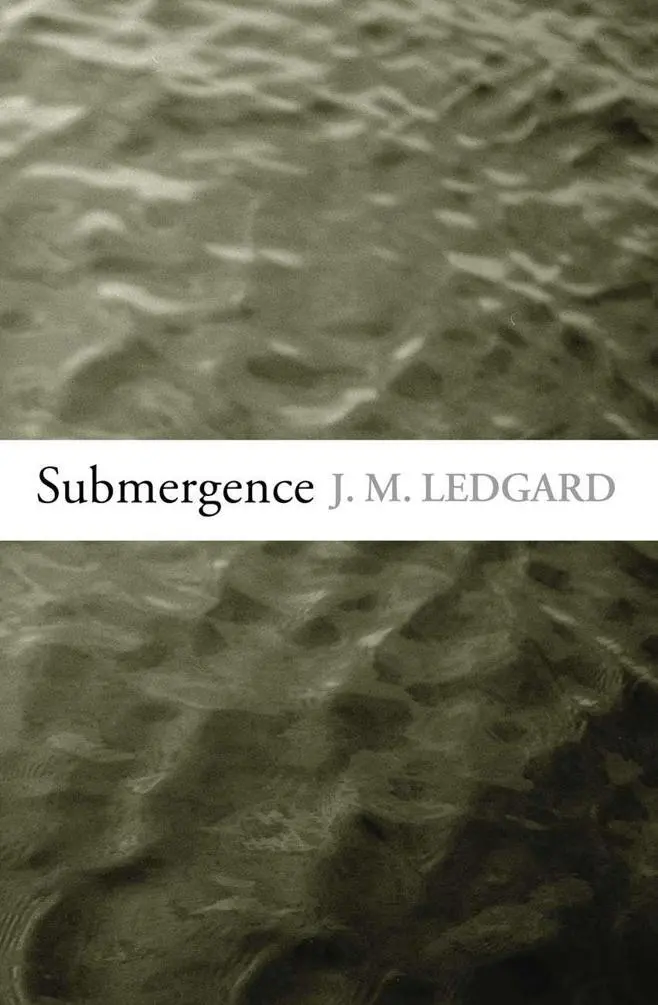
- Название:Submergence
- Автор:
- Издательство:Random House UK
- Жанр:
- Год:2011
- ISBN:9781446496831
- Рейтинг книги:5 / 5. Голосов: 1
-
Избранное:Добавить в избранное
- Отзывы:
-
Ваша оценка:
Submergence: краткое содержание, описание и аннотация
Предлагаем к чтению аннотацию, описание, краткое содержание или предисловие (зависит от того, что написал сам автор книги «Submergence»). Если вы не нашли необходимую информацию о книге — напишите в комментариях, мы постараемся отыскать её.
Both are drawn back to the previous Christmas, and to a French hotel on the Atlantic coast, where a chance encounter on the beach led to an intense and enduring romance. For James, his mind escapes to utopias both imagined and remembered. Danny is drawn back to beginnings: to mythical and scientific origins, and to her own. It is to each other and to the ocean that they most frequently return: magnetic and otherworldly, a comfort and a threat.
Submergence — читать онлайн бесплатно полную книгу (весь текст) целиком
Ниже представлен текст книги, разбитый по страницам. Система сохранения места последней прочитанной страницы, позволяет с удобством читать онлайн бесплатно книгу «Submergence», без необходимости каждый раз заново искать на чём Вы остановились. Поставьте закладку, и сможете в любой момент перейти на страницу, на которой закончили чтение.
Интервал:
Закладка:
He looked across the raging sea. Somewhere was the gold and jewels meant for Mecca, unopened, without glitter. Oh, the scale of things was planetary for him then, Somalia was mighty, yet just a piece of the main, the sea larger still; the ocean sank away under him.
James cradled his drink, sipped it like life. Fanta, fanta, fantasy, fantastic, it was orange nectar, a bubbling drink of New Atlantis, and though he was in mortal peril, or because he was, he had a rising sense of excitement, as if buoyed into the Arabian Nights , and it comforted him to place the seasick holy warriors of al-Qaeda not a clash of civilisations, but a bunch of brigands who would get what was coming to them.

Professor Danielle Flinders, biomathematics, self-organisation , was what it said on her official Imperial College webpage. She was one of the world’s leading researchers on population dynamics of microbial life in the oceans. The microscopic was phantom and massive to her and her lectures were popular because they ranged widely beyond maths to take in biology, physics, geology; even philosophy and literature.
She had written him a letter in which she very seriously claimed that an understanding of microbial life in the deep was necessary for human survival on the planet:
Without that knowledge, we will not be able to comprehend the scale of life on earth, or its ability to regenerate. The fact that life can exist in the darkness, on chemicals, changes our understanding about life everywhere else in the universe.
She was a senior scientist, not the chief scientist. That was perfect. She had responsibility for her work, with none of the bureaucratic burdens of the chief scientist, whose job it was to balance the personalities and goals of those who want sediment core samples, those who want sweeping measurement of the water column, and those who are after one particular deep-sea fish. She had been a chief scientist once. It had been a disaster. She had her father’s brains, not his easygoing charm. She was brittle. She excelled, but suffered no fools. That was one problem. The other had been with politically correct individuals. She was black to them, carrying the burden of black history, the meagreness of black science, and they could not bear to criticise her openly. That had led to miscommunication, passive-aggressive behaviour, and recriminations when the expedition failed. It was easier with the French. They appreciated her fluency. They perceived her coolness as elegance and warmed to the intensity she brought to her work.
She kept fit in London, and more so at sea. When it was said she punched her way through a science cruise, it was only the punishment she delivered to the punch-bag in the boat’s gym. She built up her cardiovascular strength. When her work was finished she had in the past fallen in with a scientist or a deckhand. Whatever the stolen pleasures of the bunk, she would end the arrangement directly when the ship returned to port.
Though the Fanta was warm and he was chained like a dog and the sharks in the hold were buried in salt, there was something alive and enormous in being set sail on the ocean, something about the flight of the dhow in the wind and no other force, and the smoothness of the deck, where shoes were forbidden, and the planking had been polished by bare feet over a long time.
To set sail was another of the smaller truths. There was landlessness, rocking. The harpooner’s cry of thar she blows! was another way of saying there she breathes. He lived in a time when no ships sailed the line, when there was no sail cloth, no rope, no horses or carts in the ports, while aboard the supertankers were freezers the size of an admiral’s state rooms, filled with meats and fruits; metal cupboards with cartons of treated milk wrapped in plastic, which were a long way advanced from the crates of spring water, wines, almonds, lemons, dry bread and all manner of sauces for salted meat in the stores of eighteenth-century vessels.
The storm abated. The prayers and mutterings continued. There was the rhythmic dousing of barnacles encrusted on the hull and a noise of the planking giving under the weight of the water.
Then it was day, the sun struck the sea. He watched the seabirds touch the crest of the swells, always on the wing. He saw a whale shark big enough to swallow a Jonah, hoovering the life that was invisible to the naked eye. There were gold markings on its back, which the fishermen believed were coins sprinkled by Allah as a reward to the fish for being toothless and having no appetite for meat.
A recent top secret United States Army report predicts mass death for Africans in the coming years. The report’s main points will be leaked to the press, and placed alongside the headline points of other similarly depressing reports made by diplomats, spies and political scientists; including those which speak of death by famine, new epidemics, climate change, infestations of insects, methane gas bubbles, or even by meteors. In this context it is a relief to read again the writings of the Russian anarchist Prince Pyotr Kropotkin.
As a child, Pyotr served in the Corps of Pages in St Petersburg; his father owned a thousand souls on the family estate. Pyotr escaped a life in court by enlisting in a Cossack regiment in the wild Amur region of Siberia. Later, as an anarchist in exile, he sought to use a study of the animal kingdom to resolve the two great movements of his day: the liberty of the individual, and the cooperation of the community. Darwin’s survival of the fittest theory was brilliant, Kropotkin said, but it did not explain everything. Revolution required other considerations.
Kropotkin believed in the pre-human origin of moral instincts, a mutual aid that draws us together:
Whenever I saw animal life in abundance, as, for instance, on the lakes where scores of species and millions of individuals came together to rear their progeny; in the colonies of rodents; in the migrations of birds which took place at that time on a truly American scale along the Usuri; and especially in a migration of fallow-deer which I witnessed on the Amur, and during which scores of thousands of these intelligent animals came together from an immense territory, flying before the coming deep snow, in order to cross the Amur where it is narrowest, in all these scenes of animal which passed before my eyes, I saw mutual aid and mutual support carried on to an extent which made me suspect in it a feature of the greatest importance for the maintenance of life, the preservation of each species, and its further evolution.
In other words, the unsociable species is doomed. Kropotkin’s example of the deer crossing the Amur still intrigues. How did the deer understand their common cause was to cross the Amur River in greatest numbers at its narrowest point? How many of them were swept away in discovering the narrowest point? Did the birds give the deer a clue? When the deer found the narrowest point how did they agree upon it? Were there deer who refused to support the decision? Dissenters? Mutual aid extends to man. In exile, Kropotkin interviewed a Kentish boatman who risked his life to save some drowning souls. What had made him row out into the storm?
‘I don’t rightly know myself,’ said the boatman to the prince, ‘I saw men clinging to the mast, I heard their cries, and all at once I thought: I must go!’
There are other examples, as of the old man in Karelia who dug his grave in the summer as a service to his village in the winter, when the earth was frozen hard. Or the mutual aid practised by the crews of the Hansa trading ships on the Baltic and the North Sea who, if they were caught in a storm and believed they would drown, proclaimed each man to be the equal of the other, and all to be at the mercy of God and the waves.
Читать дальшеИнтервал:
Закладка:
Похожие книги на «Submergence»
Представляем Вашему вниманию похожие книги на «Submergence» списком для выбора. Мы отобрали схожую по названию и смыслу литературу в надежде предоставить читателям больше вариантов отыскать новые, интересные, ещё непрочитанные произведения.




Обсуждение, отзывы о книге «Submergence» и просто собственные мнения читателей. Оставьте ваши комментарии, напишите, что Вы думаете о произведении, его смысле или главных героях. Укажите что конкретно понравилось, а что нет, и почему Вы так считаете.