J. Ledgard - Submergence
Здесь есть возможность читать онлайн «J. Ledgard - Submergence» весь текст электронной книги совершенно бесплатно (целиком полную версию без сокращений). В некоторых случаях можно слушать аудио, скачать через торрент в формате fb2 и присутствует краткое содержание. Год выпуска: 2011, ISBN: 2011, Издательство: Random House UK, Жанр: Современная проза, на английском языке. Описание произведения, (предисловие) а так же отзывы посетителей доступны на портале библиотеки ЛибКат.
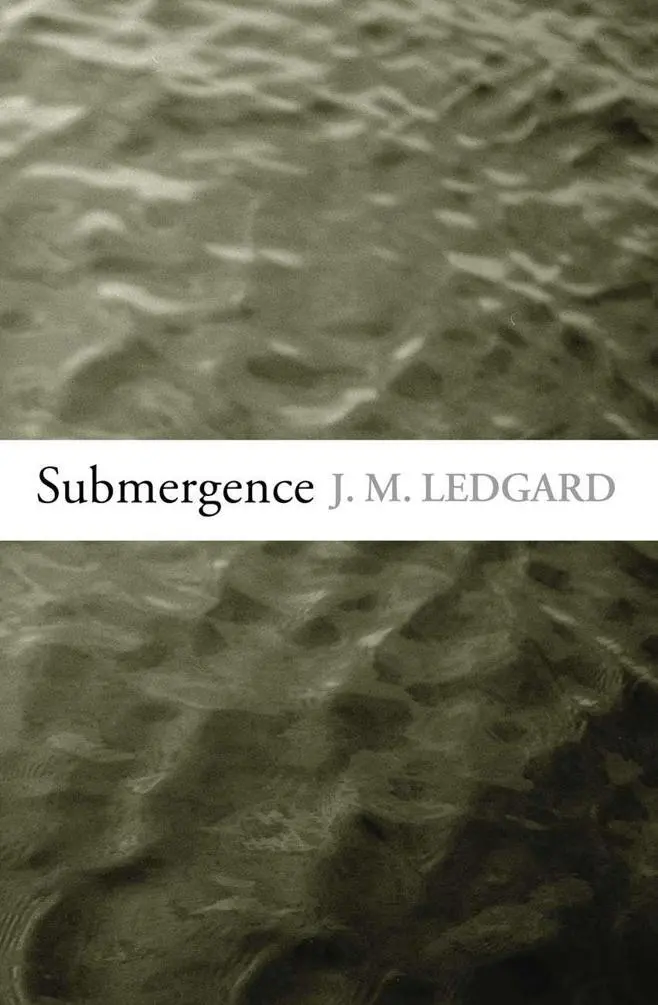
- Название:Submergence
- Автор:
- Издательство:Random House UK
- Жанр:
- Год:2011
- ISBN:9781446496831
- Рейтинг книги:5 / 5. Голосов: 1
-
Избранное:Добавить в избранное
- Отзывы:
-
Ваша оценка:
Submergence: краткое содержание, описание и аннотация
Предлагаем к чтению аннотацию, описание, краткое содержание или предисловие (зависит от того, что написал сам автор книги «Submergence»). Если вы не нашли необходимую информацию о книге — напишите в комментариях, мы постараемся отыскать её.
Both are drawn back to the previous Christmas, and to a French hotel on the Atlantic coast, where a chance encounter on the beach led to an intense and enduring romance. For James, his mind escapes to utopias both imagined and remembered. Danny is drawn back to beginnings: to mythical and scientific origins, and to her own. It is to each other and to the ocean that they most frequently return: magnetic and otherworldly, a comfort and a threat.
Submergence — читать онлайн бесплатно полную книгу (весь текст) целиком
Ниже представлен текст книги, разбитый по страницам. Система сохранения места последней прочитанной страницы, позволяет с удобством читать онлайн бесплатно книгу «Submergence», без необходимости каждый раз заново искать на чём Вы остановились. Поставьте закладку, и сможете в любой момент перейти на страницу, на которой закончили чтение.
Интервал:
Закладка:
The ground was flat as a billiard table. It had been underwater in the last pluvial period. When he looked more carefully he saw the scattered teeth of prehistoric fish and crocodiles.

The arrival of a soul in heaven is like a sailing ship discovering the harbour whereunto it saileth. But the truth of Danny’s voyage was that she sailed to no harbour. They had left Iceland behind, Akureyri, with its fjord and green hills and glaciers, and steamed north into the Greenland Sea, Grønlandshavet. She was bound for the largest uncharted hydrothermal vent field in the world, far below the plunging icebergs and the blue-black top, in a part of the Hadal deep whose unlit clock ticked at an incalculably slower speed.
It was the most important summer cruise she had been on. It held the chance, she believed, to reckon the extent of life in the fissures of the rock underlaying the Hadal deep. She had been one of those who discovered the vent field the previous summer. She had been asked to name it and had called it the Enki field.
She was aboard the French oceanographic research vessel Pourquoi Pas? which carried also the French Navy submersible, Nautile . The preparations had gone well. Her lab equipment was in place. Thumbs was along for the ride. The scientists were French, British, German, Swiss, Italian and Norwegian. She was inclined to stereotype nationalities. There were enough Brits to guarantee showings of Monty Python’s Flying Circus in the evenings. The French, she thought, would take care of wine at meals and hand around cigarettes on deck. The Italians would surprise. She was happy anyway not to be on an American boat. The Americans were more self-congratulatory, with less bon viveurs, with people in the fluorescent-lit galley reading airport novels, sipping iced water through the evenings. There was a pressure on American boats to purchase ugly expedition T-shirts, even sweatshirts, as if a badge was needed to prove that you had touched the ocean and partaken in your own profession. She refused to buy the items. Even when she was given them she never wore them, except for a cap. She offended those American women who habitually covered themselves in such loose-hanging cotton garbs, who seldom wore high heels in their lives, and who felt she was a snob and an ice maiden.
She was a snob. She detested what was vulgar; vulgarity was something else. Thumbs had it best when he said she was two cats in one: a Persian and an alley cat. For inasmuch as she dressed carefully and stylishly on the boat, and expended her mind in the lab, she had drunk, punched and screwed her way through science cruises over the years with a dirtiness beyond the suspicions of her detractors.
They rattled up into the green hills.
‘We’re going to where the water is,’ said one of the boys.
His Somali was improving; he understood.
In the clouds there was a hut tended by a shepherd in a ski jacket. Geese flew overhead and one of the fighters covered his ears to their honking. There was grazing. Water trickled from the rock into a pool green with algae.
It was easier out of the heat. Even the mad boy, the snake, became more reasonable and did not strike so often. Down there in the badlands were those who did not know any more where to dig for water, and so tied up a cow to the point of death, then cut its rope and let it go smell the water out.
The shepherd made extra money by harvesting frankincense. It was not clear whether his connection with Yusuf was related to that trade, or whether they shared a shepherding past, but the nicks in the boswellia trees, and how carefully the shepherd attended them, stood in contrast to the boiling down of a whale for perfume.
The hut had two rooms with a cement floor. The doors and windows were gone and there was a thickness of dust and dead flies throughout, but he could picture a Calabrian shepherd once hiding out here to escape the law. It must have been an Italian who planted the cypress tree at the back of the property. It was tall and cast a tapering shadow up the hillside. James would not have believed a cypress could have so prospered there, but it was well planted, in a shady spot.
It was different from the coast. The wind ripped through in the mornings, and there was a stillness at the end of the day: the land seemed to sigh with the fleeing light.
It was a new, soft, blown-apart hill. The spring water attracted all kinds of thirsty animals. There were dik-diks, of course. They made only the slightest disturbance, their tiny hoofs staying a second in the dust. Three elephants walked through. They had climbed the hill for a drink. They moved cautiously, snapping the branches. They were small, with short tusks. It was improbable, yet that was how nature was. Hippos appeared at waterholes from nowhere. Tilapia fish eggs attached themselves to the legs of water birds and spread from one pool to another. Life clung to life.
James had met an old Serbian poet in New York City. The man was always living hand to mouth, on the edge, and bitter that his Yugoslav neighbourhood had turned Haitian.
There was a basketball court beside his tenement where the youths came to play.
‘Cocksucking blacks. They shout. They’re rude, you know. I’d whip them with my fists … But look at me, I’m so old I want to go to church, know what I mean?’
What sounded like vot. W was a v , t was sometimes tz .
It was a small room. The man gave him a glass of clear alcohol and told him about observing the faces of Ustashe soldiers during the Second World War, even though James had come to him on a matter related to the Balkan wars of the 1990s.
The poet said that as a young man he was standing off to one side under an oak tree on an October day.
‘It couldn’t have been November, no, it was October, you know, it was one of those days that ain’t summer and ain’t winter, with mushrooms, with berries. When the Ustashe was shot there was a kind of a cloud from their face, you know, or it was from the back of the head, yeh, like a breath, yeh. I remember the ground was wet, my boots were wet. It wasn’t warm. It was in the mountains, around Plitvice.’
The poet had left Yugoslavia in 1960; his poems in exile had made him a figurehead for some Serbian paramilitaries.
‘It came I couldn’t stand Tito. He sold us out. Anyway, I was brought forward, I was asked to shoot one of these Ustashe in the head. I couldn’t do it. I mean, I could think about doing it any number of times, yes, but a real gun, a real man, uh-uh.’
There was the screeching of the last elevated train, the Jamaica line, the poet said, then a single bird on the street outside, then nothing; the basketball court was empty. There was an open notebook on the table and a sharpened pencil.
‘It’s funny,’ the poet said, ‘how things go around in your mind. Whirligigs they call them, in them toy shops uptown. Here I am in New York City, but I ain’t in New York. I was born in a kingdom, the KINGDOM of Serbs, Croats and Slovenes. Yes, I seen a war, I come to America, how to explain, I float, the baseball seasons come, they finish, the snow comes, goes, never money, but time is standing still for me, like I was every day stamping a time clock.’
He threw his hands in the air. His body language was all New York.
‘You come ask me about the future. These men in hiding. This Bosnia. What do I know, I’m the wrong guy, I just can’t move.’
Читать дальшеИнтервал:
Закладка:
Похожие книги на «Submergence»
Представляем Вашему вниманию похожие книги на «Submergence» списком для выбора. Мы отобрали схожую по названию и смыслу литературу в надежде предоставить читателям больше вариантов отыскать новые, интересные, ещё непрочитанные произведения.





Обсуждение, отзывы о книге «Submergence» и просто собственные мнения читателей. Оставьте ваши комментарии, напишите, что Вы думаете о произведении, его смысле или главных героях. Укажите что конкретно понравилось, а что нет, и почему Вы так считаете.