J. Ledgard - Submergence
Здесь есть возможность читать онлайн «J. Ledgard - Submergence» весь текст электронной книги совершенно бесплатно (целиком полную версию без сокращений). В некоторых случаях можно слушать аудио, скачать через торрент в формате fb2 и присутствует краткое содержание. Год выпуска: 2011, ISBN: 2011, Издательство: Random House UK, Жанр: Современная проза, на английском языке. Описание произведения, (предисловие) а так же отзывы посетителей доступны на портале библиотеки ЛибКат.
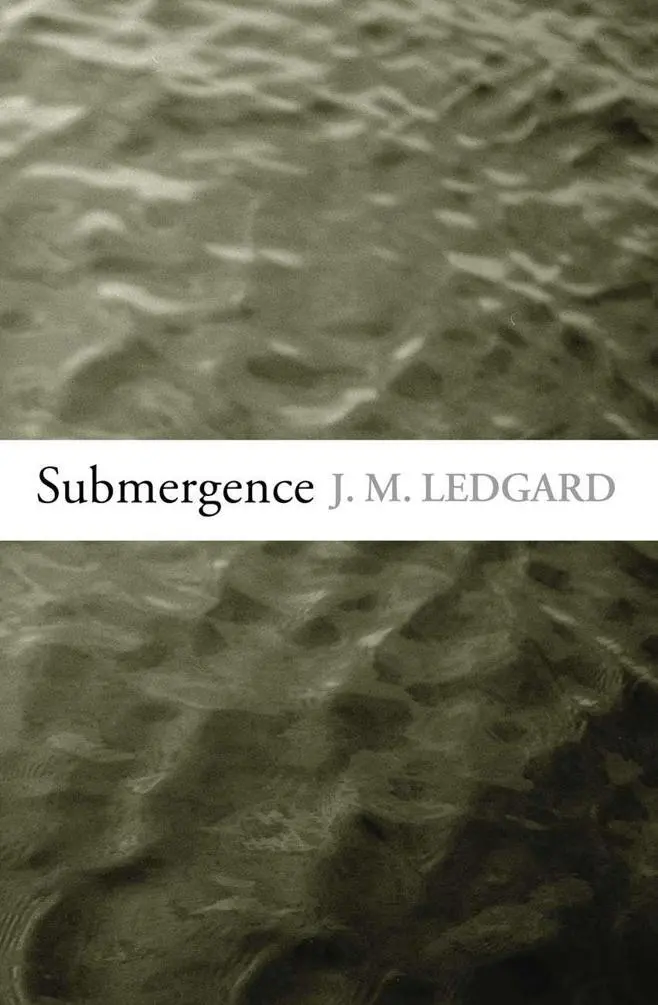
- Название:Submergence
- Автор:
- Издательство:Random House UK
- Жанр:
- Год:2011
- ISBN:9781446496831
- Рейтинг книги:5 / 5. Голосов: 1
-
Избранное:Добавить в избранное
- Отзывы:
-
Ваша оценка:
Submergence: краткое содержание, описание и аннотация
Предлагаем к чтению аннотацию, описание, краткое содержание или предисловие (зависит от того, что написал сам автор книги «Submergence»). Если вы не нашли необходимую информацию о книге — напишите в комментариях, мы постараемся отыскать её.
Both are drawn back to the previous Christmas, and to a French hotel on the Atlantic coast, where a chance encounter on the beach led to an intense and enduring romance. For James, his mind escapes to utopias both imagined and remembered. Danny is drawn back to beginnings: to mythical and scientific origins, and to her own. It is to each other and to the ocean that they most frequently return: magnetic and otherworldly, a comfort and a threat.
Submergence — читать онлайн бесплатно полную книгу (весь текст) целиком
Ниже представлен текст книги, разбитый по страницам. Система сохранения места последней прочитанной страницы, позволяет с удобством читать онлайн бесплатно книгу «Submergence», без необходимости каждый раз заново искать на чём Вы остановились. Поставьте закладку, и сможете в любой момент перейти на страницу, на которой закончили чтение.
Интервал:
Закладка:
He got in the taxi and closed the door. She waved once and walked back into the hotel. The Algerian gave him a warm greeting and he returned pleasantries, enough to warm the cab.
The local train stations were all snowed in so they had to drive for an hour to a larger town that was on the main line. At one point in the journey they came up a steep hill and the car slid across the road into a ditch. He got out and pushed. It gave easily. He followed the car up the hill. When he was at the top, the car ahead of him, the brake lights, the exhaust, he found himself at the edge of a cliff and saw the Atlantic breaking on the rocks below.
A few kilometres further on, his mobile rang.
‘It’s me, it’s Danny,’ she said. ‘I just wanted to say I miss you already.’
‘Let me turn around.’
He would have done. She did not reply immediately. He could hear the wind. Then her voice was clearer. She must have cupped her hand over the mouthpiece. ‘I’m going for my swim now. Merry Christmas.’
‘Merry Christmas, Danny.’

In the last scene of August Strindberg’s novella By the Open Sea , an arrogant and maniacal fishing inspector, Axel Borg, breaks down when confronted with his own mediocrity, something he has despised in almost everyone else.
A steamer is wrecked on Huvudskär, the island in the Stockholm archipelago to which he has been posted. It is laying on its side just offshore, its white and black funnel broken and its vermilion bottom shining like a blood-stained, shattered breast. He is feverish, half-mad. He staggers along the treeless shore, slipping on the red gneiss scraped clean of lichen by pack ice, and sees dark figures floating and twisted like worms on hooks among the masts and yards of the steamer.
He wades out into the icy waters, the waves slopping over him, and gathers in armfuls of gaily dressed children:
Some had fair fringes on their foreheads, others dark. Their cheeks were rosy and white, and their large, wide-open blue eyes stared straight up at the black sky and neither moved nor blinked.
They were a consignment of dolls.
There is another world in our world, but we have to live in this one. Jellies we are, washed up on the shore.
He knew he had to keep his wits about him. He had resisted the Stockholm syndrome. He was repelled by the Muslim men around him, who chained and beat him, who called him miisteer watir and yet saw him as unclean — monkey, rat, waste — and would not touch him except in violence and gave him drink and food on a plate and cup which were his alone and considered dirty and not to be touched by anyone else, and they would not endow a smile on him. He spat at them when they were knelt in prayer with their backs turned. They were not worth more than spit to him. He spat at them the way he had masturbated in his jail in Kismayo, to invigorate and separate himself from them. It was all the sordid means he had available.
Their minds were weak. They misrepresented their religion. The jihad had trammelled them. They lied to others and to themselves. They had no strategy. Their choice was to fight on and kill more innocents or be annihilated. It was obvious they would choose oblivion over surrender. There was an emptiness in their expressions, which came from not entertaining any doubts. Some of the Somali boys had already died to the world the way Saif had. They were like the bleached and opened badlands. Not dead, not alive. Scarred. They recorded their martyrdom videos outside the shepherd’s hut, with the cypress tree in the background.
They were copying the Heaven’s Gate cult in America, the first group to document suicides with video testimony. Its members found a collective determination to take their own lives having visited a funfair earlier in the day. They made their video testimony and jumped the earth to a shooting star, so they believed, while their bodies remained on the bunks in California; the bodies, flesh, hair, the mint $5 bill they each had folded in their pocket, their brand new running shoes. They died in shifts, assisting each other. The last members had no one to clean up the vomit from the phenobarbital and vodka they drank, or to remove the plastic bags from their heads which suffocated them.
He stopped. Maybe he had the same dullness in him, maybe he had fallen in a crack. His stories always circled back to death rites. The tap of an axe on a boy’s spine.
They drove for a day without stopping and the lorry set them down in a village on the coast south of Kismayo. He was shackled to the wooden railing of a shark-fishing dhow. They sailed south through a night and into the day. The wind was against them. The sea was rough. The fishermen moved barefoot on the dhow, adjusting and readjusting the lateen sail. He was sure they were sailing south to the al-Qaeda training camps in the mangrove swamps around Ras Kamboni, on the border with Kenya.
His shackles had enough play for him to lean out over the water and catch the sea spray. He could also move out of the sun, but it was not possible to stop himself from being rubbed raw. They were far enough from the land for him to wonder at the depth of the water. His guards brought him a bucket to wash himself and looked away when he performed (there was no other word) his toilet.
The boat listed under its unseemly cargo. There were more men at arms now, and the shark men, there were goats, nets and hooks, a brazier on which fish were cooked, and a basket of rice, bananas and mangoes. The arms in the hold were covered with the bodies of black fin sharks and lemon sharks.
‘But, as they went farther,’ Thomas More continues, in Utopia , ‘a new scene opened, all things grew milder, the air less burning, the soil more verdant, and even the beasts were less wild.’
The dhow had no motor. There was just the slop of the Indian Ocean as it gave, and the stink of the sharks and the shark oil used to caulk the hull. The fishermen had been at sea for a month. They had smoked the shark and marlins over fires on uninhabited islands, where they also made lime from the coral, burning it to such a temperature that it burst when they poured sea water on it.
The next night his shitting was endless. They gave him a can of Fanta. The heavens were hidden behind the clouds. They aimed the dhow out to sea to avoid the reefs and the shallows that would ground a boat in the finest mud. It began to howl. Rain swept in. He slid about on the deck and banged against the sides. Saif and the others were curled up like insects about to die, all armoured and repentant. He heard their prayers issuing forth and could not help but think of the disciples on the Sea of Galilee in a storm. There was only one last living shark aboard, slapping its tail against the deck. The coast lay far away in the night, hot, unlit, as the badlands had been unlit. It was not the winter grey of the French coast, it was another coast entirely; which for centuries a mongrel mix of shark men, traders and clerics had sailed up and down. The Bajunis, keeping close to their unknown islands, the Somalis, the Swahili peoples from as far south as Mozambique, the Comorians, Malagasy, Portuguese and Omanis, the Chinese fleet, the Yemenis, Persians, Gujaratis and Malays.
The pirate Edward England captured treasure from a pilgrim ship sailing to Jeddah and buried it on the Somali coast. England had dug a hole in a dry ravine and laid the treasure chest under a rock there. It was never found. The captain’s crew mutinied and put him ashore on a desert island off Madagascar, on account of his uncommon sense of mercy (for a pirate), and England circled there, searching for water and something to eat. His thinking must have been much more depressed than that of a conman beaten and left in a ditch outside Verona, who, with a ducat stitched in his dress, dusted himself down and walked back over the Alps to Munich in the spring sunshine.
Читать дальшеИнтервал:
Закладка:
Похожие книги на «Submergence»
Представляем Вашему вниманию похожие книги на «Submergence» списком для выбора. Мы отобрали схожую по названию и смыслу литературу в надежде предоставить читателям больше вариантов отыскать новые, интересные, ещё непрочитанные произведения.




Обсуждение, отзывы о книге «Submergence» и просто собственные мнения читателей. Оставьте ваши комментарии, напишите, что Вы думаете о произведении, его смысле или главных героях. Укажите что конкретно понравилось, а что нет, и почему Вы так считаете.