J. Ledgard - Submergence
Здесь есть возможность читать онлайн «J. Ledgard - Submergence» весь текст электронной книги совершенно бесплатно (целиком полную версию без сокращений). В некоторых случаях можно слушать аудио, скачать через торрент в формате fb2 и присутствует краткое содержание. Год выпуска: 2011, ISBN: 2011, Издательство: Random House UK, Жанр: Современная проза, на английском языке. Описание произведения, (предисловие) а так же отзывы посетителей доступны на портале библиотеки ЛибКат.
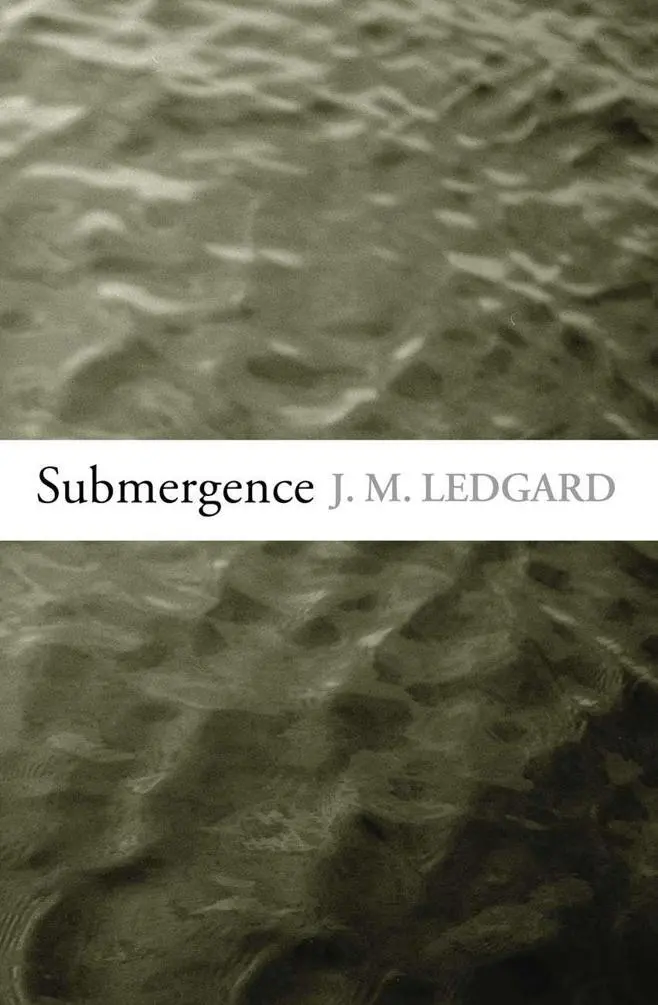
- Название:Submergence
- Автор:
- Издательство:Random House UK
- Жанр:
- Год:2011
- ISBN:9781446496831
- Рейтинг книги:5 / 5. Голосов: 1
-
Избранное:Добавить в избранное
- Отзывы:
-
Ваша оценка:
Submergence: краткое содержание, описание и аннотация
Предлагаем к чтению аннотацию, описание, краткое содержание или предисловие (зависит от того, что написал сам автор книги «Submergence»). Если вы не нашли необходимую информацию о книге — напишите в комментариях, мы постараемся отыскать её.
Both are drawn back to the previous Christmas, and to a French hotel on the Atlantic coast, where a chance encounter on the beach led to an intense and enduring romance. For James, his mind escapes to utopias both imagined and remembered. Danny is drawn back to beginnings: to mythical and scientific origins, and to her own. It is to each other and to the ocean that they most frequently return: magnetic and otherworldly, a comfort and a threat.
Submergence — читать онлайн бесплатно полную книгу (весь текст) целиком
Ниже представлен текст книги, разбитый по страницам. Система сохранения места последней прочитанной страницы, позволяет с удобством читать онлайн бесплатно книгу «Submergence», без необходимости каждый раз заново искать на чём Вы остановились. Поставьте закладку, и сможете в любой момент перейти на страницу, на которой закончили чтение.
Интервал:
Закладка:
‘You don’t believe?’
‘You do?’
‘I do,’ he said. ‘And I’m not sorry for saying so.’
She could have pulled back at this point, from credulity, but when you are drawn to someone there are things you cannot share that come with them too. Besides, she had her own experiences, her own imaginings.
She looked at him directly. ‘I have a problem believing in anything that can’t evolve,’ she said. ‘What makes Donne an authority anyway?’
He thought for a moment. ‘Generosity? Awareness?’ Another line of Donne’s came to him. ‘“But I do nothing upon myself and yet I am my own executioner.”’
‘Do you know why in paintings you never see angels smile?’
‘No.’
‘Because they’re so ancient.’
Her work had given her a sense of the importance of imagination. It interested her that angels predated the surviving religions, and with a fineness of detail. Angels were not superheroes. They had no humours. They were flawless, inhuman. She saw a Babylonian clay box and kneeling in it a furled angel. If she lifted a lantern to it, as if adjusting a spotlight on a submersible, she would be able to see clearly the anatomy of its back and shoulders. The angel would stand, giant in her consciousness, its head bent down. She would stare up into its meteor-scarred face and its wings would open slowly, with pinguid plumage, a wider span than any sea eagle. Then the angel would get down again in the box and she would walk away, back into her own life, London, work, bills.
‘Tell me something horrible,’ she said.
‘Why would I do that? “Tis the season to be jolly.”’
‘We don’t have much time. Is that a reason?’
He was quiet. ‘It would turn your stomach.’
‘My stomach is strong enough.’
His mind raced. He was not a water engineer. He had seen violence. He had done it.
‘OK,’ he said, finally. ‘Another death rite. Do you remember the Luos I told you about in the forest in Nairobi?’
‘The hyenas digging them up? Barack Obama’s people?’
‘That’s it. Most of them live in Western Kenya, on the shores of Lake Victoria. The isolated fishing villages there still hold to traditions codified before independence in a pamphlet called the Luo kiti gi tubege . I’ve read it, so I’m certain that what I saw in one of the villages there was not an aberrance. A boy drowned in the reeds where the women wash clothes and the crocodiles are hidden. He was a hunchback. He was weak, the people said, and he had had difficulty walking. Before he could be buried, his hunch had to be opened. His family paid a man in goats to do the job. The price used to be paid in cows, but no one can afford a cow. The lake is fished out and the people are penniless.
‘Everyone in the village gathered around,’ he said. ‘The man sharpened his axe. I thought I was watching an execution. Then I saw the corpse laid face down on a string bed so the hunch was exposed. There was sadness, also tension; if the man made a mistake, the hunch would pass to his family. If he made no mistake, the lake would take the curse. The man drank banana wine and swung the axe about, loosening up. He ran his hands up and down the boy’s spine, searching for the spot, his hand bumped along. Finally he stood over the corpse and tapped at the point of the hunch with the axe and opened it up.’
‘I’ve seen nothing with my own eyes,’ she said, after a silence had passed between them. ‘Only the news.’
He gave a querying look.
‘Since I was a child,’ she said, ‘I’ve pictured a slave ship sinking during an Atlantic crossing.’
‘A dream?’
‘No. A series of lithographs. Slightly different faces each time. Very close up, often at strange angles. It begins the same way. The boatswain is fumigating the slave hold with a red-hot chain dipped in a bucket of tar. The chain is too hot. He drops it on the varnished deck. The decking bursts into flames. The helmsman abandons the wheel. Sailors suffocate in the smoke. The varnish bubbles. The slaves are screaming below decks. I seldom see them. When I do, it always unclear, very black, just the suggestion of an open mouth, the glint of metal. The sailors let down the rowing boats. They do not ever think to let go the slaves. Water pours in. The ship breaks up and disappears under the waves. Do you know what I see next?’
‘I can’t guess.’
‘Nothing. Just the surface of the sea. It’s my non-existence. My slave ancestor is drowned in the Atlantic and I’m never born.’
‘The Australian side of your family will be fine.’
‘Until the convict transport goes down,’ she said, putting on an Australian accent. ‘There’s some part of me,’ she went on, ‘that thinks I became interested in the ocean to see where those slaves went, how deep they sank. Recently the images are further and further from the ship. You cannot make out the faces, only the shapes of the sailors, the ship catching light and breaking apart. Several times now I’ve dreamt that I am leafing through the lithographs on the platform of a train station in what I remember to be Argentina. There’s a wide river, a plain, vineyards, then snowcapped mountains, Bariloche. It’s always autumn, the leaves stick like stamps to the platform, and I am told the story of the slave ship in great detail by an elderly man, who is sitting on a bench next to me.’
They were each gifted a small Christmas present. She received a small crystal rabbit; he a camping knife. A glass of whisky arrived for him.
He was in that mood when he thought of the metaphysical. He was closer to Donne than to Ibsen. Heaven was like being tuned out. You entered in and were suffused in an equal light, without sun or storms, never atmospheric, and were met also by one equal sound.

Somalia is not the Africa that is known. You will never see a naked man there. Everyone is shrouded, covered up. There are no nomads shouldering crates of Coca-Cola with scarification on their cheeks and chests; no swinging thin cocks.
And it should be said that the coming of age initiations of jihadists in Somalia are not anywhere near so demanding as the circumcision ceremony of Masai boys, who are disowned if they flinch when a sharp knife is drawn around the head, and are rewarded with girls wearing necklaces on their chest, safety pins in their skin, smelling of earth, of goats, their buttocks daubed with ochre paste, their breasts firm, with unsuckled nipples, if they remain expressionless. The Masai boy circumcised in silence has access to the milk and blood of the cattle, a knife of his own and a spear. Whatever his creed, he will sing and jump in the Masai way. If he does not go to the city and become lost there he will be strong enough to walk for days barefoot and to keep walking into his old age long after his eyesight and hearing fail him.
The lot of the mujahid is in some ways easier, in others harder. It is easier to pull a trigger or push the remote-control button on an improvised explosive device (mobile phones are unreliable) than it is to suffer a knife without anaesthetic and give no sign of pain. On the other hand, the endurance of a jihadist has no obvious reward in this life.
They walked along the wadi at night, the lorry following at a distance. They slept at dawn. The wind came in the afternoon, when they packed their camp. The wadi was a crack in the earth made by water and abandoned by water and it funnelled the wind so that even when they wrapped their faces they could hardly see for dust. He drank from the greasy ribbons and became more ill. He vomited the food he was given and meandered like an Englishman at the midday hour and no one stopped him because there was nowhere to go. He wandered too far and was caught and bound hand to foot. He could crawl to a crevice and urinate there. For the other he needed to be untied.
Читать дальшеИнтервал:
Закладка:
Похожие книги на «Submergence»
Представляем Вашему вниманию похожие книги на «Submergence» списком для выбора. Мы отобрали схожую по названию и смыслу литературу в надежде предоставить читателям больше вариантов отыскать новые, интересные, ещё непрочитанные произведения.



Обсуждение, отзывы о книге «Submergence» и просто собственные мнения читателей. Оставьте ваши комментарии, напишите, что Вы думаете о произведении, его смысле или главных героях. Укажите что конкретно понравилось, а что нет, и почему Вы так считаете.