J. Ledgard - Submergence
Здесь есть возможность читать онлайн «J. Ledgard - Submergence» весь текст электронной книги совершенно бесплатно (целиком полную версию без сокращений). В некоторых случаях можно слушать аудио, скачать через торрент в формате fb2 и присутствует краткое содержание. Год выпуска: 2011, ISBN: 2011, Издательство: Random House UK, Жанр: Современная проза, на английском языке. Описание произведения, (предисловие) а так же отзывы посетителей доступны на портале библиотеки ЛибКат.
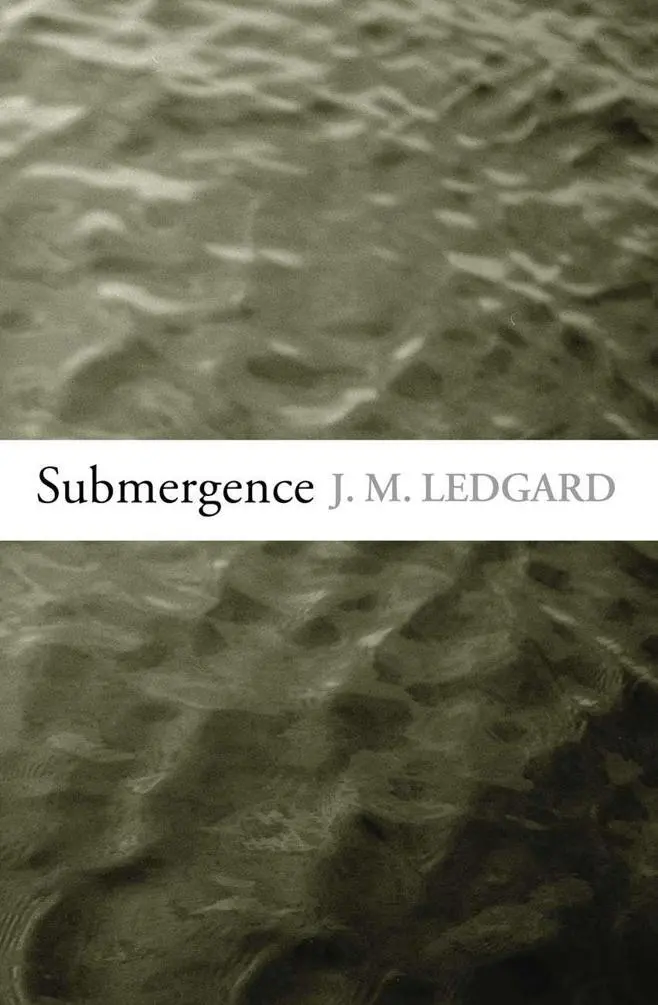
- Название:Submergence
- Автор:
- Издательство:Random House UK
- Жанр:
- Год:2011
- ISBN:9781446496831
- Рейтинг книги:5 / 5. Голосов: 1
-
Избранное:Добавить в избранное
- Отзывы:
-
Ваша оценка:
Submergence: краткое содержание, описание и аннотация
Предлагаем к чтению аннотацию, описание, краткое содержание или предисловие (зависит от того, что написал сам автор книги «Submergence»). Если вы не нашли необходимую информацию о книге — напишите в комментариях, мы постараемся отыскать её.
Both are drawn back to the previous Christmas, and to a French hotel on the Atlantic coast, where a chance encounter on the beach led to an intense and enduring romance. For James, his mind escapes to utopias both imagined and remembered. Danny is drawn back to beginnings: to mythical and scientific origins, and to her own. It is to each other and to the ocean that they most frequently return: magnetic and otherworldly, a comfort and a threat.
Submergence — читать онлайн бесплатно полную книгу (весь текст) целиком
Ниже представлен текст книги, разбитый по страницам. Система сохранения места последней прочитанной страницы, позволяет с удобством читать онлайн бесплатно книгу «Submergence», без необходимости каждый раз заново искать на чём Вы остановились. Поставьте закладку, и сможете в любой момент перейти на страницу, на которой закончили чтение.
Интервал:
Закладка:
Saif held up his mobile phones for a clearer reception. He received a final text message before the signal gave out. James saw the screensaver on one of the phones was of Giggs scoring a goal for Manchester United over and over. Saif passed the phones along to Qasab, who put them in a knapsack together with some hand grenades. The knapsack looked to have been lifted from some long-ago day trip; filled with sandwiches wrapped in paper, cake and a flask of tea.
Saif pulled out a small and finely bound Koran and began to read aloud. Quietly at first, then sonorously. When he was finished he moved down the lorry and squeezed in beside him.
‘I want to tell you not to be frightened,’ Saif said. ‘We are not heading for battle. The jihad has no frontlines. The battle is all around, it is everywhere.’
They had guns, but they were not an army. There was no likeness to the units he had served with. They were skinny men. Apart from Qasab, he had no doubt that all of them would be beaten to death in a confined space by the average British paratrooper. He welcomed the thought.
Nonetheless the jihadists showed their stamina over a longer period. The paratrooper — the Crusader — was stronger and heavier, but grew tired and demoralised more quickly. The paratrooper was limited in his rules of engagement by the need to protect civilians. The paratrooper did not want to die. The jihadists drank water from the ditch and were resigned to the slow rhythm of the insurgency, walking for days in jeans and sandals, shouldering their guns like skis. Some of them sharpened their teeth with metal files. Over time the jihadists might wear down a much larger force. They were the opposite of the United Nations peacekeepers in Africa, who were all logistics and no fight. Those UN outposts were guarded by machine-gun nests, while on the inside the Portakabins were arranged around a mess tent with a television playing one code of football or another, and the only cheer in those places was when a goal was scored, or a try — a ball puncturing a plane. He had been in one remote camp in Sudan and noticed a beautiful half-naked Dinka girl standing at the edge of the tent bathed in the glow of a football match on a television.
There were seventeen fighters in the lorry. They were self-sufficient. They shared with paratroopers only a care for their guns; they were constantly cleaning them. Most did not even own a prayer mat. They were empowered by the prospect of martyrdom. Famines, flash floods, malaria, the bones that were set wrong or not set at all, the hole rotted through the jawbone, the infections, the gamut of psychiatric disorders, all of this assured them that their fate was in every way and in every place an uncertain one, a medieval one. They would not be missed, and no matter that they lacked common sense, information, and adequate equipment, fatalism gave them a durability the paratrooper lacked.
He tried to strike up a conversation with Saif but the road had become rough again and it was hard to make himself understood over the noise. They fell into an uneasy silence.
Somewhere along the way the land just died. It was bleached out and the cracks that were in the soil in the old Italian plantation had here become deep enough to fall into. The insides of these cuts were twisted with roots and there were flints and fossils exposed. The badlands stretched out of sight. He was thirsty. He longed for water.
Rain was coming. They could all feel it, the prospect of it, the weight of it. The light was faded, the clouds were bruised and full. He scratched at his arms with his bound hands until there was a thickness of dirt and skin and blood under his nails. It was the flea bites. The lorry trundled on over the badlands. It rocked him to sleep. When he awoke his mind was fogged. His face hurt and his skin tasted salty. It had not rained.
They stopped the lorry under a canopy of acacia trees. It was late afternoon. He was hauled out. He begged to be allowed to piss. They untied his hands and led him to a bush. An infection had crystallised in him. It was excruciating; it dribbled, there was pus, then a jet. He could smell the camels in a herder’s camp nearby. Slow, loping, farting beasts, they smelled like they moved. They tied him to a tree while they set up camp. Qasab was the eldest, then Saif. The rest were boys. They laid out the blankets. The stars began to appear in the sky, hidden by clouds. They seemed to know nothing about camping; how to pick out a sheltered spot, or where to place the fire so the wind would not turn it and smoke them out.
The rain came in the night. It was a downpour so sudden and torrential it had even the most pious fighters shouting curses. The weapons and the blankets were thrown in the back of the lorry. There was not enough room and he was made to lay down under the lorry with some of the fighters. The tarpaulin was ripped and other fighters joined them and then they were lined up together; the sky bright with lightning, there was the closeness of human bodies, the camels could be heard, and Qasab called out a prayer with a hoarse voice. There was a shout. He was dragged out, he stood there, it was hard to see, it was an immersion, then he made out a fighter crouched behind a thorn tree and just on the other side a gazelle kicking in the mud and a lion closing off its nostrils with its paws.
When the rain eased and they were back under the lorry and they could hear the lion feeding he had a strange feeling, which was something like the speed of his passing through the world, hardly stopping, and his understanding that lions had for so many generations taken hoofed animals in the cover of rain in the desert, and that the sound of them in the dark would outlast him and all of his kind, just as even the mud under the lorry would outlast him.
Later, in a hallucinatory lightning strike, he glimpsed another lion coming to the kill. She was gaunt, her tail split, heraldically, the Bohemian way, also bent like the course of his river at home. Someone raised his gun, it was confusing, the prayers, needing to urinate, the engine dripping, the sense of being made of sugar and dissolving, a lantern, a torch, then nothing, a blankness. He saw the fighter taking aim at the lioness and called out: no! Before the trigger was pulled, Saif sprang out from the lorry and kicked the fighter into the mud and kept kicking him. Whether this was discipline or just alpha-male posturing was difficult to say. But the lioness got away.
The night spun on. Mosquitoes moved between their bodies and the drive shaft of the lorry. Each of the whining insects was crimson with blood that might have come from the fighters, from him, from the camels. He felt further from home than he ever had in his life.
What was he? Not an astronaut floating in a void after a spacewalk gone wrong. For all the puddles, not one of her aquanauts. He was an unfortunate spy, tethered to men and boys who wanted to convert or murder him. They had no understanding of where he came from, what was in his head, his country memories; Sassoon memories, a certain tree, a stile, a hedgerow, the flints in the clay of a Yorkshire field; or else, the rest of it, uncontrived, the blur of city life, friendships, faces, the noise and colours streaming in the early hours of a party in Fulham.
These men and boys had gone through the training camps and been made to see a light he could not see. What face? He did not know. Mohammedanism was without a face.
He was not wholly unsympathetic. He had read the Koran. He supported the Palestinians, mostly, as did many in the secret intelligence service. He had gone on foot through hostile country for days to reach the minaret of Jam in Afghanistan. The beauty of it had moved him to tears. His views were conventional: he was set against appeasement. The Muslim world had to allow laboratories and churches to be built. There should be a compulsory reading from Voltaire in every madrasa. Gay bars and nudist beaches on the Saudi Riviera could wait. Whatever words he might speak under the weight of his captivity, he was an unbeliever. These men of Islam held up a sword with a Koran. That was their strength; that was what made them abhorrent to him.
Читать дальшеИнтервал:
Закладка:
Похожие книги на «Submergence»
Представляем Вашему вниманию похожие книги на «Submergence» списком для выбора. Мы отобрали схожую по названию и смыслу литературу в надежде предоставить читателям больше вариантов отыскать новые, интересные, ещё непрочитанные произведения.



Обсуждение, отзывы о книге «Submergence» и просто собственные мнения читателей. Оставьте ваши комментарии, напишите, что Вы думаете о произведении, его смысле или главных героях. Укажите что конкретно понравилось, а что нет, и почему Вы так считаете.