J. Ledgard - Submergence
Здесь есть возможность читать онлайн «J. Ledgard - Submergence» весь текст электронной книги совершенно бесплатно (целиком полную версию без сокращений). В некоторых случаях можно слушать аудио, скачать через торрент в формате fb2 и присутствует краткое содержание. Год выпуска: 2011, ISBN: 2011, Издательство: Random House UK, Жанр: Современная проза, на английском языке. Описание произведения, (предисловие) а так же отзывы посетителей доступны на портале библиотеки ЛибКат.
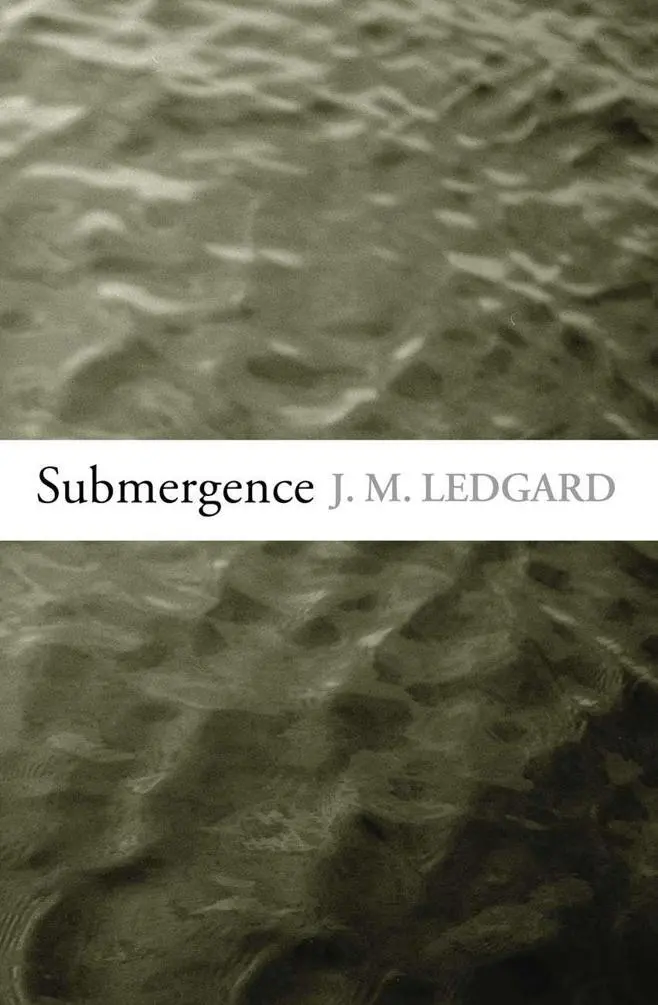
- Название:Submergence
- Автор:
- Издательство:Random House UK
- Жанр:
- Год:2011
- ISBN:9781446496831
- Рейтинг книги:5 / 5. Голосов: 1
-
Избранное:Добавить в избранное
- Отзывы:
-
Ваша оценка:
Submergence: краткое содержание, описание и аннотация
Предлагаем к чтению аннотацию, описание, краткое содержание или предисловие (зависит от того, что написал сам автор книги «Submergence»). Если вы не нашли необходимую информацию о книге — напишите в комментариях, мы постараемся отыскать её.
Both are drawn back to the previous Christmas, and to a French hotel on the Atlantic coast, where a chance encounter on the beach led to an intense and enduring romance. For James, his mind escapes to utopias both imagined and remembered. Danny is drawn back to beginnings: to mythical and scientific origins, and to her own. It is to each other and to the ocean that they most frequently return: magnetic and otherworldly, a comfort and a threat.
Submergence — читать онлайн бесплатно полную книгу (весь текст) целиком
Ниже представлен текст книги, разбитый по страницам. Система сохранения места последней прочитанной страницы, позволяет с удобством читать онлайн бесплатно книгу «Submergence», без необходимости каждый раз заново искать на чём Вы остановились. Поставьте закладку, и сможете в любой момент перейти на страницу, на которой закончили чтение.
Интервал:
Закладка:
The drizzle continued through the night and the next day winged termites rose from within the earth in great numbers. He was leaned against the side of the lorry, and the droplets fell softly on his face, with no more force than a tear. Through the campfire the droplets fell, through the growing light, causing termites to glitter. Falling in such a way that it became bewitching. It was little wonder the Musulman was consumed with the idea of paradise as a garden on which rain fell softly. It seemed irrelevant whether paradise was on this planet, or in another place entirely, but the rain was important.
The grass, the thorns, the floor of the encampment and the bed of the lorry were silvered with tens of thousands of termite wings. Grounded, without sight, the termites trembled and died in silence, not deafeningly like bees; without protest, one alone from the other. He watched them and made himself believe that their only flight produced in them an ecstasy which their body had evolved to receive and magnify and that, at the moment their wings peeled off, the quivering height of their creation was not laughter or speech, but a single sustained orgasm. Some of the fighters went around the camp picking up the termites and fried them for breakfast. He was given flat bread like a pitta, filled with them. He bit into it. There was a crunch, then juices.
He was allowed to walk with Saif in the morning and together they found the remains of the kill the lion had made.
‘A lioness and cubs,’ he said. ‘You saved them.’
‘Our fight is elsewhere,’ Saif said, dismissively.
The sun shone. The fighters dried themselves and their possessions and their guns. They were less bedraggled and looked cleaner than before the rain.
When the camel herders left they went by the camp and shouted obscenities. He did not know what, but it was brazen. The herders were wild men, the kind who used to castrate their enemies and use their genitals for snuff pouches. Several of the younger boys ran out after them. The herders turned and shouted more abuse and spat through closed teeth like cats. One of them pulled down his gun, the other ran for cover. Shots were fired. The herder with the gun dropped dead. They chased the other herder and shot him through the shoulder blades. He fell down into the brush.
James was tied to a boy. The boy ran and he ran with him. The other fighters were already crowded around. The herder was on his knees. The exit wound was small. All the jihadists watched him die without looking away. James did also. The herder crawled forward. His lungs were punctured. Blood puffed into the air with his every breath.
‘They were going to report our position,’ Qasab said, in Arabic. ‘They had to be killed.’
It was Qasab who butchered the camel calf, then let the other camels go.
They drove down into a wadi, such as he had seen Yusuf standing in, his arms sunk in the jar of spermaceti.
It was slow going. At some points they all had to jump down and walk beside the lorry, removing the boulders blocking the way, while Saif checked their position on a GPS. The mosquitoes rose hungrily from strips of filthy water. At points the wadi widened into a ravine. The lorry ground on over olivine basalt polished by the hoofs of camels gone before them. They halted under a tree whose trunk and branches were butter yellow. The lorry shone in the shade, shone all the way to space, to the American satellite they had taken their coordinates from, or so Saif thought. He was scared of being spied on more than anything else, and decided that they should stop there, camouflage the lorry, and continue on after sunset; stupid, because the satellites or Reaper drones with their thermal indicators were more likely to spot a lorry moving at night than in the day.
They took the munitions out of the lorry and kept their distance, in case it was taken out in an air strike.
Later, they gave him a plate of camel meat and rice and tea. The water was from a hole they had dug in the riverbed. It was not syrupy like the tea the others drank. He was beaten for refusing to collect firewood. It was part of his plan. By being selectively uncooperative, he could win favour by being unexpectedly cooperative.

‘Everyone else is already here,’ she whispered.
It was a formal dinner. Her dress shimmered purple and brown and in and out of those colours, showing off her breasts and hips. She took his arm as they went in. He was uncomfortable. He doubted he would have gone by himself. He hated regimental dinners and balls.
It snowed so heavily that the staff had to sweep it from the roof; so heavily that it transformed Bethlehem in his mind from a grubby little Palestinian town despoiled by Israel into a proper French country town; the shepherds in the snowy fields, the angels above.
She wore a silver Ethiopian cross that glinted in the candlelight. They were seated at the table at which Ibsen had eaten his goose in Christmas 1899. They took that as a foretoken of happy times.
Joyeux Noël! Peace and goodwill, hot chocolate and furs, and every phone switched off, please. There was a Nativity play, madrigals, some Haydn on a trumpet, an unidentifiable piano piece. The waiters wore tailcoats. Lifting a finger to them was considered gauche; they acknowledged the slightest nod, and glided out of the kitchen like a Greek chorus.
Between them, over the course of the evening, they ate servings of duck foie gras with a peach wine jelly, Scottish scallops, ham, deboned saddle of lamb from the Auvergne, white beans with truffles, sea bream, poached apricots, bay leaf panacotta, cheeses and chocolates. They drank champagne, a house white wine, Rothschild Bordeaux, Chateau Villefranche dessert wine; he an espresso and she a cup of rooibos tea. There were also almonds and Christmas pudding with brandy sauce from the Ritz in London.
He wore a blue suit with suede shoes and a grey Turnbull & Asser shirt. He had only his regimental cufflinks with him. A silver parachute on maroon. He did not think she would notice.
He was in many ways old-fashioned. He envied Victorian explorers for having such obvious goals and for the contrast they experienced between the world they discovered and the world they returned to. Nothing was that clearly defined any more. He did not trust emotions. He trusted knowledge and duty. Yes, duty. His work was only occasionally terrifying. When it was he dealt with it. His mind was supple, the mind of a future head of intelligence, who believed the greatest service he could offer in the complicated present was to help people catch up emotionally with where they stood historically. They were almost exactly coeval.
‘You were in the army,’ she said.
‘What makes you say that?’
‘Just about everything. Those cufflinks for a start. The tattoo. I’ve never met a man who folds his clothes and arranges his shoes before getting into bed.’
‘It was a long time ago,’ he said. ‘A short service commission.’
‘You sound like you regret it.’
‘In some ways.’
‘You jumped out of planes?’
‘Yes, I jumped.’
‘Wow!’ she said, echoing his wow. She wasn’t French, not really. Of course she saw his cufflinks, of course she saw through him. It would be only a little while before the nature of his spying was similarly evident; the lies, thefts, deaths; the despots of the agency, the good men and women who were prevented from getting out.
She did not ask him what it was like to jump out of a plane, she did not say: what was it about the army you didn’t like? She said, ‘Can I say something in German? Would you mind?’
‘Not at all,’ he said. Then, ‘I don’t speak German.’
Читать дальшеИнтервал:
Закладка:
Похожие книги на «Submergence»
Представляем Вашему вниманию похожие книги на «Submergence» списком для выбора. Мы отобрали схожую по названию и смыслу литературу в надежде предоставить читателям больше вариантов отыскать новые, интересные, ещё непрочитанные произведения.


Обсуждение, отзывы о книге «Submergence» и просто собственные мнения читателей. Оставьте ваши комментарии, напишите, что Вы думаете о произведении, его смысле или главных героях. Укажите что конкретно понравилось, а что нет, и почему Вы так считаете.