Yasmina Khadra - The African Equation
Здесь есть возможность читать онлайн «Yasmina Khadra - The African Equation» весь текст электронной книги совершенно бесплатно (целиком полную версию без сокращений). В некоторых случаях можно слушать аудио, скачать через торрент в формате fb2 и присутствует краткое содержание. Год выпуска: 2015, Издательство: Gallic Books, Жанр: Современная проза, на английском языке. Описание произведения, (предисловие) а так же отзывы посетителей доступны на портале библиотеки ЛибКат.
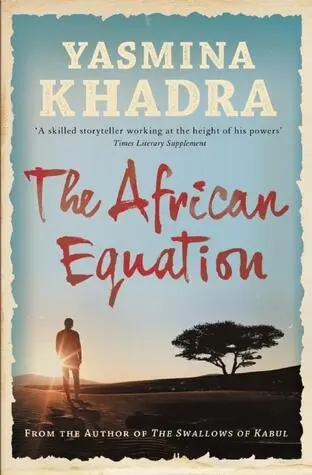
- Название:The African Equation
- Автор:
- Издательство:Gallic Books
- Жанр:
- Год:2015
- ISBN:нет данных
- Рейтинг книги:4 / 5. Голосов: 1
-
Избранное:Добавить в избранное
- Отзывы:
-
Ваша оценка:
The African Equation: краткое содержание, описание и аннотация
Предлагаем к чтению аннотацию, описание, краткое содержание или предисловие (зависит от того, что написал сам автор книги «The African Equation»). Если вы не нашли необходимую информацию о книге — напишите в комментариях, мы постараемся отыскать её.
.
Frankfurt MD Kurt Kraussman is devastated by his wife's suicide. Unable to make sense of what happened, Kurt agrees to join his friend Hans on a humanitarian mission to the Comoros. But, sailing down the Red Sea, their boat is boarded by Somali pirates and the men are taken hostage.
The arduous journey to the pirates' desert hideout is only the beginning of Kurt's odyssey. He endures imprisonment and brutality at the hands of captors whose failings are all too human.
As the situation deteriorates, it is fellow prisoner, Bruno, a long-time resident in Africa, who shows Kurt another side to the wounded yet defiant continent he loves.
A giant of francophone writing, Algerian author Yasmina Khadra takes current events as a starting point to explore opposing views and myths of Africa and the West, ultimately delivering a powerful message of friendship, resilience and redemption.
Yasmina Khadra
The African Equation — читать онлайн бесплатно полную книгу (весь текст) целиком
Ниже представлен текст книги, разбитый по страницам. Система сохранения места последней прочитанной страницы, позволяет с удобством читать онлайн бесплатно книгу «The African Equation», без необходимости каждый раз заново искать на чём Вы остановились. Поставьте закладку, и сможете в любой момент перейти на страницу, на которой закончили чтение.
Интервал:
Закладка:
I had no objection to Bruno’s suggestion. To be honest, I was in far too confused a state to think of anything better.
Bruno began by making an inventory of the things we were carrying in the back of the pick-up. In the duffle bag, we found two military uniforms, a pair of shoes, some vests, a cheche , half a dozen full Kalashnikov magazines tied together in pairs with sticking plaster, some wide-ranging books on European poetry, a brand-new pair of boxer shorts, sports socks and a pile of red scarves in their original wrapping. In the rucksacks, Joma had thrown canned food, pans, packets of bread and rusks, dried meat, cases of ammunition, defensive grenades, candles, boxes of matches, an oil stove, a sachet of coffee, some powdered sugar and a pocket torch. I looked for my watch, my ring and the other objects taken from me on the boat, but didn’t find them. Bruno grabbed the satchel and opened it by forcing a small padlock. Inside, along with all kinds of papers, including several sheets in tortuous handwriting with lots of crossings out, we found a passport belonging to Joma, an indecipherable identity card, press cuttings carefully sorted into plastic wallets, a small bundle of banknotes, a blurry wedding photograph … and a book that left us stunned. It was a slim volume of poems, the cover of which would have been utterly unremarkable if Joma’s face hadn’t been plastered all over it.
The title of the book and the name of the author were underlined in red:
Black Moon
by Joma Baba-Sy
‘Wow!’ Bruno said.
I grabbed the book from him. The back cover blurb read: A tailor by profession, Joma Baba-Sy is also a maker of verses and a tormented soul whose impassioned tirades call on Africa to awaken. Black Moon is his first book, but it already establishes him as a genuine poet who is sure to make his mark on the literature of our continent. Joma Baba-Sy has been awarded the National Prize for Letters, the Léopold Senghor Prize and the Trophy for Best Committed Poetry .
‘That brute was a poet,’ Bruno said, almost breathlessly.
Again, my limbs froze. I pulled my sheet around me and went and lay down on the dune, facing the sun. I wanted to look at the desert without seeing it, to be silent and think of nothing.
The sun had chased away the mist, and you could see to infinity. The few sticky clouds that had ventured into the sky had disintegrated, leaving in their wake only a stringy, fragile shroud. We had worn our eyes out looking through the binoculars, searching for the smallest gleam; sometimes, we thought we saw a convoy or a group of nomads, but they were only mirages. Late in the morning, we had witnessed a terrible attack by three jackals on a stray dog. The poor, solitary beast had fought with real valour, but its attackers, more cunning than hungry, had torn it to pieces in the end. Once their dirty work was over, they had gone off along a river bed and disappeared.
We ate, drank coffee, and went back to our observation posts. Laying siege to the desert is a monotonous task … By late afternoon, I was starting to feel restless. Bruno admitted that waiting for a miracle wasn’t such a good idea after all, and we set out in a northerly direction. What a relief when, after an hour’s drive, we spotted a collection of huts! All at once, there was light at the end of our tunnel. Almost ecstatic with excitement, Bruno pulled up. He rubbed his eyes and only got out of the truck once he was sure he wasn’t hallucinating. I joined him on a hillock, impatient to get the binoculars from him.
‘There’s someone there,’ he exclaimed, stretching his arm out towards the village.
A figure was walking up and down the village square, a dog at its heels, going from one hut to another and bending to pick things up. It was a man. He was alone. The village seemed uninhabited. Bruno took back the binoculars and swept every corner, alert to a trap. But there was nothing to alarm us. The man was calmly going about his business. We decided to try our luck.
As we approached the huts, we noticed forms lying on the ground. The man didn’t seem to notice the roar of the truck, and continued to pick things up without paying any attention to us. The doors of the huts were wide open, but nothing moved inside. No women or children. The forms lying in the dust were animals, and they didn’t move. There were two donkeys in the square, some goats in the middle of an enclosure, a dromedary lying in its trough, and here and there some dogs with twisted bodies. All of these animals were dead.
‘Something bad happened here,’ Bruno said.
The man was gathering branches and leaves in the square. His arms were laden with bundles of sticks. He hadn’t yet noticed us, in spite of the noise of our vehicle; maybe he was deliberately ignoring us. His dog, which had run away when it heard us arrive, started back towards its master, although without going too close, ready to scuttle away again. It made a curious impression on me, with its ears down and its tail between its hind legs: it seemed to be in a state of shock.
We parked the pick-up at the entrance to the village and got out, our senses on the alert. The animals were lying in pools of blood. There were bloodstains everywhere, some indicating where bodies had been dragged. Bullet cartridges glittered amid the stones. As slowly as a sleepwalker, the man went over to one of the huts, laid his burden down and came back to get the pieces of wood that marked off the enclosure where the goats had been killed. Bruno said something to him in an African dialect, but the man didn’t hear him. He was a doddery old fellow with a stooped back and white hair, as thin and dry as a nail. His face was chiselled, with hollow cheeks that made the bones stand out. His absent gaze seemed to be swallowed up by the curdled white of his shaded eyes.
A terrible buzzing came from the hut. Human corpses lay inside it, besieged by thousands of frenzied flies. You could see arms and legs, the bodies of women and children heaped one on top of the other, some naked and displaying open wounds. Paralysed by the sight, we were immediately overcome by the terrible stench of putrefaction, a stench the scarves over our faces were unable to keep at bay.
‘I’ve seen lots of massacres in my life,’ Bruno said with a mixture of sorrow and disgust, ‘and every time it’s made me sick.’
‘Do you think it was Gerima’s men?’
‘I don’t see any tyre marks on the ground.’ He pointed to horse droppings and countless hoof prints in the sand. ‘These poor devils were attacked by horsemen. There are all kinds of criminal gangs operating like this. They decimate isolated families who are unfortunate enough to be in their path.’
‘I don’t understand what goes on in these monsters’ minds.’
‘A goldfish can’t bring the complexity of the ocean back to the tranquillity of its bowl, Dr Krausmann,’ Bruno said with a hint of reproach.
‘I don’t live on another planet,’ I retorted, exasperated that he could still come out with these insinuations after all I had been through.
‘Neither does a goldfish. But what does it know about storms? The world has become colour blind. On both sides, everything is either black or white, and nobody cares to put things into perspective. Good and evil are ancient history. These days, it’s a matter of predators and prey. The predators are obsessed with extending their living space, the prey with their survival.’
‘You’ve been too long in Africa, Bruno.’
‘What is Africa, or Asia or America?’ he said in disgust. ‘It’s all the same. Whether you call it a brothel or a whorehouse, it’s the soul that’s in it that determines its vocation. Whether you say “it smells bad” or “it stinks” doesn’t change the air around you. The South Pole is only the North Pole lying flat on its back, and the West is only the East on the other side of the street. And do you know why, Monsieur Krausmann? Because there are no more shades of grey. And when there are no more shades of grey, anybody can rationalise anything, even the worst atrocity.’
Читать дальшеИнтервал:
Закладка:
Похожие книги на «The African Equation»
Представляем Вашему вниманию похожие книги на «The African Equation» списком для выбора. Мы отобрали схожую по названию и смыслу литературу в надежде предоставить читателям больше вариантов отыскать новые, интересные, ещё непрочитанные произведения.



Обсуждение, отзывы о книге «The African Equation» и просто собственные мнения читателей. Оставьте ваши комментарии, напишите, что Вы думаете о произведении, его смысле или главных героях. Укажите что конкретно понравилось, а что нет, и почему Вы так считаете.