Yasmina Khadra - The African Equation
Здесь есть возможность читать онлайн «Yasmina Khadra - The African Equation» весь текст электронной книги совершенно бесплатно (целиком полную версию без сокращений). В некоторых случаях можно слушать аудио, скачать через торрент в формате fb2 и присутствует краткое содержание. Год выпуска: 2015, Издательство: Gallic Books, Жанр: Современная проза, на английском языке. Описание произведения, (предисловие) а так же отзывы посетителей доступны на портале библиотеки ЛибКат.
- Название:The African Equation
- Автор:
- Издательство:Gallic Books
- Жанр:
- Год:2015
- ISBN:нет данных
- Рейтинг книги:4 / 5. Голосов: 1
-
Избранное:Добавить в избранное
- Отзывы:
-
Ваша оценка:
The African Equation: краткое содержание, описание и аннотация
Предлагаем к чтению аннотацию, описание, краткое содержание или предисловие (зависит от того, что написал сам автор книги «The African Equation»). Если вы не нашли необходимую информацию о книге — напишите в комментариях, мы постараемся отыскать её.
.
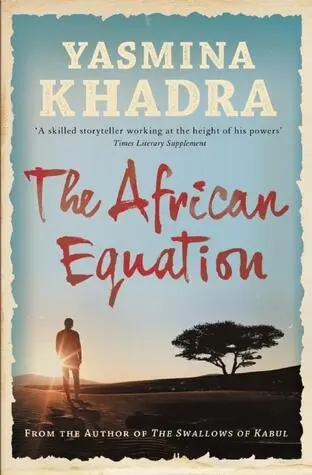
Frankfurt MD Kurt Kraussman is devastated by his wife's suicide. Unable to make sense of what happened, Kurt agrees to join his friend Hans on a humanitarian mission to the Comoros. But, sailing down the Red Sea, their boat is boarded by Somali pirates and the men are taken hostage.
The arduous journey to the pirates' desert hideout is only the beginning of Kurt's odyssey. He endures imprisonment and brutality at the hands of captors whose failings are all too human.
As the situation deteriorates, it is fellow prisoner, Bruno, a long-time resident in Africa, who shows Kurt another side to the wounded yet defiant continent he loves.
A giant of francophone writing, Algerian author Yasmina Khadra takes current events as a starting point to explore opposing views and myths of Africa and the West, ultimately delivering a powerful message of friendship, resilience and redemption.
Yasmina Khadra
The African Equation — читать онлайн бесплатно полную книгу (весь текст) целиком
Ниже представлен текст книги, разбитый по страницам. Система сохранения места последней прочитанной страницы, позволяет с удобством читать онлайн бесплатно книгу «The African Equation», без необходимости каждый раз заново искать на чём Вы остановились. Поставьте закладку, и сможете в любой момент перейти на страницу, на которой закончили чтение.
Интервал:
Закладка:
‘Have you ever killed for him?’
Blackmoon stiffened. The little grin that had been playing over his lips like a will o’ the wisp now abruptly deepened the creases at the corners of his mouth. ‘Were you ever a policeman?’ he asked Bruno.
‘No, never.’
‘Then can you explain why your questions make me want to piss on you?’ With that, he stood up, looked us up and down and grunted, ‘They’re all the same! You try to be nice, and they try to screw you over.’
And he went off to kick stones behind the rampart.
‘I told you the boy was unstable,’ I said sharply to Bruno as we went back to our straw mattresses in the jail. ‘You upset him, and he won’t forgive us in a hurry.’
‘No, no,’ Bruno reassured me, lying back on his mat. ‘The boy is seriously disturbed, I don’t deny that, but of all the sons of bitches who are keeping us in this hole, he’s the least formidable and probably the only one who has a bit of a soul left. I’ve been watching him for weeks. He likes to let himself go without really dropping his guard, which complicates things with him … He’s not as bad as he seems … He was the one who slipped me the miracle powder and the ointment. In these conditions, a gesture like that almost restores your faith in the human race …’
He rolled a cloth into a pillow and slipped it under his neck.
His excessive serenity exasperated me. I was seriously starting to doubt his ‘great knowledge’ of African matters.
‘I think we should avoid getting too familiar with the boy.’
‘Why’s that?’ he asked nonchalantly.
‘These people are unpredictable.’
He gave a brief, dry laugh and dismissed my words with his hand. ‘It’s obvious you don’t know much about Africa, Monsieur Krausmann.’
Bruno brought out this excuse every time I disapproved of his actions or his theories about the complexity of people and things. As far as he was concerned, I was merely a middle-class European who lived in a bubble, as indifferent to the bedlam of the world as a goldfish in its bowl; a conventional doctor with manicured nails, so narcissistic he could live in a mirror, who saw only a superficial exoticism where there were other mindsets and other truths to explore. He even showed contempt for the narrowness of my culture and my lack of curiosity when it came to looking a bit further than the end of my nose, and declared emphatically that a person who couldn’t love one song from each folk tradition and one saint from each belief had only lived half a life. ‘The African,’ he said one night, ‘is a code. Decipher it, and you’ll achieve understanding.’
Bruno had told me the story of his life in Africa. In fact, that was all he had been doing in the time I’d been sharing the jail with him. He had fallen in love with the continent as a young man after reading The Forgotten Trail , a novel about the Tuaregs by a French writer named Frison-Roche. Captivated by the Sahara and the peoples of the Hoggar, he had studied dozens of books dealing with the lives and customs of that part of the world, and had ended up hungrily devouring the work of the French naturalist Théodore André Monod, a great explorer of the desert regions as well as a scholar in many disciplines and an unequalled humanist, who had died at the beginning of the twenty-first century. At the age of nineteen Bruno had followed in his mentor’s footsteps, setting off with a group of students from Bordeaux to search for the famous ancient route, buried beneath the ergs and regs , which, according to Frison-Roche, King Solomon had taken in order to establish trade relations with the black kingdoms. After a short expedition in the Ténéré, the group of students returned to Bordeaux empty-handed, but Bruno stayed, and was taken in, half dead with dehydration, by a Fulani family. He spent several weeks in a nameless village before resuming his investigations. He never returned to France. He was in his element in the desert, sometimes an anthropologist, sometimes an archaeologist, before deciding to follow the movements of the caravan people and nomadic shepherds, and it was they who really introduced him to what was most special and remarkable about Africa. His wanderings lasted fifteen extraordinary years, during which he discovered Niger, Upper Volta, from where he was displaced by a bloody coup, Ghana, Mali, Senegal and Mauritania. He returned to Upper Volta, now Burkina Faso, before being chased out by another coup, then went back up to Aguelhok in the north of Mali, where he taught French to surprisingly receptive kids in an open-air classroom. He knew all the tribes in the region: from the Idna to the elusive Regonatem, by way of the Imghad, the Ifora and the Chamanama. It was a Chamanama girl that he married, the beautiful Aminata, with whom he settled in Gao where he became a guide to scientific researchers. He came back one evening from a hike to find that Aminata wasn’t in the house. The neighbours told him that his wife had been abducted by a cousin of hers. The elder of the tribe assured him that he knew nothing about the abduction and had no idea where the kidnapper was hiding. Bruno set off in search of his wife and found her at last, two years later, in a township to the east of Zinder in Niger. His relief was short-lived: his wife informed him that she had not been abducted by her cousin, but that she had run off with him out of love. Humiliated and crushed, Bruno did not have the heart to go back to Mali; one night, he followed a star that shone less brightly than the others and wandered wherever the wind took him. He eventually settled in a village in Chad, where he ran an incense shop, then, thrown off course by the civil war ravaging the country, took refuge, first in Kenya, then in Tanzania, before waking up one morning from an alcohol-induced coma in a dive in Zimbabwe where a dancer named Souad set the nights alight with her swaying hips. Souad had Aminata’s magical eyes, her gingerbread complexion and her dizzying embraces. He loved her with all his might and invited her to follow him deep into the unexplored jungles where he would build for her mausoleums of emeralds, dreams by the cartload, dance floors carpeted in beautiful flowers and footlights directly powered by the sun. They actually went no further than the nearest mountain, where the shacks were no better than cowsheds and people died of starvation and synthetic drugs; they soon became disillusioned with this absurd attempt at an idyll, and Souad, realising that happiness is impossible without money, didn’t hesitate for one second before dumping her handsome but penniless lover when a club owner promised her the moon if she agreed to go with him to Cape Verde. Mad with grief and hunger, Bruno resumed his peregrinations, entrusting his fate to the whims of the unconsoling roads that took him from one country to another for six years. He ended up in Djibouti, where he got by on odd jobs and adulterated beer, and then, offering his services to the Western media, started venturing from time to time to Somalia for the purposes of a TV item or a journalistic investigation, until the day he was kidnapped by bandits near Mogadishu along with a star of Italian television to whom he had acted as both interpreter and guide.
‘How can you still have faith in these people after what they’ve put you through?’ I asked.
Lying there wrapped in his cloths, Bruno rested his left foot on his right knee and stared up at the rickety beams on the ceiling. Shafts of light filtered through the cracks in the sheet metal and scattered a multitude of golden coins on the sandy ground. An ash-coloured lizard held itself motionless on the wall, almost imperceptible against the cob. Above its head, a vast, tattered spider’s web moved gently in the draught, like a hanging garden in a state of decay. In a corner, near the receptacle we used as a urinal, two beetles grappled in silence … plus of course, searching for gaps in our mosquito nets, our very own pets, the flies!
Читать дальшеИнтервал:
Закладка:
Похожие книги на «The African Equation»
Представляем Вашему вниманию похожие книги на «The African Equation» списком для выбора. Мы отобрали схожую по названию и смыслу литературу в надежде предоставить читателям больше вариантов отыскать новые, интересные, ещё непрочитанные произведения.








Обсуждение, отзывы о книге «The African Equation» и просто собственные мнения читателей. Оставьте ваши комментарии, напишите, что Вы думаете о произведении, его смысле или главных героях. Укажите что конкретно понравилось, а что нет, и почему Вы так считаете.