Daniel Alarcon - Lost City Radio
Здесь есть возможность читать онлайн «Daniel Alarcon - Lost City Radio» весь текст электронной книги совершенно бесплатно (целиком полную версию без сокращений). В некоторых случаях можно слушать аудио, скачать через торрент в формате fb2 и присутствует краткое содержание. Год выпуска: 2008, Издательство: Harper Perennial, Жанр: Современная проза, на английском языке. Описание произведения, (предисловие) а так же отзывы посетителей доступны на портале библиотеки ЛибКат.
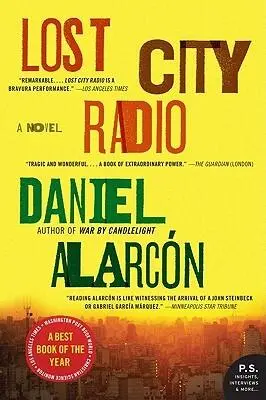
- Название:Lost City Radio
- Автор:
- Издательство:Harper Perennial
- Жанр:
- Год:2008
- ISBN:нет данных
- Рейтинг книги:4 / 5. Голосов: 1
-
Избранное:Добавить в избранное
- Отзывы:
-
Ваша оценка:
Lost City Radio: краткое содержание, описание и аннотация
Предлагаем к чтению аннотацию, описание, краткое содержание или предисловие (зависит от того, что написал сам автор книги «Lost City Radio»). Если вы не нашли необходимую информацию о книге — напишите в комментариях, мы постараемся отыскать её.
, she reads the names of those who have disappeared — those whom the furiously expanding city has swallowed. Through her efforts lovers are reunited and the lost are found. But in the aftermath of the decadelong bloody civil conflict, her own life is about to forever change — thanks to the arrival of a young boy from the jungle who provides a cryptic clue to the fate of Norma's vanished husband.
Lost City Radio — читать онлайн бесплатно полную книгу (весь текст) целиком
Ниже представлен текст книги, разбитый по страницам. Система сохранения места последней прочитанной страницы, позволяет с удобством читать онлайн бесплатно книгу «Lost City Radio», без необходимости каждый раз заново искать на чём Вы остановились. Поставьте закладку, и сможете в любой момент перейти на страницу, на которой закончили чтение.
Интервал:
Закладка:
Old men have mothers, too. Subversives, too, even those who live Spartan lives. Rey tried to smile. The man turned off the burner and flipped the egg into a bowl. The water settled in the pot, steaming. He tapped some instant coffee into a cup, then filled it with the same water he’d used to boil the egg. He stirred with a fork and handed the cup to Rey. “When you finish,” he said, “I’ll have some.”
Rey nodded and took the cup. Sugar? he almost asked, then thought better of it. He held the cup to his lips. It smelled like coffee, at least.
“This message?” the man said, without looking up. He sat with his legs crossed and peeled his egg carefully, gathering the tiny bits of eggshell in his lap. “Who gave it to you?”
“Are you Marden?”
The man glanced at Rey, then brushed off his fingers and took the egg into his mouth whole. He chewed for a minute or more, nodding. Rey drank his coffee, for lack of anything else to do. It burned his tongue. Then he sat forward, with his elbows on his knees and his chin resting in his palm. He watched the man eat. The loose skin of the man’s cheeks puffed and stretched. He swallowed with an exaggerated expression of satisfaction and rubbed his belly. “I’m Marden,” he said. “Where’d you get this message?”
Rey put down his coffee and joined the man on the floor. He pulled the envelope from his back pocket. “I don’t know his name.”
Marden looked the envelope over, squinted at the M , and broke into a grin. “Very nice,” he said. He tore the envelope in half, then into quarters, then into eighths. He handed the bits and pieces back to Rey. “Where is he finding people these days?” he said, amused.
Rey held the scraps of the envelope in his cupped hands. “What do I do with this?” he asked.
Marden shrugged. “Smoke them. Bury them. Confetti at your wedding. It doesn’t matter, kid.”
“I don’t understand.”
“When he asks, tell him there were eight pieces. When we need you, the professor will find you. He’ll tell you where to leave a message for me and you’ll do it.” Marden coughed dryly into his hand. “You work in Tamoé?”
Rey nodded.
“Avoid this part of the district. Wait for us. It could be months. It could be a year, or even two. No one knows.”
“No one?”
“I don’t. You don’t. Not even the professor does. We do as we’re told. You’ll be a messenger. Your job is to wait.”
Rey put the pieces of the envelope back into his pocket. His coffee had cooled a bit, enough for the bitter liquid to go down without too much trouble. He finished it and passed the cup to Marden. Was this all? Had he waited two weeks to have an empty envelope torn to pieces before him by a jowly, yellow-haired old man? It didn’t seem right.
“Were you at the Moon?” Rey asked.
Marden frowned. “I’ve been there,” he said after a moment. “You have as well?”
“Yes.”
“Keep it to yourself.” Marden sighed. “You won’t be coming back here. We have people all over the district. Things are happening.”
The meeting was over. There were no good-byes, no handshakes. The door opened, and the small room released him.
Outside, the children ran in frantic circles, raising a film of fine dust, a low, sandy fog over the street. He could feel it in his nostrils, he could taste it. The day was just beginning. The children paid him no attention. Rey walked away from the hill, down the avenue, absentmindedly scattering remains of the envelope along the way.
WHEN REY returned to the university that year, just before his twenty-fifth birthday, he still hadn’t seen the man in the wrinkled suit, or been to the eastern end of F–10. He’d worked, documenting scores of Indian families and the exact addresses of their ramshackle homes. He interpreted hand gestures and forged signatures for people he thought might benefit. He learned a bit of the Indian dialect, enough to say “good day” and “thank you” and “you’re welcome.” A half year in Tamoé, and the dust became a part of him: in the evenings, his clothes shook off clouds of it, his skin felt heavy with it. He was going to be buried alive if he stayed much longer. Every Friday, he made his way to the central office of the district, a blandly decorated room with a single desk and a sun-faded flag, on the district’s other lighted avenue. He turned in his paperwork, wondering only briefly what became of these maps and forms and records. Once settled, Rey knew, nothing would move these people. They didn’t need his help for anything beyond peace of mind: only a cataclysm would clear the area. He thought now and then of the man in the wrinkled suit, but on these rare occasions, the entire episode was cloaked in absurdity. There was no war of subversion in the making: where were the soldiers? The young men of the district seemed content to spend their evenings leaning against lampposts, posturing for the girls that passed by. The man in the wrinkled suit had invoked the future of the nation when he spoke of Tamoé, but who was the mysterious contact in this vanguard district? A terse, phlegmatic man with an unhealthy pallor, peeling eggs, alone. Marden, with his faraway look and peripheral existence, hardly seemed capable of leaving his home — to say nothing of instigating a general revolt.
Rey arranged to work part-time and resumed his studies. Despite all the talk, the president’s warnings, and the bellicose editorials, life at the university had not yet changed. There were no soldiers inside its gates. Students still gathered in the main courtyard and discussed the coming conflict as they had before, with that strange mix of awe and anxiety. It made Rey nervous to return: there were more than a few people who might remember one or another of the speeches he’d made, his brief and intoxicating turn at the university as an outspoken critic of the government. The prospect of meeting these people made his heart quicken. He’d been on committees that planned trips to the mountains. He’d met in dark rooms to plan protests. Most significant, he’d acquired another name, and with it came responsibilities. But then he had disappeared. His old friends would have questions: Where have you been? What did they do to you? Are you all right? Every so often, in the months of his recovery, Rey’s father handed him a note that some concerned young man had brought by the apartment. They were always polite but insistent: that he contact them, because they were waiting. Rey never responded: what could he say? There were people at the university who had looked up to him. He hadn’t seen anyone in nearly a year; he had fled to Tamoé. By now, they must consider him a traitor. They had surely interpreted his silence this way, and if they asked, he would have no answers.
Do you hate them? It tormented him, this question. At the university, Rey slipped into class just as the professor began lecturing, and left before the hour ended. He wore hooded sweatshirts even on sunny days, and walked quickly through campus, careful to keep his gaze fixed on the ground before him. All the things he would say to Norma years later were true. He was afraid of politics. He was afraid of dying. He was afraid of finding himself a broken man of fifty, living in a slum at the edge of the city, waiting for the arrival of obscure messages from the great brain of subversion. When Rey met her again, when he saw her and saw that she had seen him as well — he felt a shiver: even at a distance, she recalled for him, in all its immediacy, the terror of what he had done, of Marden and the man in the wrinkled suit and the blank horrors that still penetrated his dreams. He had risked too much. He had come so far from that night of dancing, that night of bombast and boasting. He’d only wanted to impress her. Because she was beautiful. Because she didn’t seem to mind looking at him either. And now she was walking toward him. The IL had found him at a bus stop; why did he believe, even for a moment, that they would forget him now? That he could just walk away? It was a cold, cloudy day — the malaise of winter.
Читать дальшеИнтервал:
Закладка:
Похожие книги на «Lost City Radio»
Представляем Вашему вниманию похожие книги на «Lost City Radio» списком для выбора. Мы отобрали схожую по названию и смыслу литературу в надежде предоставить читателям больше вариантов отыскать новые, интересные, ещё непрочитанные произведения.






Обсуждение, отзывы о книге «Lost City Radio» и просто собственные мнения читателей. Оставьте ваши комментарии, напишите, что Вы думаете о произведении, его смысле или главных героях. Укажите что конкретно понравилось, а что нет, и почему Вы так считаете.