Daniel Alarcon - Lost City Radio
Здесь есть возможность читать онлайн «Daniel Alarcon - Lost City Radio» весь текст электронной книги совершенно бесплатно (целиком полную версию без сокращений). В некоторых случаях можно слушать аудио, скачать через торрент в формате fb2 и присутствует краткое содержание. Год выпуска: 2008, Издательство: Harper Perennial, Жанр: Современная проза, на английском языке. Описание произведения, (предисловие) а так же отзывы посетителей доступны на портале библиотеки ЛибКат.
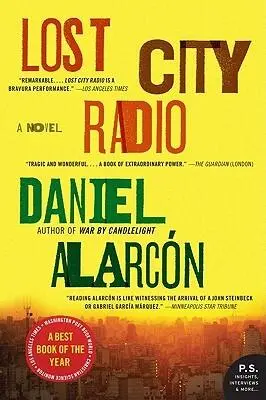
- Название:Lost City Radio
- Автор:
- Издательство:Harper Perennial
- Жанр:
- Год:2008
- ISBN:нет данных
- Рейтинг книги:4 / 5. Голосов: 1
-
Избранное:Добавить в избранное
- Отзывы:
-
Ваша оценка:
Lost City Radio: краткое содержание, описание и аннотация
Предлагаем к чтению аннотацию, описание, краткое содержание или предисловие (зависит от того, что написал сам автор книги «Lost City Radio»). Если вы не нашли необходимую информацию о книге — напишите в комментариях, мы постараемся отыскать её.
, she reads the names of those who have disappeared — those whom the furiously expanding city has swallowed. Through her efforts lovers are reunited and the lost are found. But in the aftermath of the decadelong bloody civil conflict, her own life is about to forever change — thanks to the arrival of a young boy from the jungle who provides a cryptic clue to the fate of Norma's vanished husband.
Lost City Radio — читать онлайн бесплатно полную книгу (весь текст) целиком
Ниже представлен текст книги, разбитый по страницам. Система сохранения места последней прочитанной страницы, позволяет с удобством читать онлайн бесплатно книгу «Lost City Radio», без необходимости каждый раз заново искать на чём Вы остановились. Поставьте закладку, и сможете в любой момент перейти на страницу, на которой закончили чтение.
Интервал:
Закладка:
In the city, among the literate classes, there was shock and disgust. Tadek was discussed on the radio (there were nearly a dozen stations then), and to the surprise of many, some people, often calling from scratchy pay phones in the city’s dustier districts, defended it. They didn’t employ Rey’s arguments — no one did — but invoked instead tradition, community, culture. They were happy to see it coming back. They told stories of village cripples, living symbols, who took their punishment without complaint. They were lessons for the children. Detractors called it retrograde and barbaric. A few case studies of tadek appeared in other local papers, alongside similarly disquieting dispatches from the interior: shootouts in formerly calm and altogether forgotten villages, policemen kidnapped from their posts in broad daylight, army patrols ambushed and relieved of their weapons on windy mountain passes.
The government had no choice but to shut down the partisan newspaper and a few others. A radio man who had done a series expanding on Rey’s articles was jailed briefly, questioned, and released. A congressman who considered himself very progressive introduced a bill to outlaw the practice. The bill passed, of course, with senator after senator rising to the dais to express his indignation. The president himself denounced the practice of tadek when he signed the legislation, saying the very concept offended the dignity of a modern nation. He preached continued faith in progress, and, as he did in nearly every speech in those days, alluded vaguely to a discontented minority bent on disrupting the calm of a peaceful, loyal people. The war itself, so long in coming, had finally arrived, but received only these oblique official references for the first five years of its violent life.
When Rey published his articles, the war had been raging in the interior for nearly three years, but in the city, it had scarcely been felt at all. Everything in the capital was different when the war began, so clean and ordered — before The Settlement was settled, before the Plaza was razed and replaced with Newtown Plaza, back when The Cantonment was a cantonment and not a furiously expanding slum along the northern edge of the city. In this place — which no longer exists — it was an affront to imagine tadek could be real. It offended the city’s sense of itself: as a capital, as an urban center in dialogue with the world. But it wasn’t only that: the war itself was an insult to the literate classes, and so tadek was patriotically legislated out of existence, and with it the war — all nation’s unpleasant realities excised from newspapers and magazines, deemed unmentionable on the radio.
Early on, Rey’s editor at the newspaper went into hiding — this had been previously agreed upon — but before he did, he promised Rey no one would give him up. That name of his hadn’t been in circulation in many years, and he had never really been a public figure outside of the small, insular world of campus politics. But still, the tension was real: for weeks after, Rey expected armed men to burst into his home, to kick open his door at dawn and take him back to jail, back to the Moon. No one will read it, they’d told him. But Rey slept nervously, tightly entwined with Norma, with a chemical certainty in his blood that each evening together would be their last. They had been married only a few months, and he hadn’t even warned her.
Somehow, he had imagined he could take this step without her ever knowing. One afternoon, before the worst of it, he came home and found his wife in the kitchen of their one-bedroom apartment, standing by the stove, stirring a pot of rice. He kissed her on the back of her neck, and she shrank from him. The obscure newspaper that no one read was right there, on the kitchen table. “They’re going to kill you,” she said.
He’d had precisely the same thought when the project was proposed. He’d been assured it was safe. He composed himself before he answered her. “No one knows who I am.”
Norma laughed. “You’re serious? You can’t really believe that.”
But what else could he believe?
“Why would you write these things?”
Of course, he’d been asked to, and it had been approved. But he couldn’t tell her that. Rey reached for her, and she pulled away. Rey had proposed, and they had married; four years had passed since the day they met, and still the questions had not come. Now, with the essays published, out in the world, Norma was going to ask what she was entitled to know. She was his wife, after all, and he her husband. These were the questions he had expected since the day he proposed to her in his father’s apartment: “Who are you?”—in various permutations. Now they had come. “Ask me anything,” he said, and she began, as any journalist would, at the beginning: “Why didn’t you tell me your father was alive?”
“I thought I was going to die.”
This much was true.
“And I was sure they would come back for me. I wanted to protect you. The less you knew about me, the better.”
He had not lied — not yet. It still shocked him sometimes: that he hadn’t died in a pit and never been heard from again. But here was the proof: he was in his own apartment, with his wife, who was preparing dinner for the two of them. Hundreds of men might be doing the same thing at that exact moment. Thousands. Who could say he was any different from them? Many of these men, he could suppose, did not expect to die that day. Rey sighed. The kitchen was dark and claustrophobic. He longed for a beautiful day, for thin, high clouds spread like muslin across the sky. For a breeze. Before the war came to the city’s finer neighborhoods, there were parks of olive trees and lemon trees planted in rows, and flower beds bursting with flowers of alarming colors, shady places for napping on a spread blanket, places where couples might stroll, hand in hand, and discuss in whispers all manner of personal things. This, too, the war would bring to an end. The city would become unrecognizable. In only a few weeks, at the height of the tadek controversy, Rey would write his will, would go over it with a colleague from the university, a law professor, who would view the entire affair as a morbid paranoia. You’ll live to be old, the law professor would say over and over again, laughing nervously, laughing all the more because Rey would not. Rey would leave Norma everything. When the radio man was jailed, Rey knew they would come for him, too. It was only a matter of time: he visited his father to promise him a grandson but didn’t explain. He begged his wife for forgiveness. All this would come later, but now he approached Norma, felt her tense when he touched her. He turned her around, until she faced him, but she wouldn’t look up. He took Norma’s hand in his, and worked his thumb along her knuckles, weaving figure eights. He could hurt her, he realized, and it could happen easily. The thought frightened him.
“Are you IL?” she asked.
He thought for a moment he should say what they had taught him, what the bearded professor at the Moon had told him: that there was no such thing. That the IL was an invention of the government, designed to frighten and distract the people. He almost said it — and just then she batted an eye. “Tell me the truth,” Norma said, “and I’ll never ask you again.”
She was his wife, and they were in their own home; the doors were locked and bolted, and they were safe. Rey felt his heart surge for this woman, for this illusion called life: tomorrow the longed-for sun might come out, and they could walk through that quiet city park. The worst of the war was so far off it was unimaginable.
And so Rey had pronounced himself cured, as if subversion were a disease of the body. “No, I’m not IL. Let me explain.” At the Moon, he told his wife, they buried him in a pit and he stood there for seven days, unable even to bend his knees properly, unable to squat. The hole was covered with wooden boards, with tiny slats wide enough to see a sliver of the sky: just a sliver, but enough to pray on. What did you pray for, Rey? Clouds, he said. By day, when the sun blazed above, it was stifling and hot, like being baked alive, and he felt insects all over but couldn’t decide if they were real. He convinced himself they weren’t. If he jumped, he could almost reach the top, but after the first day, he couldn’t jump. Rey spent hours trying to reach down to massage the cramped and leaden muscles of his calves. It was a delicate procedure that involved pulling his leg up toward his chest, until his knee hit the earthen walls of the hole he had come to think of as his, tilting to one side, and reaching down into the darkness. My hole wasn’t wide enough, he told Norma. My tomb, he might have said. He dug at the sides with his fingernails, scraped at the bottom with his curled toes. Rey longed to knead his calves, but had to content himself with scratching a spot just below the knee. He scratched until it hurt, and then he scratched some more. On the fourth night, a couple of drunken soldiers took the cover off. Rey saw stars, the glittering firmament full of light, and he knew he was far from the city. The sky was beautiful, and for a moment, he believed in God. Then the soldiers unzipped their pants and urinated on him: a wordless, joyless transaction. He expected them to laugh, to joke, to find happiness in cruelty, but there was nothing, only the starlight and the marmoreal glow of his tormentors’ faces. Rey slept standing. He could smell himself. The fifth day passed, and the sixth. He was unconscious when they pulled him out on the seventh and placed him in a cell with a half-dozen prisoners: the bearded man in the wrinkled suit and a few others, all of them shrunken, deformed, able simply to lie on the floor, unable to speak.
Читать дальшеИнтервал:
Закладка:
Похожие книги на «Lost City Radio»
Представляем Вашему вниманию похожие книги на «Lost City Radio» списком для выбора. Мы отобрали схожую по названию и смыслу литературу в надежде предоставить читателям больше вариантов отыскать новые, интересные, ещё непрочитанные произведения.






Обсуждение, отзывы о книге «Lost City Radio» и просто собственные мнения читателей. Оставьте ваши комментарии, напишите, что Вы думаете о произведении, его смысле или главных героях. Укажите что конкретно понравилось, а что нет, и почему Вы так считаете.