Joshua Cohen - Witz
Здесь есть возможность читать онлайн «Joshua Cohen - Witz» весь текст электронной книги совершенно бесплатно (целиком полную версию без сокращений). В некоторых случаях можно слушать аудио, скачать через торрент в формате fb2 и присутствует краткое содержание. Год выпуска: 2010, Издательство: Dalkey Archive Press, Жанр: Современная проза, на английском языке. Описание произведения, (предисловие) а так же отзывы посетителей доступны на портале библиотеки ЛибКат.
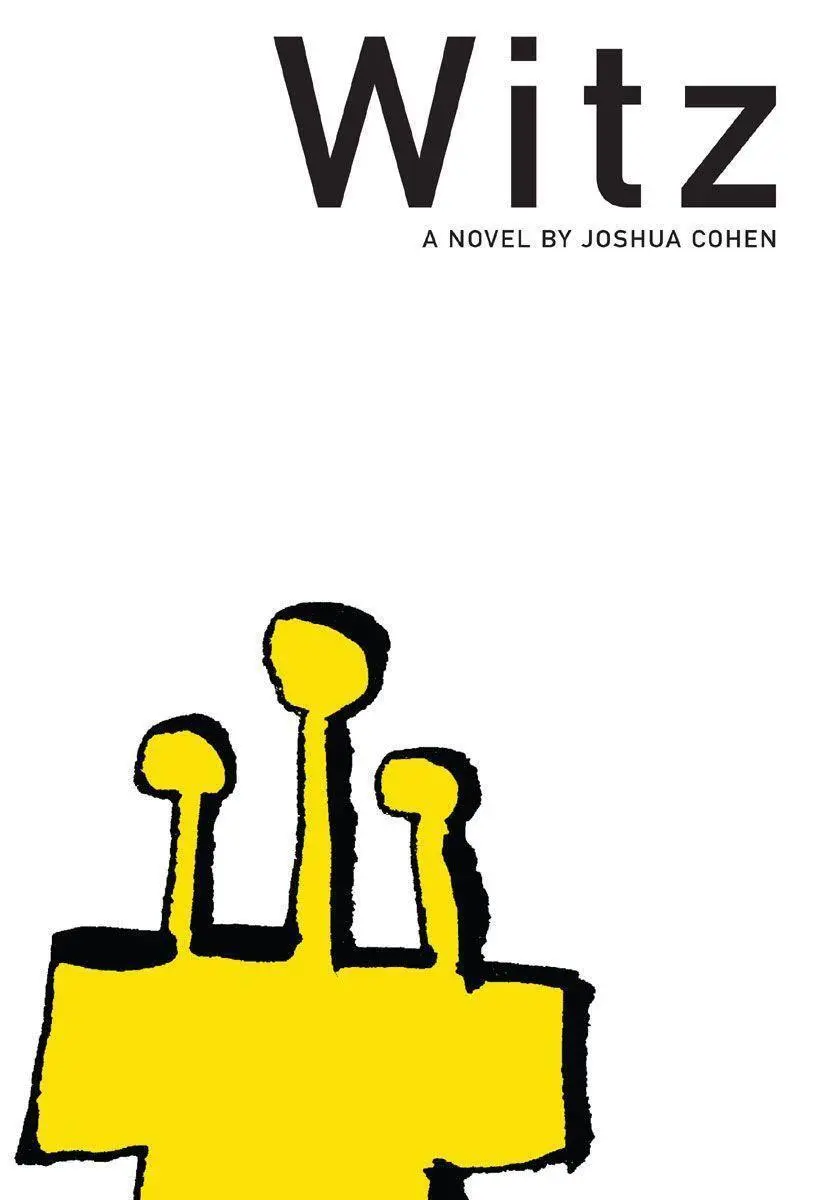
- Название:Witz
- Автор:
- Издательство:Dalkey Archive Press
- Жанр:
- Год:2010
- ISBN:нет данных
- Рейтинг книги:3 / 5. Голосов: 1
-
Избранное:Добавить в избранное
- Отзывы:
-
Ваша оценка:
Witz: краткое содержание, описание и аннотация
Предлагаем к чтению аннотацию, описание, краткое содержание или предисловие (зависит от того, что написал сам автор книги «Witz»). Если вы не нашли необходимую информацию о книге — напишите в комментариях, мы постараемся отыскать её.
Meanwhile, in the not-too-distant future of our own, “real” world, another last Jew — the last living Holocaust survivor — sits alone in a snowbound Manhattan, providing a final melancholy witness to his experiences in the form of the punch lines to half-remembered jokes.
Witz — читать онлайн бесплатно полную книгу (весь текст) целиком
Ниже представлен текст книги, разбитый по страницам. Система сохранения места последней прочитанной страницы, позволяет с удобством читать онлайн бесплатно книгу «Witz», без необходимости каждый раз заново искать на чём Вы остановились. Поставьте закладку, и сможете в любой момент перейти на страницу, на которой закончили чтение.
Интервал:
Закладка:
Above their uniforms, which are tuxedos, they’re turned out in yarmulkes; they’ve grown silken beards to complement their payos, like thin and greasy noodles: it’s as if they’ve been waiting to wait upon an opportunity such as this, any service that might serve them a customer, any customer as they’re always right, as is the custom of their abject gratuity; as the evening’s third and last seating has long turned over (the earlybird special tonight was young Szechuan duck, which’ll find its way into tomorrow’s soup), and since then they’ve been bored, staring their slits at the blank quartz clock over the desk of the cashier; sitting at twotops after having finished their own meals as their fortunes have finished them, unsettlingly sated and tired with little or nothing left to do: some smoke opium from pipes as long as nightmare, extensive stems of bamboo, fitted for the drug with the bowls they’d use for tea or rice; others toke hashish imported from Palestein, rolled tightly in their surplus of outdated menus: with their slick, quick tongues they lick to let the bones burn slower; then flick their ash at the murmur of the fountain, its pool lined in plaster stones and shards of broken china, pennies without wish; a few play dead with those delicious porcelain dogs: fetch the chopstick isn’t working. In the kitchen, busgoys wash to their wrists, then rub the Buddha’s belly for luck with the nightly splitting of their tips: wishful thinking, they’re lucky to still have any hands to wait on. The last few straggling regulars having unfurled their fortunes as wide and as whitepure as napkins with which to wipe their lips, then scurried out the door, with menus held over their faces, praying to avoid the eyes of their employers’ spies, their family’s informants. What’s more, the latenight takeout rush hasn’t delivered on any hope of late, not fast enough at least, ever since this block went and zoned itself for imminent conversion; it’s natural, where more Affiliated than here, their historic home, once upon a time. The new laws aren’t the problem, though, not their most pressing (hahaha: a few of the waiters are planning to open a laundry), it’s inadvertent, effect — it’s business, it’s cash. And the intolerance, the discrimination, terrorism even: a week ago — and this after a moon of threats from who exactly you think they’re dumb enough to name; they’d run up a tab, then walked them through how it was going to go down — their windows’d been smashed in and so they had to shutter their other place, sell off the appliances for scrap as it was all already treyfed up, porktainted. Trash had been set on fire. A waiter smacked around. Another week as empty as this and they’ll have to go kosher or else, shut it down.
Excited, apologetic (don’t they recognize Him, how could they; they’re not allowed to, and anyway, that’s another’s ghetto), with an entire menu’s worth of the derisive servile, the whole industry’s trade of humble bows and modest blinks, the waiters serve Him warm inside. The youngest busgoy, hoping to make cashier or heaven by dint of his good deeds, dashes out again to retrieve the half left of B’s blackboard, a chipped length remaining from His chalk. His slime to stain the doorjamb, Him to track His incoherent trail atop their priceless rugs, dizzying in their symmetry, in the intricate integrity of their patterns; to destroy, then, their wonder in the wander of His mad — don’t worry, they assure Him, it’s fine by them, they were thinking of remodeling. In fluent Affiliated accent they insist on messaging His wife, on phoning His son or daughter, that they should pick Him up. Have a meal here, or three. Halfoff, or that of two for one. How nextdoor, too, there’s this shvitzbad staffed by nominal Slavs: present them with your check and they’ll beat your back with tiny trees at cost. He rises from the chair where He’d been seated, goes to retrieve from the table adjacent that sharp shard of board and hint of chalk.
I have none, I write.
No wife? they ask.
Just me.
What’s He waiting for they want to know — us, too.
Dim Sum, the maître d’, the only one with a black cummerbund (all the others are in red), and matching vest shiny with appetites of wear, disappears into the kitchen, returns with a pot steaming, then with three fingers holds open His mouth and shut His nose to ply Him with the potion, pours cup after scalding, soured cup down B’s throat, says, Swarrow!
As if to say, thisee will’a help you…one Wan Lo takes it upon himself to finish the sentiment: it should stop the dlopping, then bows wan and low to his boss and guest.
All He can think to thank them with’s an old joke, that Taste my soup! routine…remembering, though, that nothing’s ever funny when you have to spell it out, screeching chalk on board.
One hundred apologies, Dim Sum says, but this will not help stop His dlopping…
What? which B, His board cleared for the pot, spells atop the table in an artful arrangement of six pairs of chopsticks.
What I meant to say was dlipping, answers Wan Lo, dlipping, you must excuse me both.
B has to struggle to keep down the last cup of the cure.
Dislespectfur, Dim Sum whispers, while Wan Lo does his patient waiting standing tableside, what professional effort to appease.
One million pardons, he then says to B or another does and He can’t tell, not because He’s racist but laughing — what we’re talking about’s the Srime…
O, the slime! and nods His head along with His laughter to make known His gratitude, as if to say no hard feelings, get used to it, from a mensch like me you might expect such disrespect, and with each of His nods the also funny taste of the proffered potion rises within Him, up from His stomach, His throat, rather the taste of its taste, the idea of it only, its texture homemade, a hot, thickskinned homeopathological grime — that’s about the best you can hope for when you can’t tongue to tell, which is the worst of it: that lately I don’t partake to enjoy, only to fill, and with me full is never. You honor us with your presence, they say, then bring Him out a heaping bowl of this morning’s leftover lo mein. He makes to stab at the writhing noodles with, after their last pair of chopsticks splinters in His hand, a dull fork they manage to find Him: it’d been locked in the lowermost drawer in the desk in the manager’s office forever, umfarshemt. He’s slurping, sucking, making every noise known to consumption save chewing; without a tongue to offer the meal to the teeth, He swallows most everything whole. With the last served shred of a miscellaneous meatstuff, its gnarled and gritty suspect heavily dusted with a powder of glistening white, fine pure MSG, which the chef out of boredom’s been fermenting for a moon in a trashcan in the alley out back — with such a tough and darkened cut, anisodactyl, the foot of a bird, He counts the taloned toes, perhaps of one of the pigeons that arrive fresh daily from traps nestled amongst the trees of local parks — with such prey presently hanging tined at B’s pouting lips, Dim Sum, the one sitting opposite Him (He’s trying to remember who might be who, or Woo), stares Him in the eye, holds His gaze, then begins to talk in a voice that burbles celestially high, sounding to Him just like frying; he can’t help himself: his bowtie finally loosened, he hands it to Him as a napkin as if proclaiming their peace, then begins:
I was in business, he says as B wings away at the birdgrease on His lips…had gone into business with my Blothel-in-Raw: this was our first restaurant, before I moved the family Downtown — a pack of heads nod in encouragement, interest, or in rhythm to the surge of the pipa music, the pentatonic plinking coming over the speakers, hidden to soothe their sound inside the restaurant’s worthless collection of facsimile vases…Blothel-in-Raw brought up on charges of sodomy, and with an inspector from the Depaltment of Hearth; here his cousin Woo, nu, that’s who just has to cut in: this lady had come to inspect, great body no brains, didn’t expect to be inspected herself, it was rape, simple enough, then attempting to bribe with counterfeit money the arresting officer of the Raw — though with our old landlord’s recommendation of the right lawyer his son, Dim Sum goes on, he managed to do right by the judge, at least that’s what I was told, and the waiters spit twice, at the same time and on their own floor, their saliva angry or just darkened with soy. Wan Lo rises from his seat slowly, smoothes down his tux shirt, pauses to reposit a stud, adjust the lotus in his lapel, then walks stately waiter to the front of the room and behind the cashier’s desk, at which he gathers the slack of his pants, squats, balancing on the balls of his feet to rummage around shortorder, and maybe just for ritual, for exotic effect, then returns to table with a box carried under his arm: done in bone with a bamboo handle, and inlaid with moons waxing and waning in chalcedony set amid skies of brass kept lovingly polished, its horn mingg striped in onyx, it’s gorgeous, waiters who haven’t worked here long enough are cowed, even back home they’d never seen anything like it. It’s not for them, though; they’re supposed to be working: it’s intended as distraction for their womenfolk, who’ve just emerged giggles and elbows in ribs from the kitchen; here to steal a slit of eye at their arrival, the contents of this box are hoped to keep them from undue flirtation. Unseemly, illegal. Wait, Dim Sum says, pay attention…that’s not the half of it: nu, so my Blothel-in-Raw, a failed furrier, you know, Woo feels it justified to explain as if to a mystified Him, the mensch who he makes the coats and hats and supplied for us our meat…Dim Sum’s irritated by the interruptions but it’s too late and his restaurant’s too doomed to pull rank when the door says push and don’t let it hit you on the way out, the schmuck he went and burned down the place for the insurance — makes you think, doesn’t it, says Woo’s brother who he’s named Woo, too, though what right does he have to say anything being only a junior busgoy (Wan Lo, an elder, he grumbles), makes you think of what he might do now that the schmuck’s out, free and converted; the waiters listening in as the hostess, the cashier girl and two more from the cleaning service how they might be their sisters or even twins to each other, you think, have already begun with their play. In a world of olden pleasures revived, theirs has among the most ancient of origins — yichus, of a type. Think of it like mystical rummy: but instead of cards, this pursuit makes use of tiles, onehundred thirtysix of them, gematric with meaning, symbolized with dragons, flowers, seasons, and winds stilled in suits, in dots, craks, and bams, if you’re following, numbered up to nine. What else for this refresher? As in life, here, too, what you discard is as valuable as anything you keep. Mahjong.
Читать дальшеИнтервал:
Закладка:
Похожие книги на «Witz»
Представляем Вашему вниманию похожие книги на «Witz» списком для выбора. Мы отобрали схожую по названию и смыслу литературу в надежде предоставить читателям больше вариантов отыскать новые, интересные, ещё непрочитанные произведения.










Обсуждение, отзывы о книге «Witz» и просто собственные мнения читателей. Оставьте ваши комментарии, напишите, что Вы думаете о произведении, его смысле или главных героях. Укажите что конкретно понравилось, а что нет, и почему Вы так считаете.