Christopher Hope - Kruger's Alp
Здесь есть возможность читать онлайн «Christopher Hope - Kruger's Alp» весь текст электронной книги совершенно бесплатно (целиком полную версию без сокращений). В некоторых случаях можно слушать аудио, скачать через торрент в формате fb2 и присутствует краткое содержание. Год выпуска: 2009, Издательство: Atlantic Books, Жанр: Современная проза, на английском языке. Описание произведения, (предисловие) а так же отзывы посетителей доступны на портале библиотеки ЛибКат.
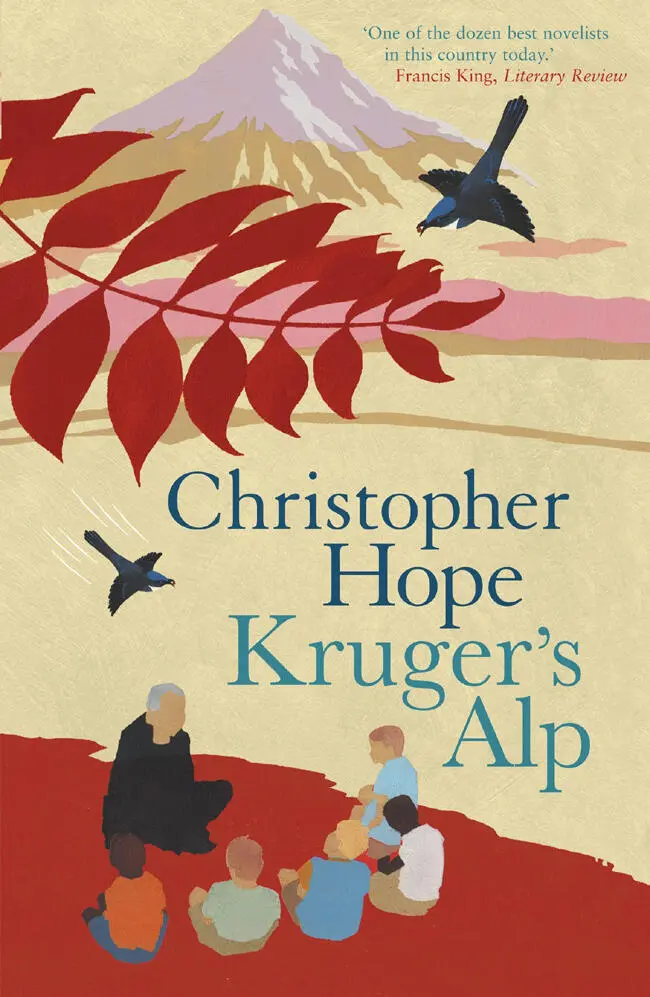
- Название:Kruger's Alp
- Автор:
- Издательство:Atlantic Books
- Жанр:
- Год:2009
- ISBN:нет данных
- Рейтинг книги:3 / 5. Голосов: 1
-
Избранное:Добавить в избранное
- Отзывы:
-
Ваша оценка:
Kruger's Alp: краткое содержание, описание и аннотация
Предлагаем к чтению аннотацию, описание, краткое содержание или предисловие (зависит от того, что написал сам автор книги «Kruger's Alp»). Если вы не нашли необходимую информацию о книге — напишите в комментариях, мы постараемся отыскать её.
Kruger's Alp — читать онлайн бесплатно полную книгу (весь текст) целиком
Ниже представлен текст книги, разбитый по страницам. Система сохранения места последней прочитанной страницы, позволяет с удобством читать онлайн бесплатно книгу «Kruger's Alp», без необходимости каждый раз заново искать на чём Вы остановились. Поставьте закладку, и сможете в любой момент перейти на страницу, на которой закончили чтение.
Интервал:
Закладка:
‘As a kind of disguise,’ Kipsel suggested, ever naïve.
‘No. Not a disguise. It shows Gabriel is presidential material.’
Kipsel said he wished he could identify the tribe from which it came.
Blanchaille said it didn’t matter. ‘They probably have a big box of fancy dress tribal finery, or a props cupboard and drag out some vaguely appropriate costume when a ceremonial visit crops up. Something that makes you look vaguely chieftain-like and impressive.’
‘The only thing that worries me is that Bubé, of course, wore it when he made these visits to some wretched tribe who were about to be dumped in the middle of nowhere.’
‘God, how he must have terrified them!’ said Kipsel. ‘Imagine Bubé stepping out of the presidential limousine in that get-up. Imagine what the God-forsaken tribe felt when they saw him. It must have been like getting a sign, the arrival of the messenger of doom,’ said Kipsel.
‘Remember the shepherds warned us about Gabriel,’ Blanchaille pointed out. ‘They said he was no angel.’
‘I still say they weren’t shepherds,’ Kipsel insisted.
‘Please Ronnie, is this the time to argue about shepherds?’
Kipsel agreed it was not perhaps the time.
And I saw in my dream how the two friends began the long haul, retracing their steps back to the crossroads as darkness fell.
CHAPTER 24
Blanchaille and Kipsel heard, rather than saw, Looksmart, for it was quite dark by the time they had regained their position at the crossroads, deeply regretting the distance travelled and the time lost in the vain detour into which Gabriel had tricked them.
They heard the scrape and scrabble of his dragging walk while he was still some distance behind them and they heard him muttering to himself. They heard the name ‘Isobel’. They heard how he addressed himself in a language composed of grunts and clicks, in a dialogue between the foreigner and the lunatic.
‘Here comes Looksmart,’ whispered Kipsel. ‘Poor bastard. If he saw Bubé it will have finished him. Let’s wait.’
‘Perhaps he really does imagine himself to be another Columbus. Listen how he argues with himself. Do you think he could be talking about Isabel of Spain? Didn’t she send Columbus off to discover the New World?’
‘Isabella,’ said Kipsel. ‘It was Queen Isabella and Ferdinand who sent Columbus off.’
Looksmart approached. ‘Isobel,’ he said firmly, ‘who sent me to find America.’ Here he took out a tiny, weak torch and examined their faces. What a strange couple, the big round one with a face like kneaded dough and the other, thin, big-lipped, with hands that sliced the air like fins. Though it was many years ago they still retained the familiar shapes of the boys he remembered toiling in Father Lynch’s parish garden. In his curious click language he muttered their names.
‘He really knows us now,’ said Blanchaille.
Of course he knew them now. They were the altar servers whose heads Lynch had filled with stories of vanished millions, of Uncle Paul’s promised land across the sea, of gold and secret colonies and lost souls, of the illusions of politics and the sole reality of power. Above all he remembered the pleasure he felt at seeing how hard those white boys were made to work in a garden which would never be got right, by an Irish priest leaning on an elbow on a tartan rug on a hot day drinking something from a thermos flask. But these memories returned in bits and pieces, now bright, now fading, like light glimpsed through a smashed windscreen. The work done by the policeman Breek on Looksmart’s head had been thorough, the damage to the brain irreversible, but these glimpses remained of the old days. ‘Blanchie, and Kipsel…’
‘Odd that he should know us by night and not by day,’ Blanchaille reflected.
The weak, yellow flickering torch-light searched their faces, assembling sections for process and developing in the dark room of Looksmart’s brain.
‘Did you meet with the President?’ Kipsel asked.
The torch went out. ‘Looksmart saw him, oah yes. What a traveller! He must be on another diplomatic tour. He had been given a special police escort. I approached the car with my treaty and asked for ratification that this land belongs to me and my descendants, in perpetuity.’ Looksmart had trouble getting the word out. ‘The President looked at me. He pushed my pen away. “No need for me to sign. You have it anyway. You and your descendants, forever”. Then he went away, the President and the police. Perhaps they planned to show him to the people of all the towns he passed through.’
‘Perhaps,’ said Kipsel drily.
Blanchaille felt his pity mounting. This shambling wreck in the darkness with his weak little torch and his insane ideas. This shadow of Looksmart. The real Looksmart had been a holy terror. This was a mumbling ghost. ‘Who is this Isobel you’re talking about? Tell us, please.’
On went the little torch again, probing their faces as if verifying the authenticity of this request. ‘It’s a good story,’ said Looksmart. ‘Oah yes.’ And switching off his torch he began.
If Looksmart had been ignorant of his famous travelling companion, Lenski, on his flight to America, he had not wanted for company. In the seat beside him sat Isobel. And before we are too quick to condemn Looksmart for his failure to recognise the treachery of which he was a victim we would do well to remember the fate of other black exiles who went to America, reached New York, and later jumped to their deaths from sky-scrapers, or bridges; and the white exiles had come to no happier conclusions. Their patron saint is probably General Cronje, who earned a few dollars at the World Fair in St Louis in 1904 by re-enacting for gawping tourists his disastrous defeat and surrender at the Battle of Paardeberg. That Looksmart arrived in Philadelphia and discovered the roots of the American revolution was an advance due entirely to Isobel. That he drew strange conclusions from what he learnt must be laid at the door of the Salvationist delusions of all South Africans.
Pretty Isobel, in her caftan, cowboy boots and soft generous ways had come to Southern Africa as a mere tourist intending to visit the famous game reserves including, of course, the Kruger National Park. Instead she had fallen into conversation with the man who carried her cases to her hotel bedroom soon after her arrival in the country and had been converted. This radical spirit had taken her on a tour of the townships, to the resettlement camps, had taken her to meet those who had been detained, mothers whose children had died in front of them, people under house arrest and discarded people of all sorts. The high point of her visit had been taking part in the great student march on the Central Police Station in the capital to protest against the detention without trial of student leaders. It was this that suddenly radicalised Isobel, plump, pretty and so pleasant, so cordial in her peppermint caftan and cowboy boots, who found herself sitting beside Looksmart on the flight to America. He had never met anyone so thrilled to hear he had been in prison. Her face puckered, she cried for some moments before pulling herself together and then defiantly ordered champagne. She felt utterly privileged, she told him. He liked her, too. She did not make his eyes water. Over the champagne he told her he was also fleeing the country. After that they never looked back.
Isobel carried his luggage and refused to comment on his behalf when the reporters encountered him in Kennedy Airport after their interviews with Piatikus Lenski. It had been Isobel who dealt gruffly with the surly immigration officers over the matter of Looksmart’s presence in the United States. It was Isobel who got the tickets for the train to Philadelphia and who moved him into her apartment on Walnut Street.
Читать дальшеИнтервал:
Закладка:
Похожие книги на «Kruger's Alp»
Представляем Вашему вниманию похожие книги на «Kruger's Alp» списком для выбора. Мы отобрали схожую по названию и смыслу литературу в надежде предоставить читателям больше вариантов отыскать новые, интересные, ещё непрочитанные произведения.









Обсуждение, отзывы о книге «Kruger's Alp» и просто собственные мнения читателей. Оставьте ваши комментарии, напишите, что Вы думаете о произведении, его смысле или главных героях. Укажите что конкретно понравилось, а что нет, и почему Вы так считаете.