S. Agnon - Shira
Здесь есть возможность читать онлайн «S. Agnon - Shira» весь текст электронной книги совершенно бесплатно (целиком полную версию без сокращений). В некоторых случаях можно слушать аудио, скачать через торрент в формате fb2 и присутствует краткое содержание. Год выпуска: 2014, Издательство: Toby Press, Жанр: Современная проза, на английском языке. Описание произведения, (предисловие) а так же отзывы посетителей доступны на портале библиотеки ЛибКат.
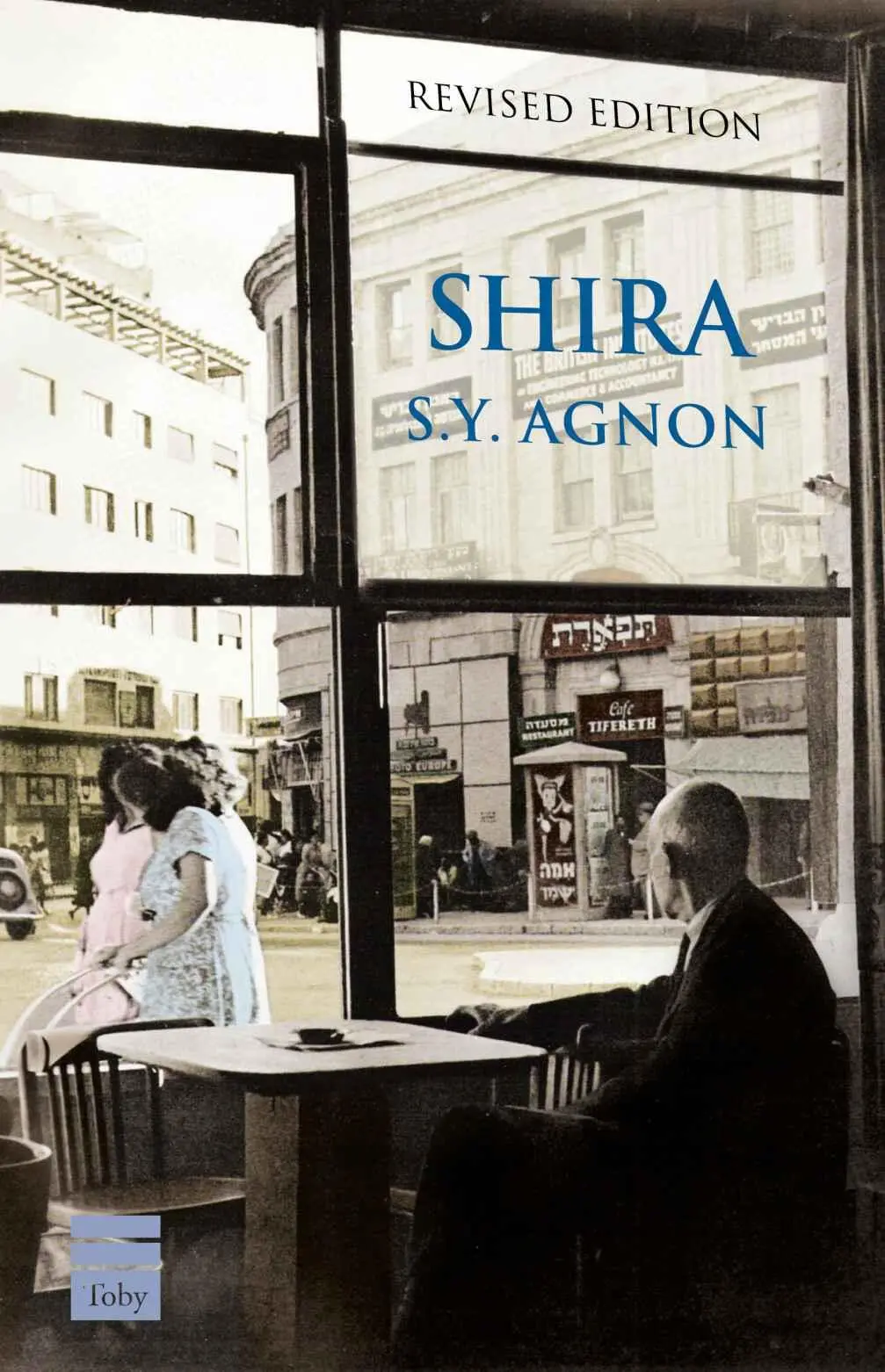
- Название:Shira
- Автор:
- Издательство:Toby Press
- Жанр:
- Год:2014
- ISBN:нет данных
- Рейтинг книги:5 / 5. Голосов: 1
-
Избранное:Добавить в избранное
- Отзывы:
-
Ваша оценка:
Shira: краткое содержание, описание и аннотация
Предлагаем к чтению аннотацию, описание, краткое содержание или предисловие (зависит от того, что написал сам автор книги «Shira»). Если вы не нашли необходимую информацию о книге — напишите в комментариях, мы постараемся отыскать её.
Shira — читать онлайн бесплатно полную книгу (весь текст) целиком
Ниже представлен текст книги, разбитый по страницам. Система сохранения места последней прочитанной страницы, позволяет с удобством читать онлайн бесплатно книгу «Shira», без необходимости каждый раз заново искать на чём Вы остановились. Поставьте закладку, и сможете в любой момент перейти на страницу, на которой закончили чтение.
Интервал:
Закладка:
Avraham arrived, his eyelashes casting bars of gold on his wife and her mother and sister. He picked up Sarah, sat her on his shoulders, and began to prance around with her. Zahara shouted, “Careful! You’ll bang her head on the ceiling.” He bent down and began to crawl on his knees, holding on to Sarah, who was perched on his neck, clapping her hands and chanting the words of a song she had learned from Firadeus. Then she began tapping her feet to the music. Henrietta called, “You’re hurting him.” The child leaned over his ear and asked, “Does it hurt?” Avraham flung the golden bars from his eyes to the child and said, “It hurts, it hurts as much as eating chocolate. Do you like chocolate? Oh, dear, we forgot to bring you chocolate. Next time we come, we’ll bring some chocolate. Take my handkerchief, Sarah, and tie a knot in it to remind me to bring Sarah chocolate. What else should we bring you? We’ll bring you a baby girl, and then you’ll be an aunt. Aunt Sarah. How would you like to be an aunt? To someone real, not just a doll. What do you think of Zahara? She knows that sort of trick; she knows how to make you an aunt. Now, honey, I’ll put you on the grasshopper’s back. He’ll carry you to Ahinoam. All the young women will see you and wish for a little girl just like you.”
After Henrietta finished wrapping everything, she handed the packages to Zahara, who handed them to Avraham, then kissed her mother and her little sister, Sarah, and said goodbye to her father. Henrietta said, “You’ll come back to Jerusalem soon, right?” Zahara said, “What do you mean, ‘soon’?” Henrietta said, “‘Soon’ means when it’s time to have the baby. The setup for childbirth is better in Jerusalem than anywhere else in the country.” Zahara laughed and said, “What are you saying, Mother? You want me to give birth in the city? Do you expect me to have a city child? I’m a country girl now. I belong to a kvutza , and I’ll give birth in the hospital in Afula, like everyone else.”
Avraham and Zahara left, loaded down with all sorts of paraphernalia. After Henrietta had finished packing a large box, she remembered other things it would be good for Zahara to have. So she filled Avraham’s arms, warning him not to lose anything, for it would all be needed by Zahara and the infant she was about to bring forth.
A contented smile spreads over Zahara’s face, the smile of a woman who has found her mate and is going off with him to his home. Avraham-and-a-half is taller than anyone. He is twice as tall as Zahara. Unless you’ve seen those two together, you have no concept of large and small. Now, imagine this small creature, this mere girl, with a baby inside. Isn’t that a truly moving sight? It’s no wonder that Father Manfred is more and more moved, and has no further complaints about her, that he accepts everything, whatever his daughter has done.
Zahara and her young man left, and the house was as it had been before. Well, not really. As long as Zahara was single, Henrietta felt that she still lived there. Even when Zahara went to the kvutza , Henrietta regarded the move as temporary. Now that she had left with her mate, there was a void in the house. All that day, Henrietta couldn’t get her bearings. Wherever she turned, there was something missing. The things Zahara took from the house were not what was missing; something that eludes and at the same time occupies every sensibility was missing. Henrietta told herself again and again: Nothing has actually changed. To which her heart’s response was: No change? Things have changed. Yes, they’ve changed.
When she went to bed, she was confronted by all these voids, which were accompanied by concern for her daughter. Zahara might not find anyone to guide her during pregnancy, since all the women in Ahinoam are young, except for the nurse, and, having never been pregnant, they have no concept of caution. They undertake every kind of work, pay no attention to their own needs, and are totally ignorant about pregnancy and childbirth. She was suddenly overcome with joy on account of her daughter, who had found a mate, and on account of this mate, who was so delightful. In the midst of her joy, Henrietta forgot about Avraham and thought again about Zahara, who was about to become a mother. First she scolded herself for having said so little to Zahara about what she should and shouldn’t do. Actually, she had talked to her a great deal, but she should have told her more, for Zahara is young and doesn’t know anything. Before she had fully explored her thoughts about her daughter, she was reliving the days when she was pregnant with Zahara. The two feelings mixed together — those pertaining to Zahara, who was pregnant now, and those about herself when she was about to give birth to Zahara. Twin joys were born in her heart. With them came sleep, the sort that doesn’t seem like sleep but is in fact the sweetest and most exquisite of sleeps.
At the same time, Herbst was lying on the couch in his study, lying there and thinking about Empress Theodora, about the women of her court, about his two friends the Weltfremdts, about Professor Bachlam and Professor Lemner, about Axelrod and his son, and various other things — a blend of thoughts that have no connection with the heart, yet grip it and induce vacant emotions. From there, he arrived at the strip of leather, the amulet Professor Wechsler had identified as a fragment of an ancient garment. From there, to the elderly nurse who showed Sarah to him the day she was born. In the midst of all these things, something unfolded, sort of a cake on which mazeltov was written. Although a lot of time had passed since he had heard the tale of the waitress and the Histadrut official, Herbst realized that the reference was to the cake the café owner had sent them for their wedding.
Avraham-and-a-half belongs to the Histadrut too, but he is taller than all those officials and as innocent as a child. You can’t seduce him with words, because he doesn’t need anything from you. Nor does he want anything from you, having already gotten whatever he might want from another source. What is more, he doesn’t need you, either. When he sat with you and listened while you talked, he was doing you a favor. Where does that firmness come from? Is it from the kvutza ? We know several young men from the kvutza who don’t have Avraham’s quality. This firmness comes from Zahara, who gives her whole heart to Avraham. Father Manfred was suddenly alarmed. This Zahara, this baby, is a woman like other women. Not just a woman, but halfway to being a mother. And Father Manfred is halfway to being a grandfather. Were we to analyze the subject, we would find…I’ll turn out the light now and try to sleep before other thoughts come and intrude on my sleep. However, it would be good to devote two or three moments of thought to the tragedy. Aristotle says, in the Poetics : One of the conditions for tragedy is…And most tragedians make the mistake of thinking that, if the events are tragic, that in itself constitutes tragedy.
When Herbst turned off the light, the thoughts he was afraid of took over. Though more than two years had passed since he first met Shira, he continued to think about her. His thoughts about her were different, a mass of contradictions. Love and hate, regret and longing; above all, wonder at himself for continuing to pursue her and wonder at the powerful attraction she exerted, though she was neither beautiful nor intellectual. What would be of interest to any intellectual, Shira dismisses with a disparaging twist of the mouth. Admittedly, this gesture of hers often led him to reexamine a subject and reflect further on it.
In addition to waking thoughts, there are his nighttime reveries and the succession of dreams they bring on. In one such dream, he met her one night at a concert hall. When did he meet her? Many years after they had parted and stopped seeing each other. But his love for her still filled his heart. That night she appeared to be a distinguished woman whose conversation with him was purely intellectual, and, though that tends to enhance a woman’s appeal, there was between them no hint of what transpires between a man and a woman. By his calculation, she was about fifty years old at the time, but she looked perhaps thirty, certainly not more than thirty-five. One further thing, her manner was exceedingly female. This led him to fantasies he did not at first dare to entertain. And these fantasies were so powerful that he became so bold as to stroke her skin. She didn’t object. On the contrary, her pleasure was evident on her face. But his joy was mixed, because her autocratic manner was replaced by submission and the desire to please.
Читать дальшеИнтервал:
Закладка:
Похожие книги на «Shira»
Представляем Вашему вниманию похожие книги на «Shira» списком для выбора. Мы отобрали схожую по названию и смыслу литературу в надежде предоставить читателям больше вариантов отыскать новые, интересные, ещё непрочитанные произведения.








Обсуждение, отзывы о книге «Shira» и просто собственные мнения читателей. Оставьте ваши комментарии, напишите, что Вы думаете о произведении, его смысле или главных героях. Укажите что конкретно понравилось, а что нет, и почему Вы так считаете.