S. Agnon - Shira
Здесь есть возможность читать онлайн «S. Agnon - Shira» весь текст электронной книги совершенно бесплатно (целиком полную версию без сокращений). В некоторых случаях можно слушать аудио, скачать через торрент в формате fb2 и присутствует краткое содержание. Год выпуска: 2014, Издательство: Toby Press, Жанр: Современная проза, на английском языке. Описание произведения, (предисловие) а так же отзывы посетителей доступны на портале библиотеки ЛибКат.
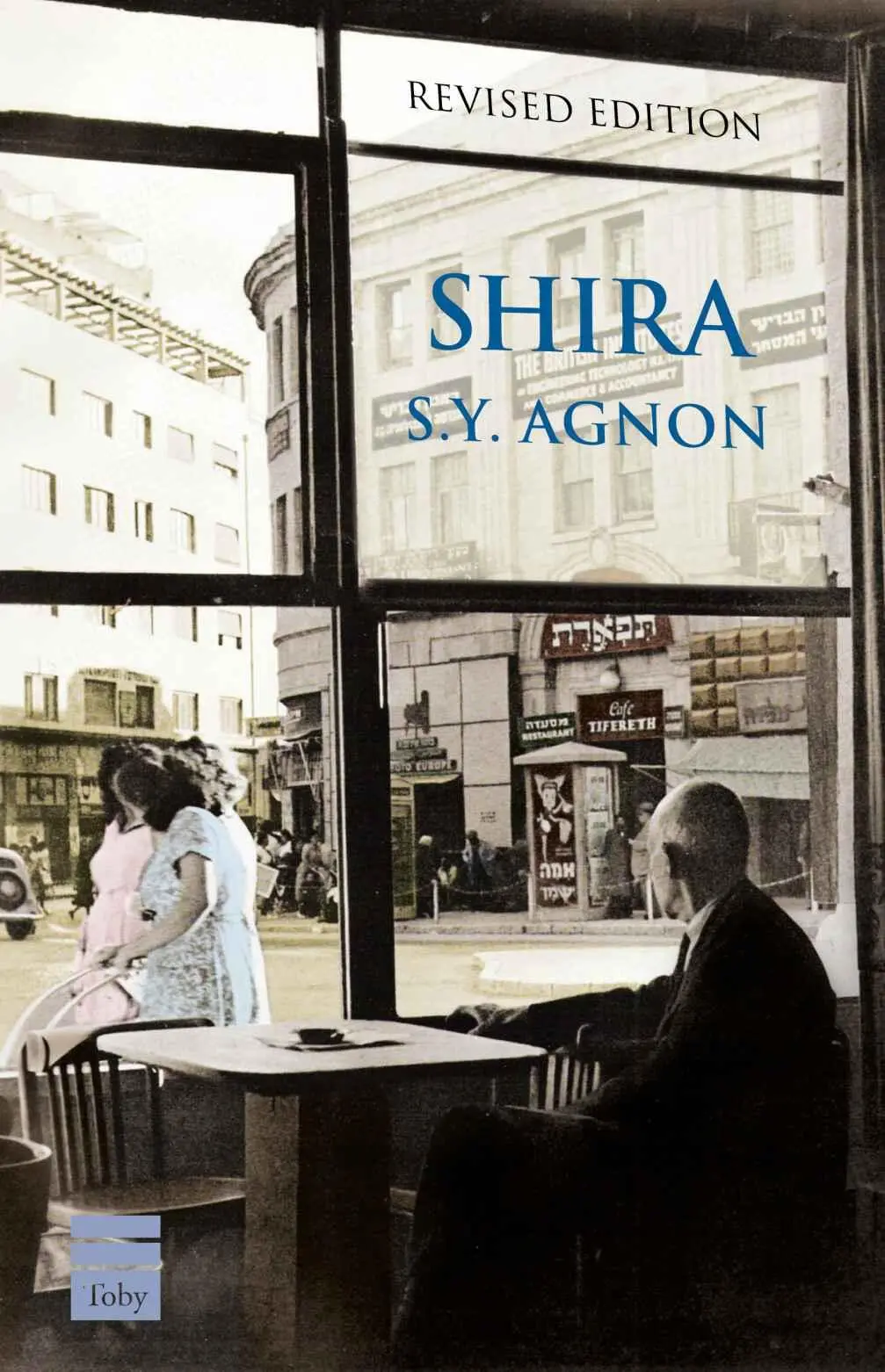
- Название:Shira
- Автор:
- Издательство:Toby Press
- Жанр:
- Год:2014
- ISBN:нет данных
- Рейтинг книги:5 / 5. Голосов: 1
-
Избранное:Добавить в избранное
- Отзывы:
-
Ваша оценка:
Shira: краткое содержание, описание и аннотация
Предлагаем к чтению аннотацию, описание, краткое содержание или предисловие (зависит от того, что написал сам автор книги «Shira»). Если вы не нашли необходимую информацию о книге — напишите в комментариях, мы постараемся отыскать её.
Shira — читать онлайн бесплатно полную книгу (весь текст) целиком
Ниже представлен текст книги, разбитый по страницам. Система сохранения места последней прочитанной страницы, позволяет с удобством читать онлайн бесплатно книгу «Shira», без необходимости каждый раз заново искать на чём Вы остановились. Поставьте закладку, и сможете в любой момент перейти на страницу, на которой закончили чтение.
Интервал:
Закладка:
Dr. Manfred Herbst, as we know, had the good fortune to come to the country a few years earlier. He had the good fortune to arrive with his books and belongings, and to find a respected position that enabled him to support himself and his family, and to continue to devote himself to scholarship in the field he had chosen. Professor Neu had done well to recommend that he be appointed a lecturer, for Herbst was well suited to the job. And if he still hasn’t been appointed a professor, this is due to the laziness of the university trustees, who never bother to open their eyes and see who he is. It is also Herbst’s fault for not pulling strings.
When refugees began to arrive from Germany, among them several of his acquaintances, Herbst sought them out as best he could, insofar as his schedule allowed, for a proper schedule determines one’s capacity to work, and, what is more, a proper schedule determines the quality of everything a man produces. There is a big difference between work undertaken at intervals and work that is uninterrupted. This is evident in the product. The one is flawed by gaps and excesses; the other is correct and thorough. There are famous professors in the great European universities who go to the library between lectures, watching the clock as they browse for a given number of minutes. In the end, they too produce books. Herbst was convinced from the start that such books, which he called “watched books,” do not amount to anything. Academic work requires concentration, which brooks neither interruption nor distraction. I will repeat what I said: Herbst, knowing that his work requires concentration and order, doesn’t devote much time to immigrants from Germany, though he fulfills his obligations. He does as much as a man such as himself can do. What he does may be minimal; in any case, his acquaintances ask no more of him. People from Germany are not accustomed to being needy. Whatever help is offered they consider extraordinary, and are grateful for what they get. Herbst’s wife tends to overdo. Without regard for herself, she would take immigrants into her home and provide them with food and drink. She would often sacrifice her own routines, and, when a guest arrived at mealtime, she would insist that he sit at the table and eat. She puts up countless newcomers in her home and searches for apartments with them, rather than let them fall into the hands of agents who wear out their customers and then charge for the wear and tear. All this was in addition to Henrietta’s efforts on behalf of relatives she was trying to deliver from their suffering in Germany. Had it not been for those heartless officials in the immigration office, several members of her family would have been with us here. The country would have benefited from their presence, since most of them were intellectuals, active individuals who did useful work in Germany. In fact, many German Gentiles were whispering among themselves, “Too bad that these good people were relieved of their jobs.” When Henrietta sees the sloppiness of officials in this country, her heart begins to cry out: If this or that relative of mine were here, he would teach them not to be idle; he would teach them that clerks were not invented to waste the public’s time. The plight of his brethren in Germany did not disrupt Dr. Herbst’s routines. I don’t mean to suggest that a photostat of some Byzantine document or the discovery of some trivial Byzantine practice was more important to him than the fate of his brethren. Nonetheless, he gave more thought to Byzantium than to Israel. He was certainly pained by the plight of his relatives, acquaintances, and fellow scholars who lost their positions, yet these heartfelt sentiments did not alter his preoccupations. The day he saw Anita Brik lying on a broken bed in a dingy room and reaching out for the flowers Shira brought her, he was suddenly confronted with an embodiment of the calamity. Herbst was not one of those who delude themselves with the thought that they can change anything. He therefore turned from what he couldn’t do anything about to something he could affect: his academic pursuits, his book. Between chapters, he filled his notebook with phrases and snatches of dialogue for the tragedy he planned to write. Herbst was planning to write a great tragedy about Antonia, woman of the court, and Yohanan the nobleman, which I mentioned earlier in this book.
Herbst took comfort in the tragedy, especially on sleepless nights when he was unable to read — because of ambivalence, because of emotional discord, because the text seemed to dissolve before he could grasp it — and drugs no longer brought sleep. He lay in bed picturing the lives of Antonia and Yohanan, of everyone else close to them in time and place, pondering, considering, plotting, arranging for them to meet. At times, it was all so sharp and clear that it could be written down and put in a book. Whether or not you believe it, Herbst sometimes saw the actual image of an image. Whether or not you believe it, he sometimes felt the tiniest trace of what a poet feels when he sees the character he has fashioned in his mind begin to take on flesh and blood. However, as joy is tinged with sadness in all of life’s pursuits, Herbst’s joy was tinged with sadness too, on his own account and on account of an imaginary character he had added to the tragedy, though the character was neither necessary to the tragedy nor validated by history. Who is it that Herbst invented from his imagination? A slave he called Basileios, whose soul was bound to his mistress and who suffered his love in silence. Needless to say, his mistress was unaware of this; nor did it ever occur to her that a slave would dare to covet her, for such a sentiment on the part of a slave would be offensive to his mistress. It was Schiller’s mistake, in his play about Mary Stuart, to allow young Mortimer to fall in love with her. Schiller, who knew only German duchesses and princesses, was misguided. Had he known a real queen, he would never have made such an error. In this connection, Herbst applauded the Scandinavian mythmakers who tell about a Norwegian queen who had several kings tortured and put to death for daring to seek her hand in marriage.
Let me return to Basileios clarifying and explaining how he interfered with Herbst’s happiness. Herbst didn’t know what to do with this slave who had sprung out of his imagination, much to his delight. He didn’t know what to do with him, yet he didn’t want to give him up, because, of all the characters in the tragedy, he alone was his creation. And, having created him without knowing what to do with him, he became a bother — so much so that Herbst was in despair and considered abandoning the tragedy altogether. After some manipulation, Herbst was able to deal with Basileios in such a way that his absence would not be a problem; that is, he found a way to account for his sudden disappearance.
I will reveal what he did and where he hid him. He made him a leper and hid him in a leper colony. Actually, in terms of the tragedy, this was a mistake, because Herbst was afraid to immerse himself in that disease, and explore it, to picture various aspects of leprosy, such as how do lepers relate to each other or how they function in conjugal terms. But, unless the mind becomes immersed in a subject, that subject remains vague. This is especially true in the realms of poetry and imagination, which require that the soul expand, and this expansion occurs only if two souls merge, giving life to a new soul, which the Creator deems worthy and endows with breath, as much breath as it can hold. Herbst didn’t achieve this, because he didn’t immerse his mind in the subject, for he was sensitive and found it difficult to tolerate infected blood. Despite the fact that he had been knee-deep in blood and pus when he fought for Germany in the last war, now that he was in Jerusalem, in peacetime, he avoided the whiff of a whiff of blood, the trace of a trace of pus — even more so leprosy, whose very name arouses metaphysical terror. So how was he to immerse his mind in a man with leprosy? I won’t be so ridiculous as to suggest that Herbst was afraid the leper would appear and display his leprous state. Nevertheless, he resisted thinking about him.
Читать дальшеИнтервал:
Закладка:
Похожие книги на «Shira»
Представляем Вашему вниманию похожие книги на «Shira» списком для выбора. Мы отобрали схожую по названию и смыслу литературу в надежде предоставить читателям больше вариантов отыскать новые, интересные, ещё непрочитанные произведения.










Обсуждение, отзывы о книге «Shira» и просто собственные мнения читателей. Оставьте ваши комментарии, напишите, что Вы думаете о произведении, его смысле или главных героях. Укажите что конкретно понравилось, а что нет, и почему Вы так считаете.