S. Agnon - Shira
Здесь есть возможность читать онлайн «S. Agnon - Shira» весь текст электронной книги совершенно бесплатно (целиком полную версию без сокращений). В некоторых случаях можно слушать аудио, скачать через торрент в формате fb2 и присутствует краткое содержание. Год выпуска: 2014, Издательство: Toby Press, Жанр: Современная проза, на английском языке. Описание произведения, (предисловие) а так же отзывы посетителей доступны на портале библиотеки ЛибКат.
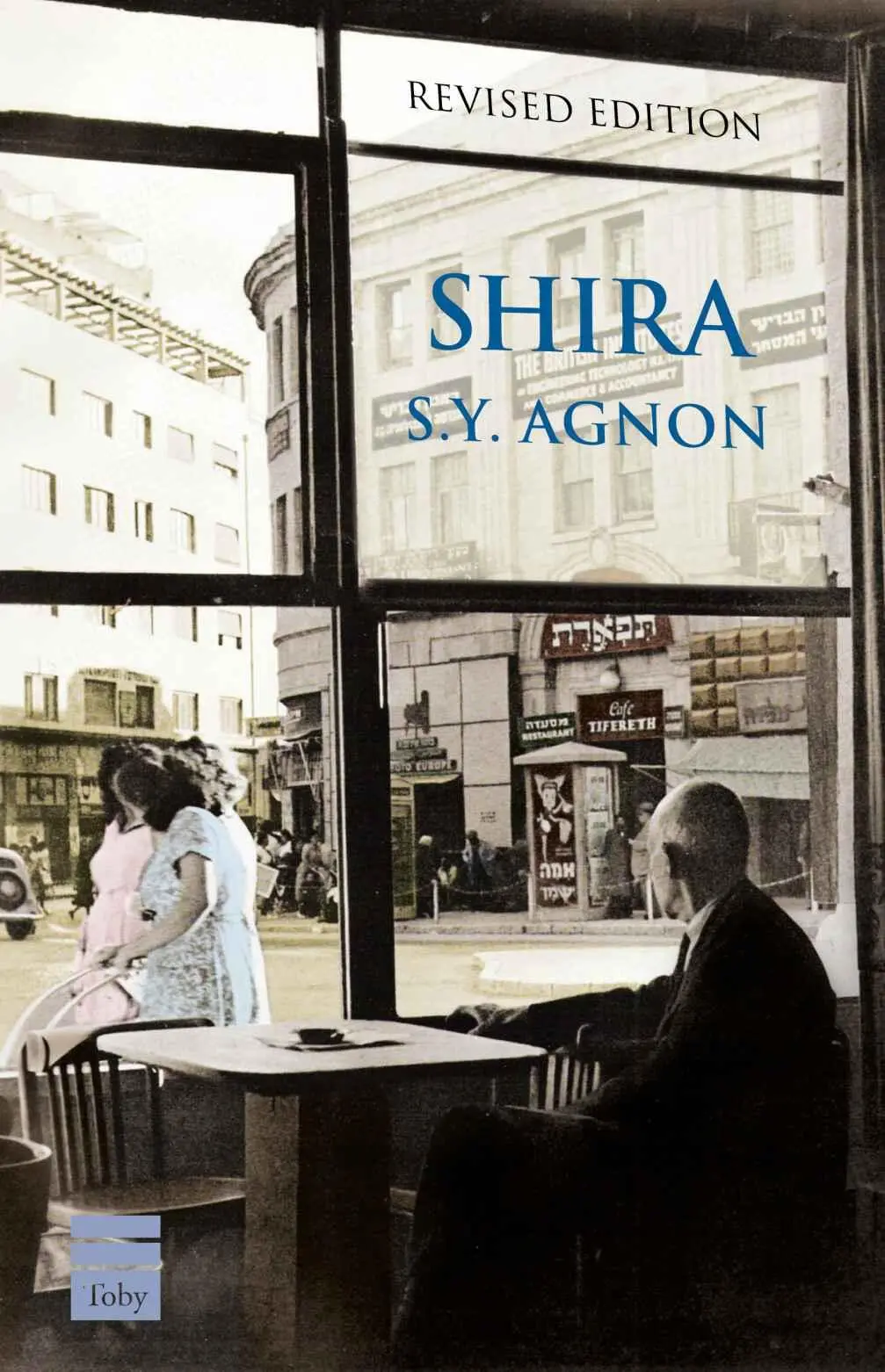
- Название:Shira
- Автор:
- Издательство:Toby Press
- Жанр:
- Год:2014
- ISBN:нет данных
- Рейтинг книги:5 / 5. Голосов: 1
-
Избранное:Добавить в избранное
- Отзывы:
-
Ваша оценка:
Shira: краткое содержание, описание и аннотация
Предлагаем к чтению аннотацию, описание, краткое содержание или предисловие (зависит от того, что написал сам автор книги «Shira»). Если вы не нашли необходимую информацию о книге — напишите в комментариях, мы постараемся отыскать её.
Shira — читать онлайн бесплатно полную книгу (весь текст) целиком
Ниже представлен текст книги, разбитый по страницам. Система сохранения места последней прочитанной страницы, позволяет с удобством читать онлайн бесплатно книгу «Shira», без необходимости каждый раз заново искать на чём Вы остановились. Поставьте закладку, и сможете в любой момент перейти на страницу, на которой закончили чтение.
Интервал:
Закладка:
Father Manfred is curious about Avraham-and-a-half and engages him in conversation. Father Manfred has two motives: first, to find out what the young man is like and get to know the qualities through which he prevailed and won his daughter; and, second, to show his daughter that he is fond of her mate. Be that as it may, Herbst’s conversation is an empty gesture. He asks questions without hearing that they have already been answered. He makes a statement without hearing that he has already said the same thing several times. The young man realizes this and has no interest in chewing over what’s already been chewed. Manfred realizes this and makes a move to placate the young man. How does he placate him? With a cigarette. But he’s not a smoker. Manfred searches the recesses of his heart for something endearing and finds nothing. Again, he offers him a cigarette. He takes the cigarette, lights it, but doesn’t smoke. Father Manfred notices and says, “I just remembered that you’re not a smoker. How I envy you. I wish I weren’t a smoker.” The young man says, “Does anyone keep you from quitting?” The father smiles graciously and says, “Really, there is nothing easier than giving up smoking. Isn’t that what Mark Twain said — ‘I know from experience, because I’ve given up smoking dozens of times’?” The young man listens but doesn’t laugh. Father Manfred thinks to himself: This young man has no sense of humor. Father Manfred doesn’t realize that most of the jokes being told in town have already made the rounds of the kibbutzim and have lost their punch. Father Manfred eyes the young man intently. What does Zahara see in him? How could she leave her father for him? The young man gets up and leaves. Father Manfred remains alone, whispering to himself, “I hope he didn’t notice what a failure I was.”
Avraham-and-a-half didn’t notice Manfred’s failure, nor did he notice his efforts. People like Herbst are of no interest to Avraham-and-a-half. Having never paid attention to avuncular types, here in the Land of Israel he was certainly not burdened by the yoke of excessive manners imposed by the leisure classes. It was merely Avraham’s good nature that kept him from walking away in mid-conversation. After each conversation with Avraham, Herbst felt as if a weight had been lifted from his heart. Herbst had made many attemptsto ascertain just what it was that oppressed him when he was with Zahara’s young man, but without success. He did not want to admit to himself that he couldn’t talk to a young person about anything but academic subjects.
Mother Henrietta was different from Father Manfred. Even before she knew Avraham, Henrietta approved of him, and the first time Zahara brought him home, she became quite fond of him. Now that Zahara had chosen him, Henrietta considered him to be the most splendid young man in the world. Whatever Avraham-and-a-half did was just right.
Henrietta moves through her house marveling over this young man, whose manners and conversation are so appealing, whose timing is so perfect, who can answer any question. Subjects that were far from her heart, in which she had no interest, suddenly engage her. When Avraham brings them up, they become important, and she wants to hear more. She declares, “I always wanted to know more about that, but I couldn’t find anyone to explain it to me until Avraham appeared and made it all clear.” Manfred hears this, and an angry sneer distorts his lips. He had tried many times to explain just those things to Henrietta, who had put him off, saying, “Let me be. I don’t have to know such things.” Along comes this whippersnapper whose learning is minimal, and she sits at his feet, a humble student, devouring his every word with no thought of fatigue, displaying her ignorance shamelessly. Manfred tries to say something to her, but she interrupts to sing the praises of Zahara’s Prince Charming, who embodies all the finest qualities one could look for in a young man. If it’s a question of tact, there is no one so tactful as Avraham; as for kindness, there is no one kinder. Henrietta has never even imagined a young man finer than this one.
Manfred jokes with her and says, “You pride yourself on being a good judge of character. In that case, how did you happen to choose me?” Henrietta says, “In those days, when we first met, you were all right.” “And now? Am I not all right?” Henrietta answers, “Now, my dear, I am tired, and I’m not in the mood for conversation.” Manfred says, “You’re not too tired to listen to that maypole of Zahara’s.” Henrietta says, “Please, Fred, cut out the nonsense. It doesn’t suit you at all.” “It doesn’t suit me because it’s nonsense, but if I said something smart, would you prick up your ears and listen?” Henrietta says, “Judging by what you just said, I doubt you could say anything smart.” Manfred says, “Then let me try.” Henrietta said, “I already told you, I’m tired.” Manfred says, “And what was my answer to that? Have you already forgotten?” Henrietta says, “Whether or not I forgot, I don’t have the strength to hear any more.” Manfred says, “Very well, then. That’s how I’ll treat you too.” Henrietta says, “Go right ahead. Whatever you like, Manfred.” Manfred says, “I’d like to see if I can really do as I like.” Henrietta said, “Since when don’t you do as you like with me? Anyway, I already told you, you have your rights, you can do as you like. Don’t you always claim your rights?” Manfred said, “Just when did I ever claim my rights?” Henrietta said, “When, when, when. Every day, all the time, at any hour, you always claim your rights. Anyway, Fred, you know what I’m going to say. It might be best to conclude this silly conversation.” Manfred said, “If it’s best for you, it’s certainly best for me. Now, what was I going to tell you?” Henrietta said, “Maybe you could put it off until tomorrow.” Manfred said, “I could put it off forever.” Henrietta said, “What were you going to tell me?” Manfred said, “Curiosity has gotten the better of you.” Henrietta said, “If you think it’s curiosity, let it be curiosity. It doesn’t matter at all to me. I’ve given up on having an ounce of understanding between us. You can’t stand to see me happy for a minute.” Manfred said, “So you’re happy. I didn’t know that.” “You didn’t know?” “I didn’t know.” “Yes, yes. A father’s eyes are too dim to see his daughter’s happiness.” Manfred said, “It’s enough for me that the daughter’s mother sees her happiness.” Henrietta said, “So let me be happy with her, and don’t interrupt with complaints and grievances. If I were as hard as a rock, I’d be worn thin by your complaints. You think I don’t see how your every move is one more gesture of protest. I wonder what you would do if…” Manfred asked in dismay, “If what?” Henrietta said, “Better to be silent.” Manfred laughed bizarrely and said, “Let’s be silent, madam. Let’s be silent.”
If not for the mailman, who brought them a card, the two of them would not have been silent. Henrietta took the card and looked at the picture. Whenever she saw that heroic figure with the outstretched arm, she regretted her inability to remember who he was. Now it wasn’t her forgetfulness that she regretted, but the fact that the figure occupied half of Tamara’s card. Manfred peered over Henrietta’s shoulder and marveled at the fact that even on such a cheap postcard one could see the splendor of the sculpture. Henrietta soon handed the card to Manfred and said, “You read it now.” Henrietta had learned to decipher her daughter’s handwriting, but she wasn’t always sure she got everything right, so she was in the habit of reading it to herself, then giving it to Manfred to read to her. Now she had tried unsuccessfully. She handed the card to Manfred and said, “What is this? Is it Greek?” It wasn’t Greek writing, but every word was surrounded by the scrawl of some member of the tour group, and the entire picture was surrounded by greetings and good wishes, such as the message inscribed under Apollo: “We’re all having a marvelous trip. We were in Athens, Delphi, and Olympus, and tomorrow we’ll travel through Arcadia as far as the eastern shore of the Peloponnesus. With best wishes…” Under Apollo’s arm was another message: “Greetings to you, Herbst. Olympic greetings. Sorry I can’t convey them in person.” The message was signed by the professor who was leading the group.
Читать дальшеИнтервал:
Закладка:
Похожие книги на «Shira»
Представляем Вашему вниманию похожие книги на «Shira» списком для выбора. Мы отобрали схожую по названию и смыслу литературу в надежде предоставить читателям больше вариантов отыскать новые, интересные, ещё непрочитанные произведения.










Обсуждение, отзывы о книге «Shira» и просто собственные мнения читателей. Оставьте ваши комментарии, напишите, что Вы думаете о произведении, его смысле или главных героях. Укажите что конкретно понравилось, а что нет, и почему Вы так считаете.