S. Agnon - Shira
Здесь есть возможность читать онлайн «S. Agnon - Shira» весь текст электронной книги совершенно бесплатно (целиком полную версию без сокращений). В некоторых случаях можно слушать аудио, скачать через торрент в формате fb2 и присутствует краткое содержание. Год выпуска: 2014, Издательство: Toby Press, Жанр: Современная проза, на английском языке. Описание произведения, (предисловие) а так же отзывы посетителей доступны на портале библиотеки ЛибКат.
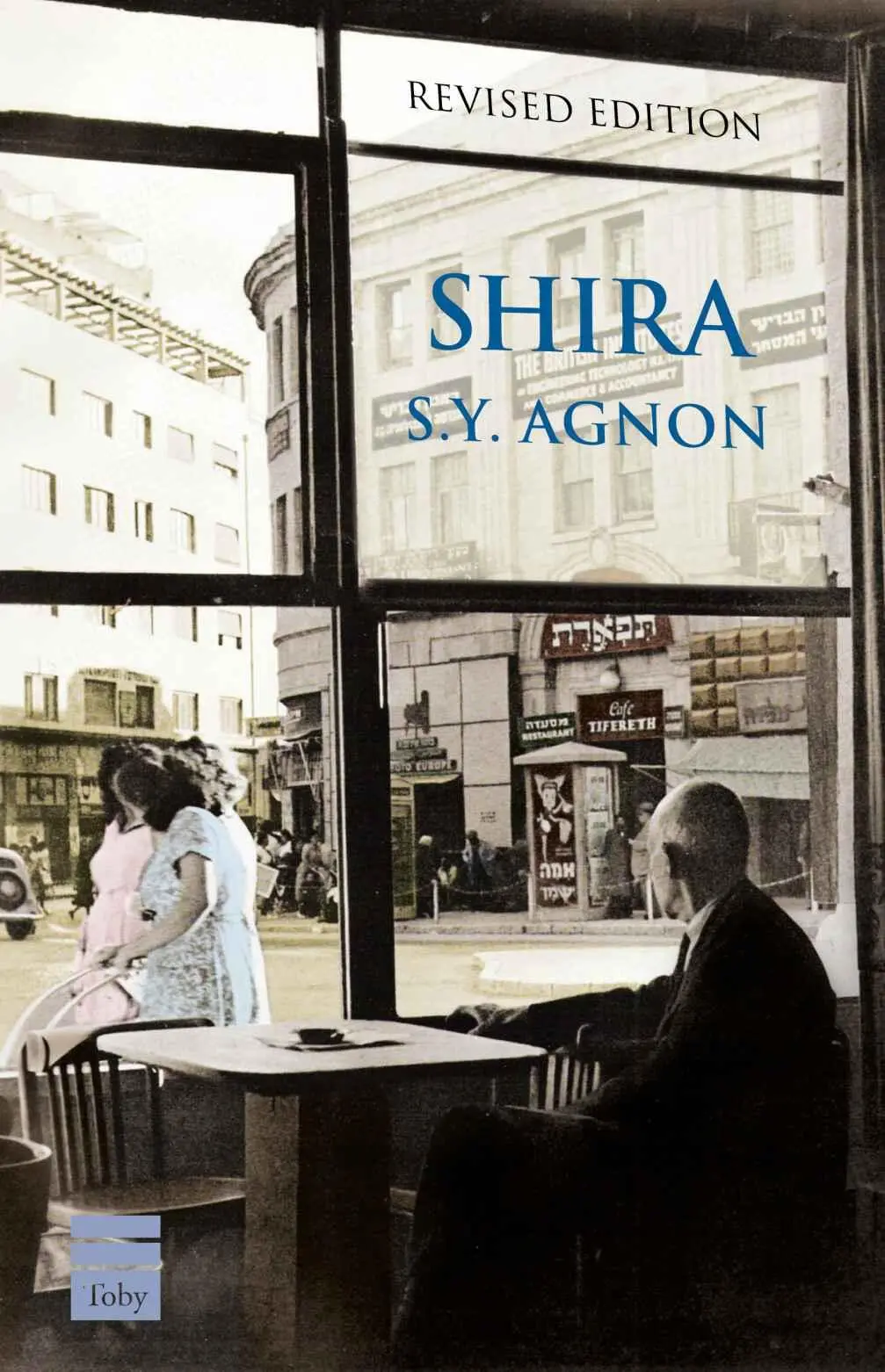
- Название:Shira
- Автор:
- Издательство:Toby Press
- Жанр:
- Год:2014
- ISBN:нет данных
- Рейтинг книги:5 / 5. Голосов: 1
-
Избранное:Добавить в избранное
- Отзывы:
-
Ваша оценка:
Shira: краткое содержание, описание и аннотация
Предлагаем к чтению аннотацию, описание, краткое содержание или предисловие (зависит от того, что написал сам автор книги «Shira»). Если вы не нашли необходимую информацию о книге — напишите в комментариях, мы постараемся отыскать её.
Shira — читать онлайн бесплатно полную книгу (весь текст) целиком
Ниже представлен текст книги, разбитый по страницам. Система сохранения места последней прочитанной страницы, позволяет с удобством читать онлайн бесплатно книгу «Shira», без необходимости каждый раз заново искать на чём Вы остановились. Поставьте закладку, и сможете в любой момент перейти на страницу, на которой закончили чтение.
Интервал:
Закладка:
Herbst asked Shira, “When did you see him again?” Shira tapped her forehead with her hand and said, “Good morning, sir. His Highness has deigned to wake up? What did you ask? If I saw him again? Why should I see him! I didn’t see him; I saw him only three times. Once in the hallway, once on the stairs, and twice in the hall again. When he saw me, he inquired about my health and was supremely polite. I looked at his hands, searching for the whip. His hands were empty. They were firm, smooth, and without hair or wrinkles. When I saw him later on, I asked him where the whip was. He answered in a whisper, ‘It’s in my briefcase. I’m about to leave.’“
Herbst asked Shira, “And before leaving, he came to say goodbye?” Shira said, “If he had come, I would have thrown him out.” “Why?” “You’re asking why? After what he did to me, I suppose I was expected to bow my head to my navel and implore him, ‘Please come to me; please come, my lord and master’? I’ll show you something if you like, Manfred.” She bared her arm, and he saw a scar. Herbst asked Shira, “From his whip?” Shira shook her head and said, “I did it myself.” Herbst said, “And that was sweet, too?” Shira said, “Please, I’m asking you not to be sarcastic.” Herbst said, “But didn’t you yourself say… — “ Shira said, “I said what I said, and you have no right to say things like that to me.” Herbst said, “Come, Shira, don’t fight with me.” He stood up, encircled her hips with his arms, and closed his eyes, leaving a tiny opening. He saw that she was looking at him. He opened his eyes and looked at her. She covered his eyes with her hands and remained in his arms, exhausted.
Chapter twenty-three
Late that night, he left her and went on his way. She stood at the window, waving. He waved back and would have run, as it was past the hour when one is normally home in bed. But he couldn’t run, lest she see him and say: He’s running away from me. Also, what he remembered slowed him down. At the same time, he was pondering: When Henrietta asks where I’ve been, what will I say? Actually, she doesn’t usually ask questions, but what if she does? He went through all the possible excuses, how plausible they were, and which ones required caution, for the very person you were counting on for an alibi could have been in your house while you were off with that woman. Anyway, whatever he considered either ruled itself out or had a glaring flaw. An honest person finds it hard to tell a lie even when he wants to. Having failed to find an excuse, he felt pathetic. Not because of Shira, not because of the excuse, but because of Henrietta, who made it necessary to seek an excuse. He reached the end of Shira’s alley and was somewhat relieved; anyone who saw him now would have no reason to suspect he was coming from Shira’s.
There was no one in sight. But the one he had just taken leave of was present, with all her power and intensity. Herbst was not happy. When he was with her, he wasn’t happy. Now that he was rushing home, he wasn’t happy at all.
It was a fine night, charged with silence; the special silence of Jerusalem, an inner silence that exudes sweetness. Herbst hurried home, indifferent to the antics of the night, which, even for a Jerusalem night may have been unique in its sweet silence, or to the hour, equally unique in its pleasant sweetness.
He was already at King George Street, having come out of the web of narrow alleys near where Shira lived. When Manfred Herbst first came to Jerusalem, one couldn’t walk here because of all the stones, rocks, boulders, and gaping potholes. When Rehavia was built, the stones were cleared, the rocks dug up, the boulders uprooted, and the holes filled with dirt. A long, wide road, suitable for pedestrians and vehicles, was built. Traffic was constant, but, as it was past midnight, the Talpiot bus, which stops in Baka and could have brought Herbst home in no time, was no longer running.
The silence had moved on, and wherever it went, it was pursued by cars flying past, one after another. Where were they all coming from? The high commissioner’s residence. The high commissioner was having a party attended by many guests — people of wealth and status, diplomats, and even some yishuv leaders. They whizzed by in shiny cars with elegant interiors, their rubber wheels drinking up the earth. Manfred Herbst was small and humble. Not only was he on foot, but he had to keep swerving this way and that to avoid being run down. Every day you read in the papers that a man was run over by a car, a car struck a woman and killed her, children were playing in the street when a car came and crushed one of them. Herbst heard about a poor Jew who sold poultry, who happened to live between Mekor Hayim and Talpiot. One day he went out to slaughter a bird. A car ran into him and broke his ribs. He was taken to Hadassah Hospital, where the doctors labored over him until he was out of danger — out of danger, but not out from under the crippling effects of the car. Now he lived with some poor relative, sharing his meager resources. Shattered, broken, disheartened, depleted by the accident, he could no longer use his legs and pursue a livelihood. By rights, the driver should have compensated him for pain and suffering, medical expenses, disability, and embarrassment. But the rich are stingy where they should be extravagant and extravagant where they should be stingy. When the victim’s family decided to sue, the driver hired a lawyer who proved, through a little-known clause in the legal code, that his client was not required to pay. The offending party won the case. He paid his lawyer a fee that may have exceeded what the victim would have claimed had he won. That day, the son of the lawyer went with his friends on one of those hikes that have become the vogue. They arrived at some spot where they found a land mine the Mandate soldiers had neglected to clear. They picked it up, played with it, got bored, and threw it down. It hit that boy, the son of the lawyer, leaving him crippled. There are those who see connections, who connect the tale of the son with the tale of the father; may those who are experts in the laws of the Mandate see that there are other laws, higher ones. But what wrong did the child do, and why did he have to answer for his father’s sins? Moreover, why wasn’t the driver answerable for his car’s crime?
Herbst was already at the train station. He turned toward Baka, but he still had no excuse to offer Henrietta. He saw Dr. Taglicht approaching. Where from? Ramat Rachel. Had he been giving a lecture? Not so. Taglicht, that saint and promoter of peace, that mass of spirituality, is training himself to fight. Should the enemy attack, he will stand up with the other Haganah members, so we will not be massacred and plundered, as we were in other years sealed in Jewish blood. Twice a week, Taglicht goes to Ramat Rachel to train with a Haganah group, and now he is on his way home. All this is beside the point. The point is that Herbst now has an excuse. Should Henrietta ask him where he was, he can say he was with Taglicht. And should she ask what they talked about he could tell an anecdote Taglicht had told him. Once, Taglicht was on his way to give a lecture. Hemdat met him and went along. After the lecture, several people attached themselves to Hemdat. One of them remarked, “I’ve read your stories. I won’t say they’re not good; I could even say I enjoyed them. But, let me tell you, today’s reader is no longer content with reading for pleasure. He expects to find a new message in every creative work. Hemdat said to him, “‘Whereto?’ is not a question I answer, though I do sometimes respond to ‘Wherefrom?’“
Herbst and Taglicht did not have a long conversation; Herbst, because he was hurrying home, and Taglicht, because he had heard good news. On this night, one of many filled with horror and distress, catastrophe, restricted rights, and harsh measures and rulings that limit our every step, a band of youngsters had taken possession of some land, establishing a new settlement there. For this reason, Taglicht was not interested in the sort of conversation academics usually indulge in. They said goodbye to each other and went on their way, Taglicht rejoicing over the birth of a new settlement and Herbst relishing the excuse he had found.
Читать дальшеИнтервал:
Закладка:
Похожие книги на «Shira»
Представляем Вашему вниманию похожие книги на «Shira» списком для выбора. Мы отобрали схожую по названию и смыслу литературу в надежде предоставить читателям больше вариантов отыскать новые, интересные, ещё непрочитанные произведения.





Обсуждение, отзывы о книге «Shira» и просто собственные мнения читателей. Оставьте ваши комментарии, напишите, что Вы думаете о произведении, его смысле или главных героях. Укажите что конкретно понравилось, а что нет, и почему Вы так считаете.