S. Agnon - Shira
Здесь есть возможность читать онлайн «S. Agnon - Shira» весь текст электронной книги совершенно бесплатно (целиком полную версию без сокращений). В некоторых случаях можно слушать аудио, скачать через торрент в формате fb2 и присутствует краткое содержание. Год выпуска: 2014, Издательство: Toby Press, Жанр: Современная проза, на английском языке. Описание произведения, (предисловие) а так же отзывы посетителей доступны на портале библиотеки ЛибКат.
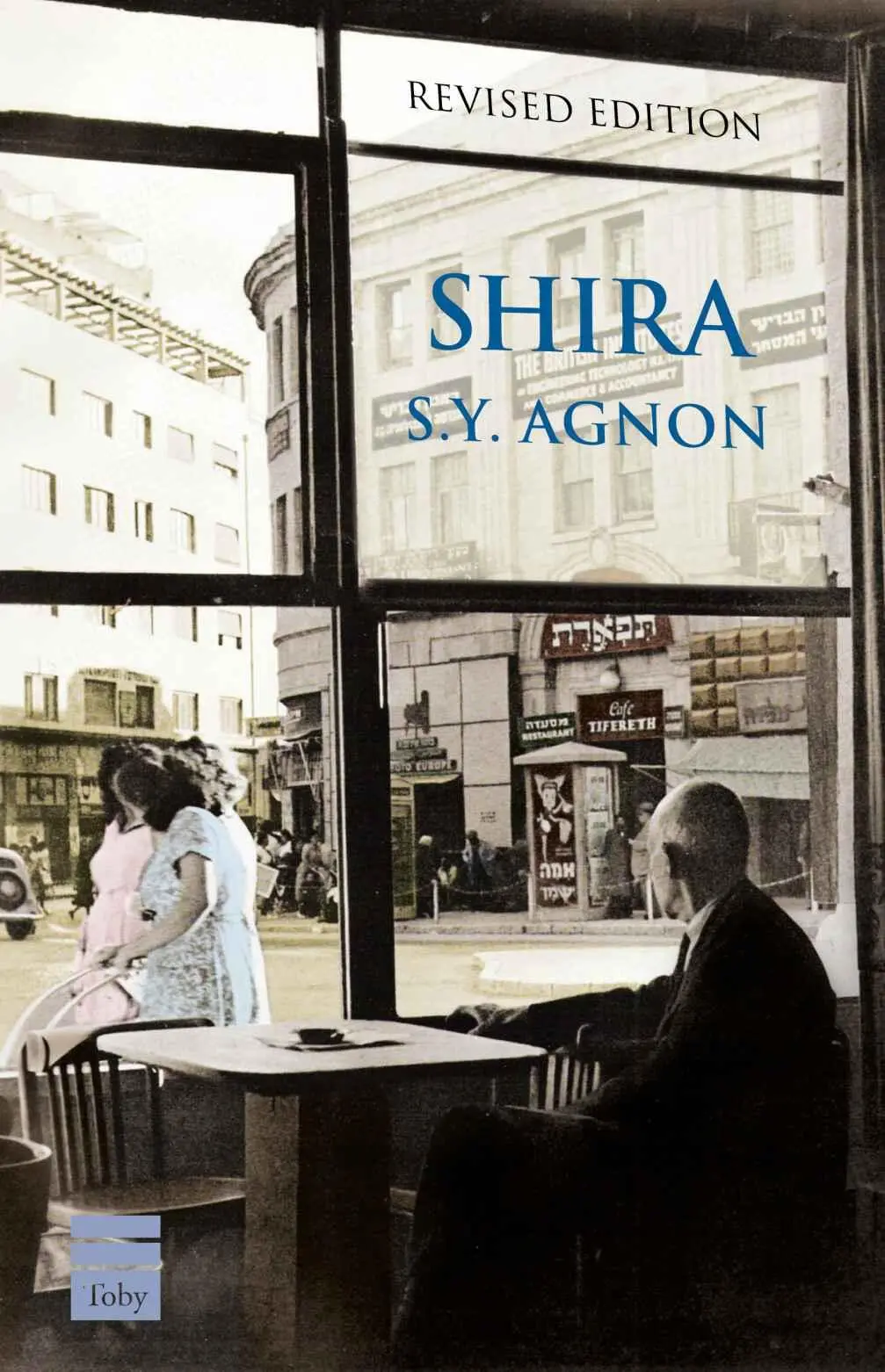
- Название:Shira
- Автор:
- Издательство:Toby Press
- Жанр:
- Год:2014
- ISBN:нет данных
- Рейтинг книги:5 / 5. Голосов: 1
-
Избранное:Добавить в избранное
- Отзывы:
-
Ваша оценка:
Shira: краткое содержание, описание и аннотация
Предлагаем к чтению аннотацию, описание, краткое содержание или предисловие (зависит от того, что написал сам автор книги «Shira»). Если вы не нашли необходимую информацию о книге — напишите в комментариях, мы постараемся отыскать её.
Shira — читать онлайн бесплатно полную книгу (весь текст) целиком
Ниже представлен текст книги, разбитый по страницам. Система сохранения места последней прочитанной страницы, позволяет с удобством читать онлайн бесплатно книгу «Shira», без необходимости каждый раз заново искать на чём Вы остановились. Поставьте закладку, и сможете в любой момент перейти на страницу, на которой закончили чтение.
Интервал:
Закладка:
I don’t know how you relate to the contemplative process. When Manfred Herbst has an issue to contemplate, he begins by turning it over, abandoning it midway to consider matters that are tangential but not part of the issue, and ending up where he started. So, at this point, involved as he was with Shira, he moved on to Lisbet Neu. Along with these two, he considered several others — women he had been with at the university, women he had met later at scholarly events. Suddenly, he was overwhelmed with the realization that some of these women were working in the very fields he was working in, although they were very different from him. And it was this difference that unsettled and disturbed his soul. After visualizing their beauty, their coiffures, their fragrance, their manners, he fixed his mind on Lisbet Neu, hoping she would save him from them and from Shira. But the One who was created only to trouble us said derisively: What’s it to me if this fool doubles his trouble?
Suddenly, Zahara’s cheerful voice was heard calling him to lunch. Herbst answered, “I’ll be right there.” Zahara called again, “Father, the food is getting cold.” Herbst called out, “I’m on my way.” He picked up two or three stones from the bunch he had collected on an archeological dig and placed them on his papers, so they wouldn’t blow in the wind, arranged his pads and notebooks, and took a quick inventory — not like those scholars who estimate how many pages they can make out of a given amount of material, but like a builder amassing lumber and stone for construction.
Manfred Herbst was sitting there; his wife, Henrietta, was sitting there; Zahara, their daughter, was sitting there. They were eating together. The table was covered with a heavy cloth made of coarse fabric Henrietta had bought from the husband of Sarini the wetnurse. Henrietta was saving the things she had brought from her mother’s house for her daughters, with the idea of dividing them between them when they had homes of their own. She did this with the silver cutlery, substituting cheap metal utensils, as well as with the linen tablecloths, which she replaced with this coarse fabric. Now, the Herbsts were sitting together. Papa Herbst and Mama Herbst and Zahara, their eldest daughter, were sitting and eating lunch. Though it was an ordinary day and the food was ordinary, there was something exceptional about this lunch. Not only for her father and mother, but even for Zahara. The vegetables Zahara’s mother cooked were not her ordinary fare, though they came from the kvutza and she herself had brought them. The quality produce grown in the fields of Ahinoam is sent to market, and the kvutza eats only what fails to make the grade. Zahara took a double helping, feeling love for her mother, for whatever her mother did, and it seemed to her that she had never loved her mother as she did at that moment, though she knew, clearly, that she loved her mother then as always. This was true of the table, the dishes, everything in the house: in its rooms, which were dearer to her today than ever before; in the vegetable garden, whose beauty was displayed between every furrow. Only her mother could dig those little holes so they hugged the seedlings that were at rest there, saturated with rich water, pleased with the brown earth, content with the fertilizer and with the sun above, welcoming the grasshoppers that leaped over them, circled around, jumped, flew, and finally landed on their long legs. Not to mention the wondrous air that stretched between grasshopper and garden row, and was sometimes endowed with a color known as Berlin blue. Her heart expanded to include love upon love. This love augmented itself and engulfed her father. Zahara knew her father well, every line, every mark on his face. Still, she stared at him as if she had never seen him before. Zahara studied him, his forehead, his hair, his person — this precious human being whom she never tired of watching, not realizing her eyes were closed and what she saw of her father was in her own mind. This was her father, and she could barely begin to describe to her friends in Ahi-noam even a particle of what she found in him. In truth, no one in Ahinoam had asked about her father, not even in jest; for example: What sort of individual is your venerable progenitor? And no one there seemed interested in such things, not even Avraham-and-a-half or Heinz the Berliner. They didn’t ask about her father either. Just because no one there asked about her father, she found herself thinking about him, even now that she was with him and her thoughts were not colored by the magic of distance. Only good sense kept her from reaching out and wrapping her arms around his neck, for she wouldn’t have wanted to be considered sentimental.
Zahara served herself and ate slowly, hoping to figure out just what was in the dish. As she ate, she abandoned her research, began eating for pleasure, and took another helping. Again she tried to analyze the dish. She stared at the plate, then at her mother, and stopped trying to guess the ingredients. With her mother’s cooking, it wasn’t the ingredients that determined the taste. Even when her mother told her how to prepare a particular dish and she passed on the recipe to her friends in Ahinoam, it never turned out like her mother’s.
Herbst ate with pleasure too, but he was troubled. He picked up a spoon instead of a fork and assured himself that, if what was on his mind was important, it would make itself known; if not, it would slip away. But it didn’t make itself known, nor did it slip away. What could be troubling me so? Manfred wondered. Is it that I didn’t praise Henrietta’s cooking? If so, I’ll say something, and, even if she sees I’m not sincere, I’ll be in the clear. He put down the spoon and looked up. His eyes met Zahara’s. Affectionate joy flashed from his eyes to hers; identical joy flashed from Zahara’s eyes to those of her father. Herbst forgot his troubles and began talking to Zahara.
Manfred said to his daughter, “Now, Zahara, we should ask what’s new back in Ahinoam. You ought to tell us without being asked, since we’re so citified that we’re total boors when it comes to kvutza affairs and our questions won’t be meaningful. Aren’t you pleased, my child, that your father knows himself so well?” Zahara said, “Wrong, Father. You ask and I’ll answer, since I don’t know what you would like to know.” Herbst said, “All your news is important to me.” Zahara said, “There are several sorts of news, and I don’t know which you have in mind.” Henrietta said to Manfred, “You start, Fred.”
Father Manfred sat asking questions, and Zahara answered at length, as if it were vital for him to have thorough knowledge of all the things he asked about. She didn’t realize that this urban man, this bookworm, probably forgot his question before he finished asking it, that he hadn’t noticed she wasn’t finished answering and was already asking Henrietta what she had accomplished with regard to the certificates. Before Henrietta could answer, he asked Zahara questions he had already asked and she had already answered. Even things he knew and had no need to ask about, he asked. Zahara and Henrietta didn’t notice at first; when they noticed, they laughed about the absentminded professor whose great ideas left no room in his head for their trivial concerns.
Zahara’s mind was somewhat like her father’s. Her brow was narrow and unwrinkled, but many ideas were spinning around in her brain. Some were the outcome of conversations with Avraham and Heinz; some were inspired by lecturers. She stored some of these ideas in her heart and imparted some of them to her parents. Herbst looked at his daughter fondly and said to his wife, “What do you think of our scholar, Henrietta?” Henrietta answered, “She’s your daughter; like father, like child.” Herbst was pleased with his wife’s words and wanted to say something about his daughter, such as “No need to be sorry that she left school.” But his own sorrow suppressed these words, for it was Berl Katznelson, his close friend, who had designed her workshops, bypassing him, neglecting to ask him to give even one lecture. Herbst had one consolation: his great work on burial customs of the poor in Byzantium. It was still a heap of notes, the skeleton of a book, but it would surely become a real book. When it appeared in print, those who ignored him now would be the first to seek him out. Herbst wasn’t thinking in terms of revenge: You underestimate me now; tomorrow, when I’m famous, you’ll be the first to honor me. But, remembering his book, he was comforted. The book was important, not only because of the sources he uncovered, but because of his ideas, which, at several points, approached the level of a study in religion. The burial customs of the poor in Byzantium, which at first glance, appear entirely opposed to Christian doctrine, were in fact derived from a philosophy that found itself a niche within that very religion. Now that Herbst was thinking about his book, he was determined to do whatever was in his power to complete it. Having reached this decision, his sorrow vanished. Although it vanished, he was not relieved. On the contrary, as he thought about his book he grew more and more angry that, with such a work in progress, he could be treated as if he didn’t exist. Actually, it was not because he wasn’t invited to the workshops that he was angry, but because of himself, because his mind was not on his work because of Shira.
Читать дальшеИнтервал:
Закладка:
Похожие книги на «Shira»
Представляем Вашему вниманию похожие книги на «Shira» списком для выбора. Мы отобрали схожую по названию и смыслу литературу в надежде предоставить читателям больше вариантов отыскать новые, интересные, ещё непрочитанные произведения.










Обсуждение, отзывы о книге «Shira» и просто собственные мнения читателей. Оставьте ваши комментарии, напишите, что Вы думаете о произведении, его смысле или главных героях. Укажите что конкретно понравилось, а что нет, и почему Вы так считаете.