S. Agnon - Shira
Здесь есть возможность читать онлайн «S. Agnon - Shira» весь текст электронной книги совершенно бесплатно (целиком полную версию без сокращений). В некоторых случаях можно слушать аудио, скачать через торрент в формате fb2 и присутствует краткое содержание. Год выпуска: 2014, Издательство: Toby Press, Жанр: Современная проза, на английском языке. Описание произведения, (предисловие) а так же отзывы посетителей доступны на портале библиотеки ЛибКат.
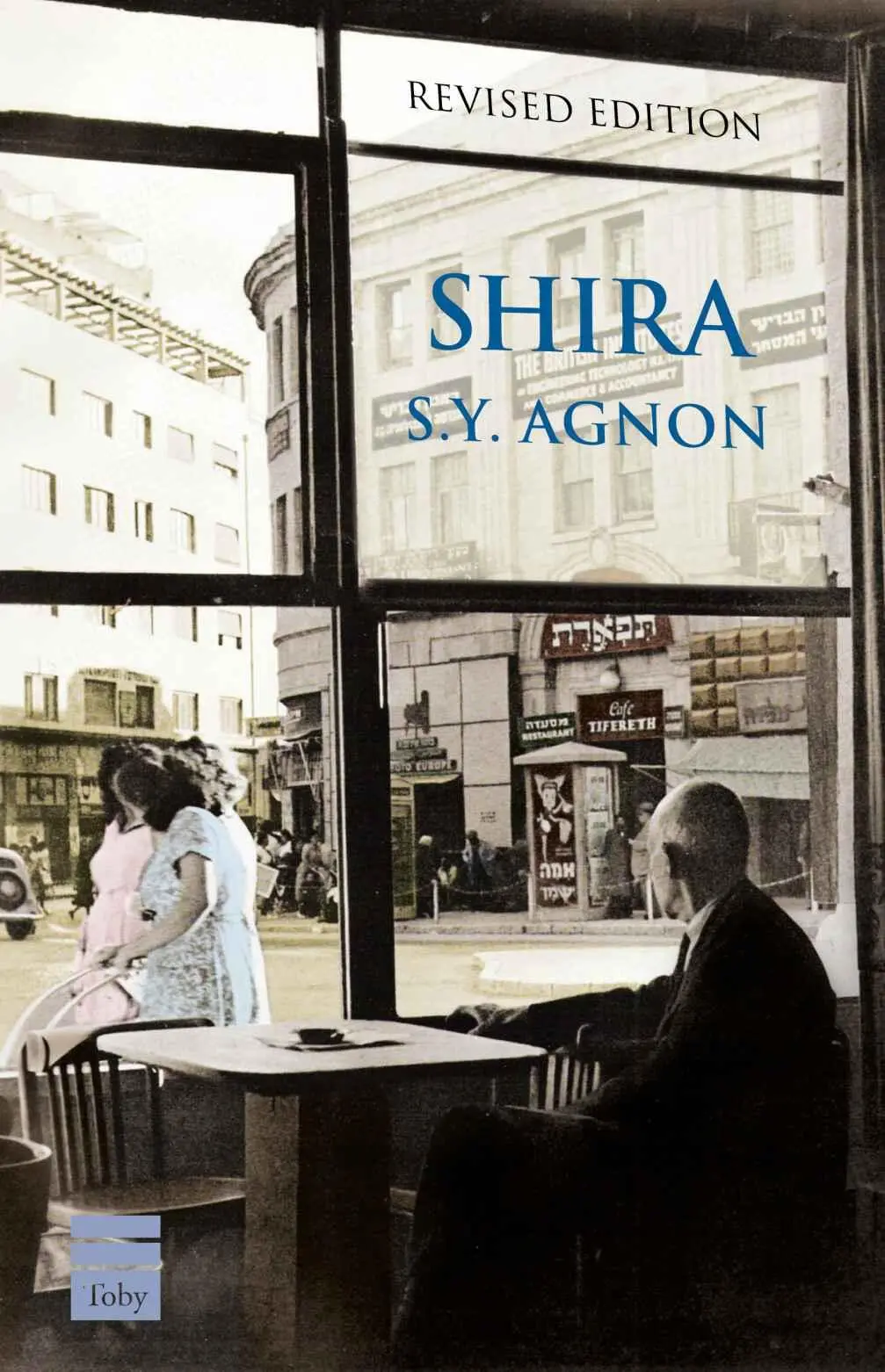
- Название:Shira
- Автор:
- Издательство:Toby Press
- Жанр:
- Год:2014
- ISBN:нет данных
- Рейтинг книги:5 / 5. Голосов: 1
-
Избранное:Добавить в избранное
- Отзывы:
-
Ваша оценка:
Shira: краткое содержание, описание и аннотация
Предлагаем к чтению аннотацию, описание, краткое содержание или предисловие (зависит от того, что написал сам автор книги «Shira»). Если вы не нашли необходимую информацию о книге — напишите в комментариях, мы постараемся отыскать её.
Shira — читать онлайн бесплатно полную книгу (весь текст) целиком
Ниже представлен текст книги, разбитый по страницам. Система сохранения места последней прочитанной страницы, позволяет с удобством читать онлайн бесплатно книгу «Shira», без необходимости каждый раз заново искать на чём Вы остановились. Поставьте закладку, и сможете в любой момент перейти на страницу, на которой закончили чтение.
Интервал:
Закладка:
The fly disappeared somewhere, and still Herbst did not stir from his daughter’s crib. He stood chirping through his lips. It occurred to him that he might entertain her by clapping. He began clapping his hands and chirping. It occurred to him that he could dance, and this would surely please her. He began to dance for her while he clapped and chirped. It occurred to him that he could walk on all fours for her. He bent down and began walking on his hands and knees. He jumped around like a rabbit or a hare, only to realize that her crib was too high for her to see what he was doing. He straightened up and stood alongside the crib, clapping and chirping. It occurred to him that all these games were outdated and not very exciting, that, if he wanted to amuse her, he should invent something new. He puffed up his cheeks and tapped them with his fingers so the air would burst out. The baby laughed and reached out to him.
Henrietta came in and saw him playing, the baby laughing. Her throat tightened and she felt like crying with joy at the sight of this child of their old age, lying in the crib, contemplating her father with such perceptive eyes. Henrietta took her husband’s hand, pressed it, and said, “Fred, is there anything in the world that we lack?” Suddenly, a sigh was plucked from her heart on behalf of the relatives stranded in that German hell. Her face darkened; she made a fist and said angrily, “What are they up to at the Jewish Agency? They pretend to be working for Zionism, and they’re not working at anything. Every day I knock on their doors and list all the calamities, and either their ears are shut tight or their hearts are stone. Fred, my love, I haven’t told you even the tiniest fraction of what I go through dealing with those blocks of ice. I know, my love, that I mustn’t keep you from your work and I shouldn’t distract you from your business. Still, I need advice. Tell me, my love, tell me what to do. I don’t expect you to tell me immediately. With your insight, you’ll surely find the answer. Don’t cry, Sarah. Don’t cry, my sweet. I’ll feed you in a minute. You’re lucky to have been born in this country, so you don’t need a certificate.”
Remembering the certificates, she pictured all the people she was negotiating with, to no avail. Some of them put her off with “Come back tomorrow”; some didn’t even take the trouble to put her off and treated her with total disrespect. Suddenly, they all appeared before her eyes, in a single horde, and, since her heart was bitter, they looked to her like monsters. She was frightened and covered the baby’s eyes with her hands, so she wouldn’t see them and be afraid.
Chapter twenty-six
That night, Taglicht came. He had no particular reason to come, other than to see how the Herbsts were doing, but once he was there, he asked to see Zahara, having heard she was in Jerusalem. To be precise, he had seen her on the street in the company of an extremely tall young man.
As soon as Taglicht appeared, Herbst became uneasy. He was worried that Henrietta might ask what she hadn’t asked the night before. He glanced at Henrietta, then at Taglicht, who was unaware of what he could unleash with one wrong word. He envied Taglicht. As a bachelor, he was not accountable to any woman, nor was he afraid she might learn things it would be best to conceal from her. Yet this man, who was free to do as he pleased, was not engaged in any acts that had to be concealed. But what do we know about our friends? Would it have occurred to Wechsler, to Weltfremdt, to Lemner that Herbst was involved with another woman? Even Professor Bachlam, whose nose was everywhere, would never have suspected that a lecturer at the Hebrew University in Jerusalem — someone who ought to be a model of the Jewish ethic proclaimed by prophets of truth and justice — might covet a woman not lawfully his. Who knew about him and Shira? Other than the driver Axelrod, son of Axelrod at the hospital, and the café owner from Berlin, no one has seen him with Shira. How different Herbst had been that night when he spoke with Axelrod the clerk, after bringing Henrietta to the hospital when she was about to give birth. With regard to Henrietta, he had still been free of guilt; with regard to Shira, that evening in the café had been so splendid because he was free of hateful envy.
Taglicht sat at the Herbsts’, saying things Herbst would have relished at another time, for Herbst preferred Taglicht’s conversation to that of his other friends. Those who go in for paradox say there is one sin even a good man can indulge in: gossip. Not Herbst; he still hadn’t acquired a taste for it. Taglicht still hadn’t learned the art either. So they discussed those matters that a wise soul can enjoy. Taglicht’s words always seem to be transmitted from his heart to his tongue and carefully arranged before they are uttered. Those who are impressed are impressed, and those who are unimpressed say, “If Taglicht had to produce books and write articles, he wouldn’t be so free to play with words.”
This is true and untrue. It is true that Taglicht does not produce books or write articles, but also untrue, because he did write a dissertation for which he was awarded a doctorate.
We will tell about the dissertation and his years at the university. Taglicht, a perpetual student, spent year after year at the university. There wasn’t a subject he failed to explore. After many years, he was still not working on a doctorate. If asked, “When do you expect to complete your studies?” he would answer, “I seem to be just beginning.” During those years he made a meager living producing dissertations for doctoral candidates with the ability to pay but without the ability to do the work.
His favorite teacher once asked, “When will you present your own dissertation, so we can grant you a degree?” Taglicht blushed, thinking the professor was suggesting he was engaged in fraud. He stopped working on other people’s dissertations and began taking notes and writing for himself. After several months, he produced a fine manuscript on the names of the angels in the poems of Rabbi Amitai, son of Rabbi Shefatyahu, and how these names were interpreted by our sages, as well as in the writings of early German Hasidim.
One night, his professor invited him to his home. They sat for a while and said what they said. As he was leaving, he handed the professor a manuscript. When he was gone, the professor began to read it. He didn’t stir until he reached the end of it, at which point he thought: If I knew where Taglicht lived, I would go to him, knock on his door, and say, “You have written a great book.”
The next day, the professor told his colleagues about Taglicht’s work. They all read it and said approximately, “In all our years at the university, no one has ever submitted such a dissertation.” They told Taglicht, “Present your work to the senate, and you’ll be awarded a degree.” Taglicht didn’t submit his dissertation. His devoted teacher saw that all his efforts with Taglicht were futile. He and his colleagues did something that was probably never done in any other university. Let me tell you about it.
One day, his favorite professor invited him to his house for coffee. They sat around talking. Another professor, who was one of Taglicht’s teachers, arrived, followed by a second and a third. They sat for a while, talking about this and that, and they did not stir from that spot until Taglicht was granted a doctorate. Taglicht concluded his affairs at the university, went back to his parents’ home, from there to Vienna and on to the Land of Israel.
When he came to this country, he looked for work in the fields, the vineyards, the orchards. He didn’t find any work on the land. Those jobs were still being done by Arabs. They were everywhere — even in the very settlements that swore not to let in Arab labor after the first round of riots, since the rioters included the very same Arab neighbors who had worked there earlier. The entire country was inundated with Arab labor, so our friend couldn’t find work. Taglicht joined the halutzim engaged in paving the roads.
Читать дальшеИнтервал:
Закладка:
Похожие книги на «Shira»
Представляем Вашему вниманию похожие книги на «Shira» списком для выбора. Мы отобрали схожую по названию и смыслу литературу в надежде предоставить читателям больше вариантов отыскать новые, интересные, ещё непрочитанные произведения.










Обсуждение, отзывы о книге «Shira» и просто собственные мнения читателей. Оставьте ваши комментарии, напишите, что Вы думаете о произведении, его смысле или главных героях. Укажите что конкретно понравилось, а что нет, и почему Вы так считаете.