S. Agnon - Shira
Здесь есть возможность читать онлайн «S. Agnon - Shira» весь текст электронной книги совершенно бесплатно (целиком полную версию без сокращений). В некоторых случаях можно слушать аудио, скачать через торрент в формате fb2 и присутствует краткое содержание. Год выпуска: 2014, Издательство: Toby Press, Жанр: Современная проза, на английском языке. Описание произведения, (предисловие) а так же отзывы посетителей доступны на портале библиотеки ЛибКат.
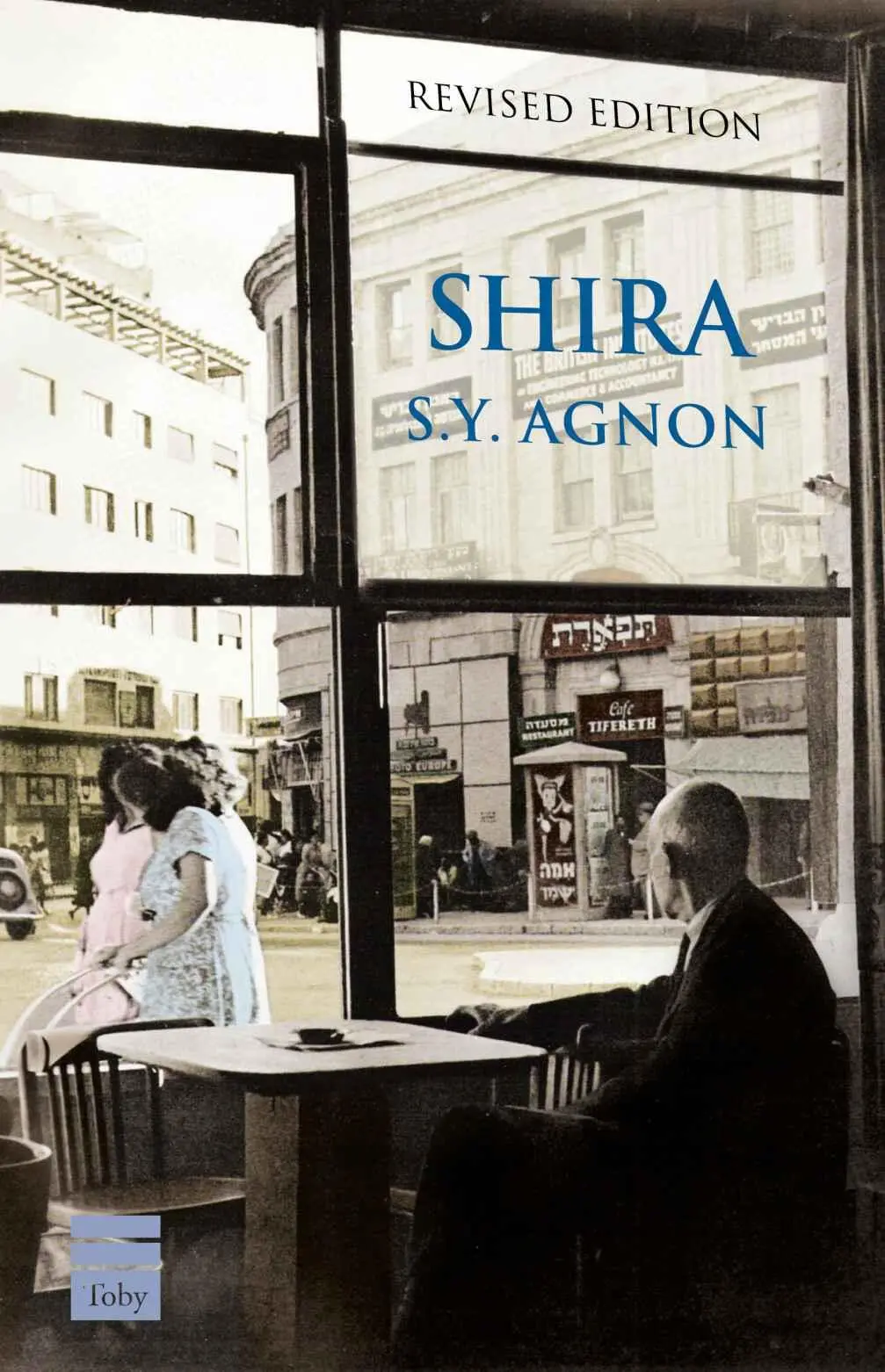
- Название:Shira
- Автор:
- Издательство:Toby Press
- Жанр:
- Год:2014
- ISBN:нет данных
- Рейтинг книги:5 / 5. Голосов: 1
-
Избранное:Добавить в избранное
- Отзывы:
-
Ваша оценка:
Shira: краткое содержание, описание и аннотация
Предлагаем к чтению аннотацию, описание, краткое содержание или предисловие (зависит от того, что написал сам автор книги «Shira»). Если вы не нашли необходимую информацию о книге — напишите в комментариях, мы постараемся отыскать её.
Shira — читать онлайн бесплатно полную книгу (весь текст) целиком
Ниже представлен текст книги, разбитый по страницам. Система сохранения места последней прочитанной страницы, позволяет с удобством читать онлайн бесплатно книгу «Shira», без необходимости каждый раз заново искать на чём Вы остановились. Поставьте закладку, и сможете в любой момент перейти на страницу, на которой закончили чтение.
Интервал:
Закладка:
When Herbst reached home, he saw there was a light on. A light at one in the morning meant something had happened. But this was beside the point, the point being that, should Henrietta ask where he was, he now had an adequate and totally reasonable excuse. Herbst put his key in the door, but it didn’t open. What’s this? Henrietta could have left her key in the lock so she would hear him when he came in.
He stood outside, unable to get into his own house without knocking. But if he knocked, his wife would come to let him in. Even if she didn’t ask any questions, shouldn’t he offer an explanation? But his face would contradict his answer. He had to get in somehow, and if he didn’t knock, no one would open the door. He knocked, and Zahara appeared.
Herbst saw his daughter Zahara and said, “You’re here? When did you come?” Zahara embraced her father and kissed him. He wanted to embrace her and kiss her too. But his soul was astir with other embraces, so he restrained himself. He brushed her head with his hand, smoothing her hair, reluctantly, as his hands still blazed with Shira’s fire.
Henrietta heard Manfred come in and called out from her bed, “Fred, what do you think about our visitor? Zahara, tell Father why you came.” Herbst asked in alarm, “What’s happened, what’s happened? Something bad again?” Henrietta said in a cheery voice, “What do you mean, ‘again,’ and why bad when it can be good?”
He hurried to his wife. Zahara followed him. He looked at them with concealed anger and said with open reproach, “Won’t you say…Won’t you tell me what happened.” Zahara answered, “Nothing, Father. Honestly. Nothing. I came to Jerusalem and I dropped in to see how you are.” Henrietta looked at her with affection and good cheer, and said to her husband, “But wait till you hear what brings her here.” Herbst said to Zahara, “Do I have permission to ask what brings you here?” Zahara said, “Honestly, you are strange.” Herbst said, “I’m strange? In what way?” Zahara said, “Isn’t that right, Mother?” Henrietta said, “When a special guest makes a statement, the host must agree.” Herbst said, “Nonetheless, I would like to know in what way I’m strange.” Zahara said, “You’re not strange now, Father.” Although at that moment he was actually stranger than ever, she repeated, “Honestly, you’re not strange now.”
Henrietta asked her husband, “Have you eaten?” Manfred was afraid to say, “I ate but I’m hungry,” since that might lead his wife to further questions. He answered, “I had tea with Taglicht.” Henrietta said, “Poor thing, you had tea, but nothing to eat.” He said, “Tea with some dry cake.” Henrietta said, “I’m getting right up to bring you something to eat.” Zahara said, “Stay where you are, Mother. I’ll fix something for Father.” Henrietta said, “Aren’t you tired from the trip?” Zahara answered, “Did I walk here? I came in a car, of course. And what a car, a very special one, like a deer with wings. It was quite a trip. Eighty kilometers an hour. If you promise not to report me, I’ll confess that we even hit a hundred kilometers an hour. Avraham-and-a-half says such speed causes cars to die an untimely death.”
Herbst asked his daughter, “What brings you here?” Zahara said, “Mother, I see Father isn’t pleased that I came.” Herbst said, “I’m pleased. I’m pleased, and all I’m asking is why.” Zahara said, “I came for the workshops. Out of the entire kvutza , two of us were chosen.” “And who is the other girl?” Zahara said, “Allow me to correct you, Father, dear. You ask about the other girl when you ought to ask about the other person.” Herbst smiled and asked, “Then who is the other person?” Zahara said, “If I tell you, will you know? You have a habit of switching people’s names, Father.” Herbst said, “Yes, child, I never remember the names of all the boys who surround you.” As he spoke, he noticed how ripe she was. He lowered his eyes and thought: She is with young men who have rejected the authority of their fathers. She has come here with one of them, and I’m too preoccupied to look after her. But look at Lisbet Neu — of course, she is older, but she is in constant contact with all kinds of people, clerks as well as customers, and she has an invalid mother and no father. Nevertheless, she behaves impeccably. He stroked his daughter’s head and said with concealed emotion, “It’s a great privilege to have been chosen to attend these workshops and to have an opportunity to hear things that are probably worth hearing. Did you see your little sister? Isn’t she a fine baby? Who will be lecturing?” As he asked this question, he felt a twinge of pain, for he had not been invited to participate. Several years earlier, there was not an intellectual event that didn’t include him. Now they were having these workshops, and he wasn’t asked to lecture even once. Manfred Herbst was on the way out. He used to be invited to participate in every cultural event, and those who arranged them didn’t make a move without consulting him. New people had come, bringing new wisdom. Herbst felt sorry for himself, sad that it had come to this. Yet he justified these omissions, for he had not published anything in several years, except for two or three trifles in Kiryat Sefer and Tarbitz . His great book on burial customs of the poor in Byzantium was still a bundle of notes, references, and preliminary drafts.
Whose fault is it that the book lies curled up in a box, like an embryo dead in the womb. This country is at fault; it is not a scholarly environment. Here in the Land of Israel, everyone makes do with the minimum. This applies to spiritual needs as well as physical ones. Whatever is not essential to sustain body or soul is a luxury this poor country cannot afford. Our colleagues — those young scholars who came from Germany only yesterday, because they were relieved of their positions there — are amazed that in all these years we have contributed absolutely nothing. They don’t realize that this place is unlike any other. In other places, scholarship justifies itself. Not so here, where, unless a scholarly study can be related to Israel’s national destiny or to the ethic of the prophets, it is immediately discredited. Those innocents still pretend to be living in a German environment. Give them two or three years and they’ll be like the rest of us, making do with articles in jubilee volumes. The ambitious ones will join the bureaucracy, which is the seat of power. In other countries, the bureaucracy serves the needs of the people and the state; here, the bureaucracy itself is primary, and it takes precedence over the needs of the people and the state. Among those who came in the early days of the university, there were some true scholars. Years passed, and they didn’t achieve anything important. This being the case, they began to regard their minor achievements as major ones. When Julian Weltfremdt and his cronies remark scornfully, “See what those professors are up to,” the professors answer, “Their words have the ring of envy; they resent us because they weren’t appointed to the faculty.” What these malcontents say about the professors, most of the professors say about their own colleagues. In fact, most of them agree that Bachlam is no scholar, while he says they have small minds and deal entirely with trivia.
Zahara brought her father his meal. Herbst glanced at his beloved daughter, who was forfeiting sleep for his sake. He picked up a knife and fork to eat what she had prepared, but they remained idle. Zahara peered at him and said, “Father, you’re not eating.” Herbst answered, “I’m eating.” Zahara laughed gaily and said, “I see you deep in thought, but I don’t see you eating.”
Читать дальшеИнтервал:
Закладка:
Похожие книги на «Shira»
Представляем Вашему вниманию похожие книги на «Shira» списком для выбора. Мы отобрали схожую по названию и смыслу литературу в надежде предоставить читателям больше вариантов отыскать новые, интересные, ещё непрочитанные произведения.










Обсуждение, отзывы о книге «Shira» и просто собственные мнения читателей. Оставьте ваши комментарии, напишите, что Вы думаете о произведении, его смысле или главных героях. Укажите что конкретно понравилось, а что нет, и почему Вы так считаете.